
In early 2026 we spent more than two months in Namibia in total, as part of a stay of a little over half a year in southern Africa. Sparsely populated Namibia is known for, among other things, its vast desert regions and coastal towns with a German atmosphere, and for Finns it also lingers in the memory because of the peace work President Ahtisaari did there at the time of the country’s independence. Our nomad life in Namibia was largely “ordinary everyday life” in and around the capital Windhoek, but we also made a fairly long road trip in the country, which took in stunning desert scenery in Namib-Naukluft National Park as well as the Atlantic coast. In this post you’ll find the best bits of the road trip, along with tips for renting a car and driving in Namibia.
The coastal towns of Swakopmund and Walvis Bay
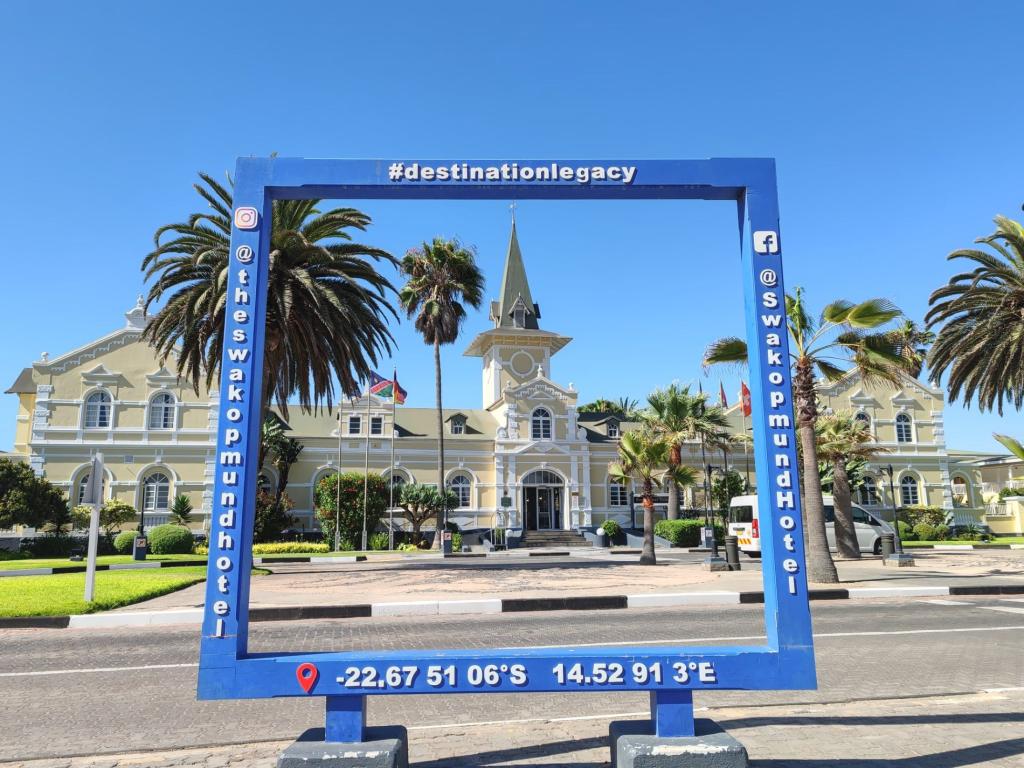
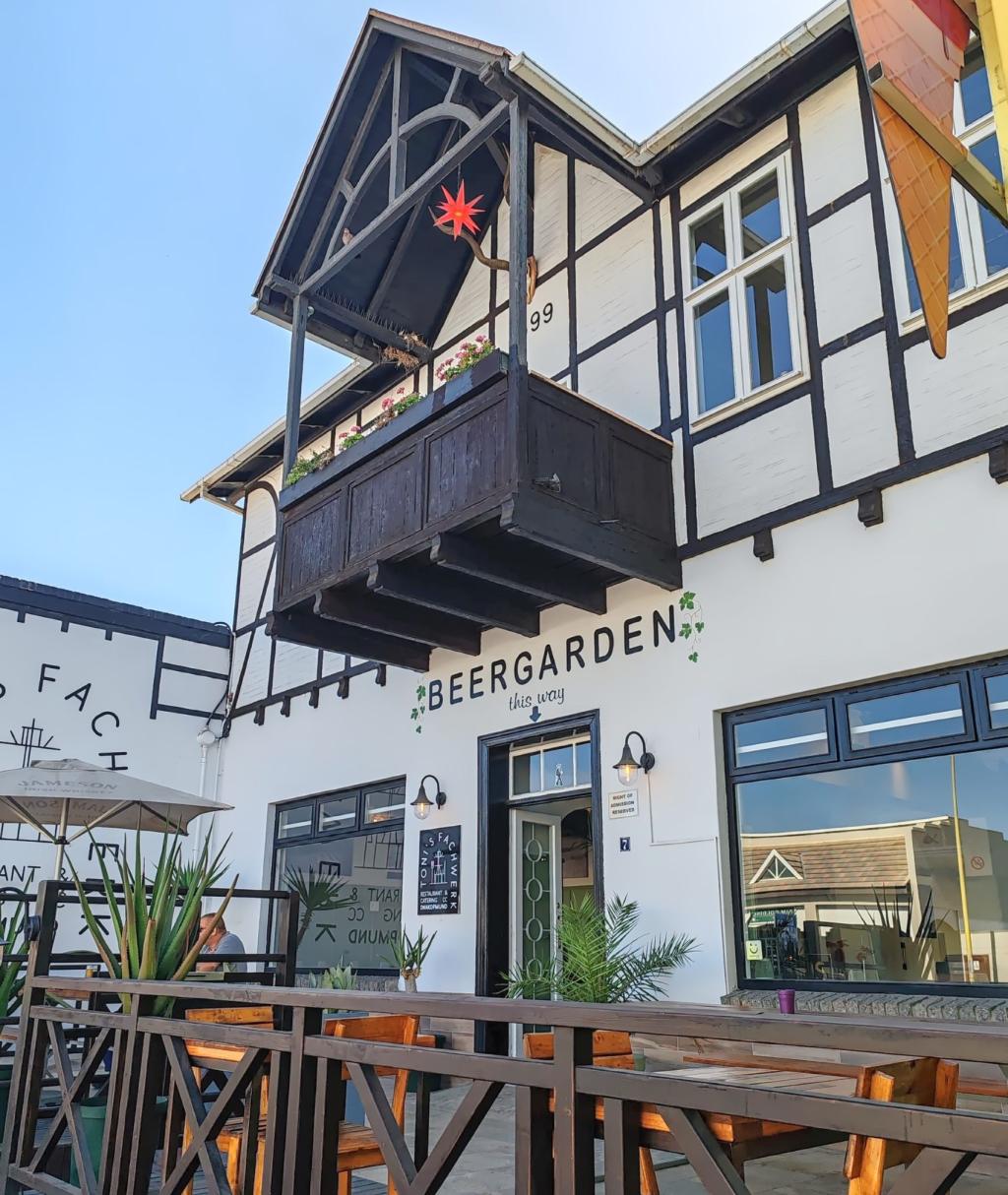
Our road trip began with a drive from the capital Windhoek to Swakopmund. This coastal town on the edge of the Namib Desert is best known for its well-preserved German colonial-era architecture, and it is also said to be the country’s adventure tourism hub, with plenty on offer such as various desert excursions. We stayed for two nights in the Ocean View area in a simple, affordable guesthouse room* – the area was quite nice, though admittedly somewhat far from the centre, which of course was no problem when travelling by car.
Swakopmund was founded in 1892 as the main port of the German Empire’s colony. The town’s sights include the Swakopmund Lighthouse and Museum and numerous German-style buildings. In addition, the historic breakwater and the long pier braving the surf, as well as the town’s beach and its restaurants, tempt people out for walks and sunbathing on sunny days.
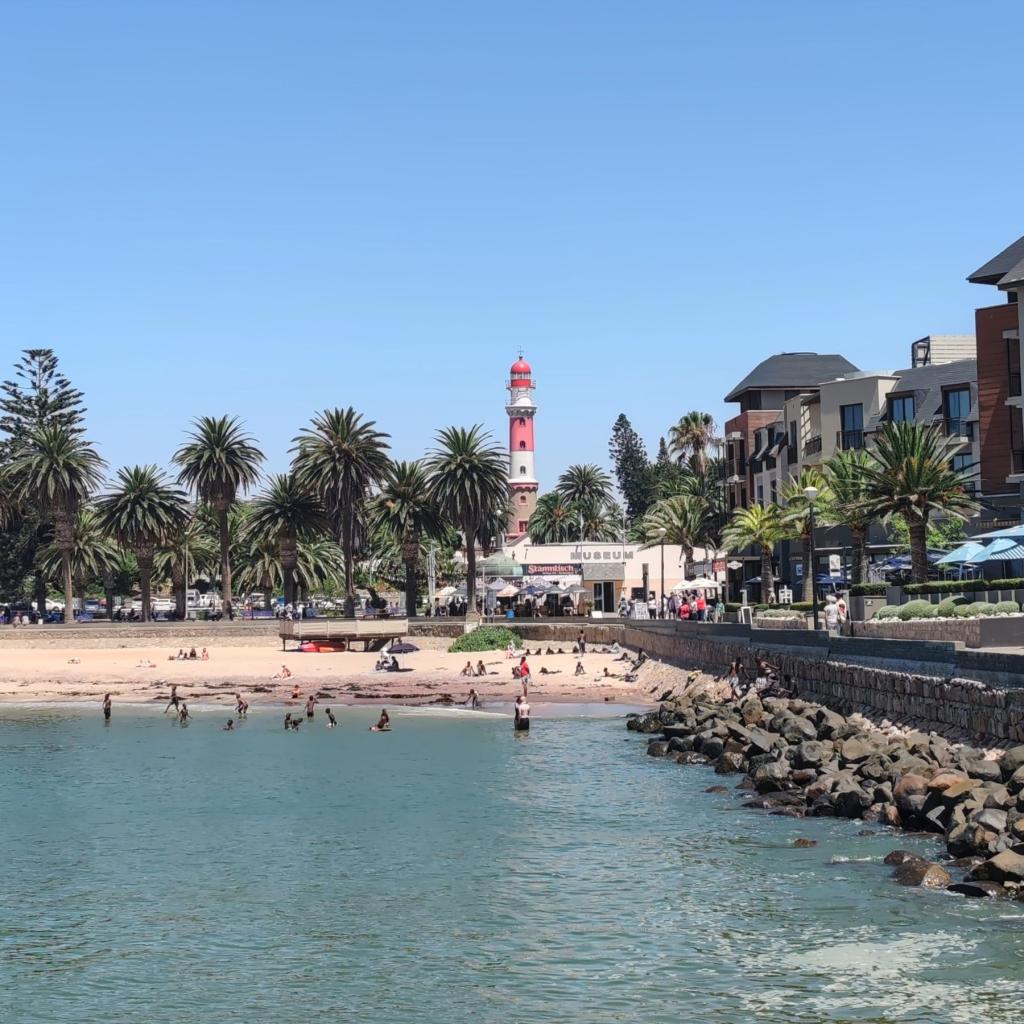
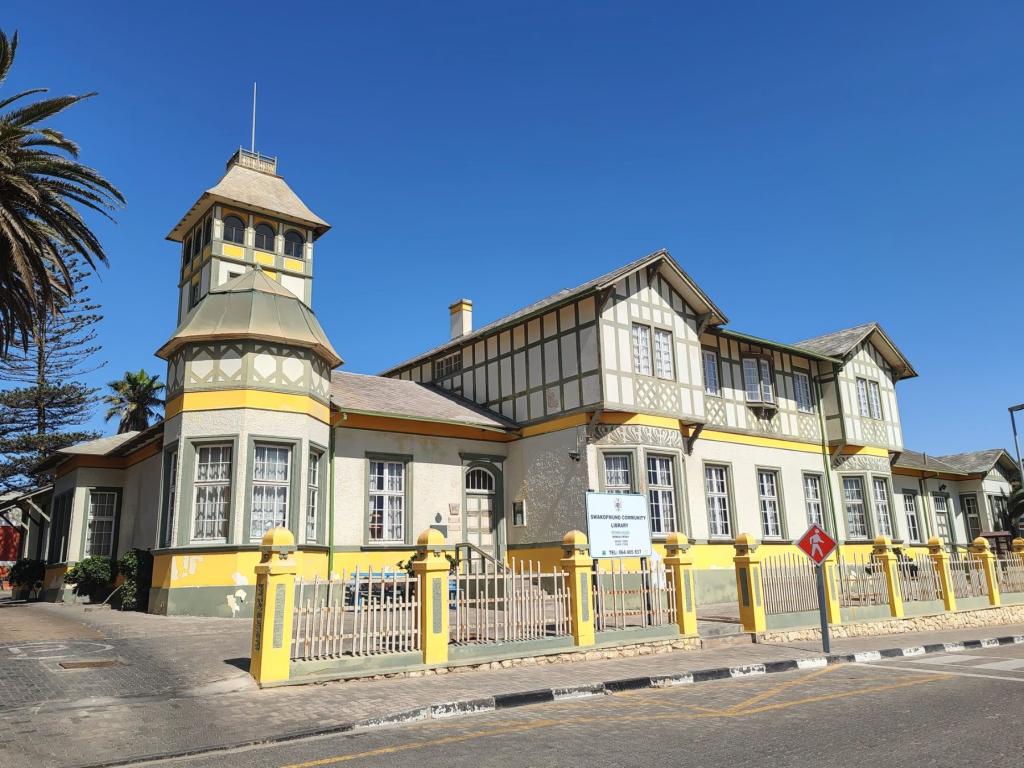
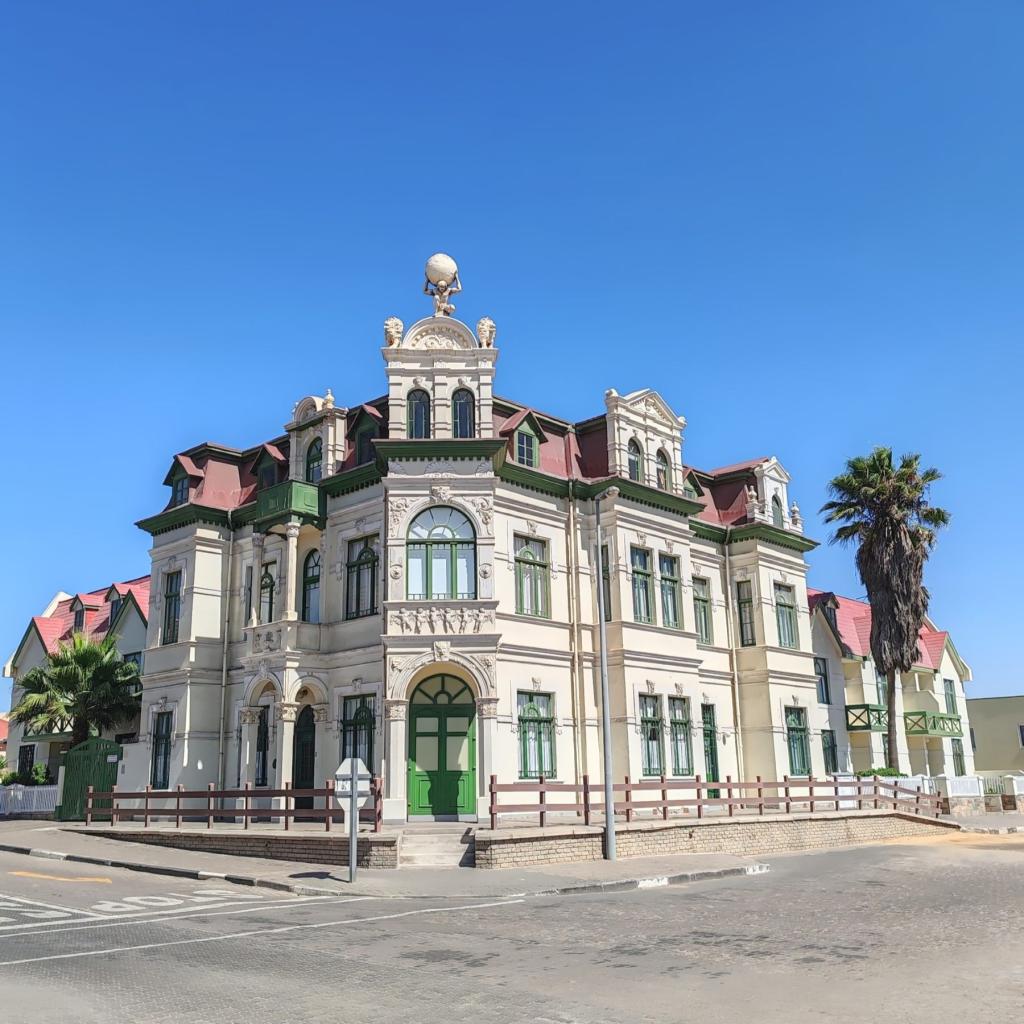
You might imagine that an African coastal town next to a desert would be hot, with warm waters almost all year round, but on the Namibian coast the situation is quite different. The weather in Swakopmund is mild, with temperatures usually staying between twelve and twenty-five degrees. The Atlantic waters on this coast are cold, as the cold Benguela Current runs quite close to the shoreline.
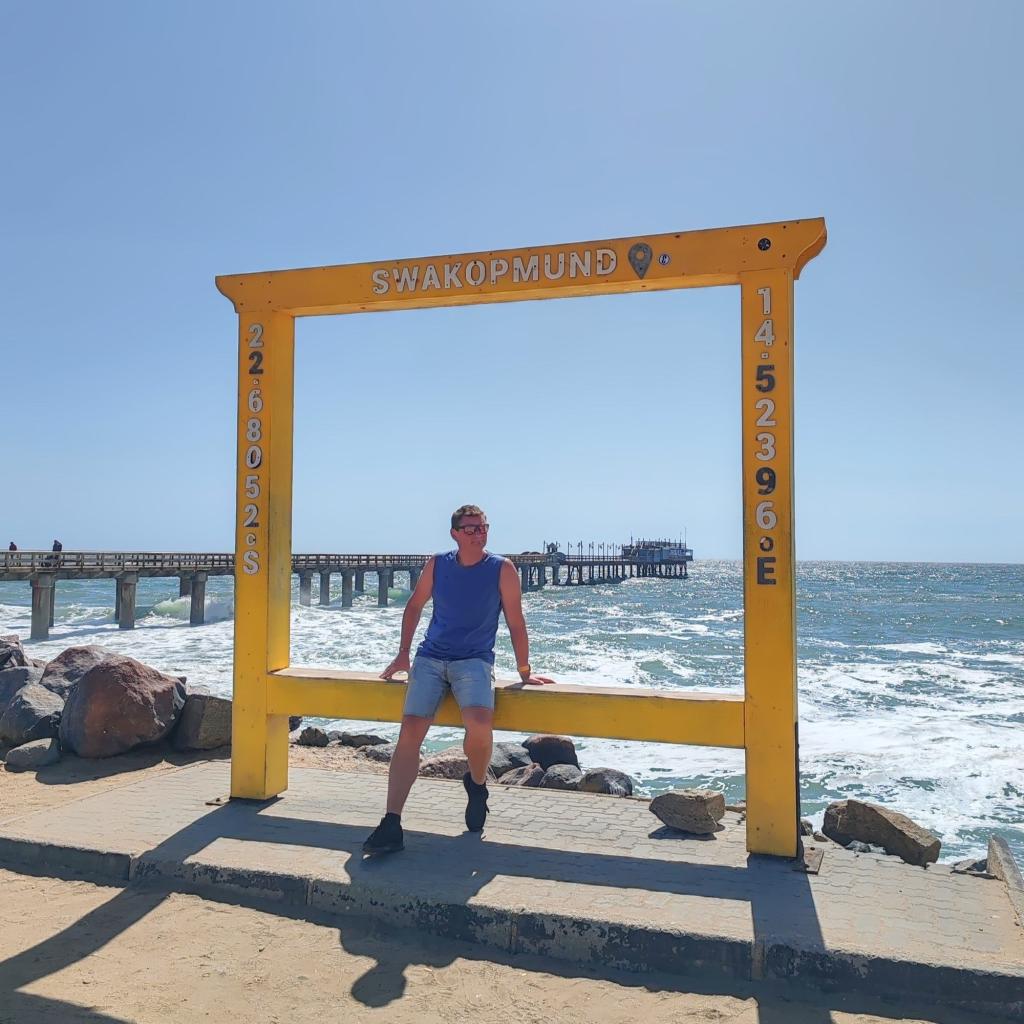
We visited the Namibian coast in January, so in midsummer, the hottest time of the year, yet the daytime high was only 22 degrees on average. On sunny days the air still felt pleasantly warm, but because of the ocean current the area often has thick fog, for even more than half the year. This damp sea fog brings life to an otherwise extremely dry desert and is an irreplaceable part of the area’s ecosystem, as the desert’s sparse plants have developed the ability to absorb water straight from the air, through their leaves.
The Namib Desert, which stretches over 2,000 kilometres along the Atlantic coast through South Africa, Namibia and Angola, is the oldest desert in the world, and it is known for its beautiful, tall sand dunes. Our first encounter with this vast, extremely dry desert took place precisely in Swakopmund, where we went for a walk on the nearest dunes, right next to the town. The sand dunes start rising practically straight out of the sea, and the scenery is starkly magnificent.
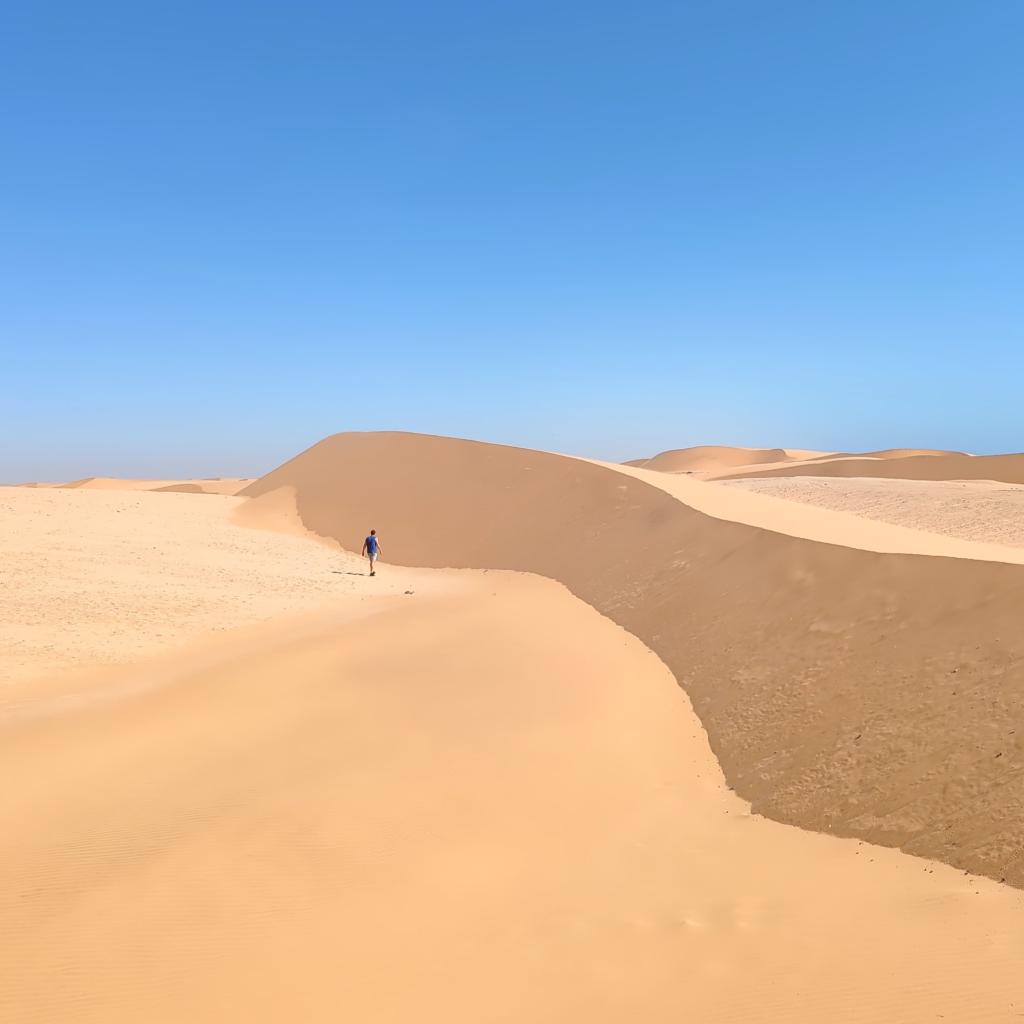
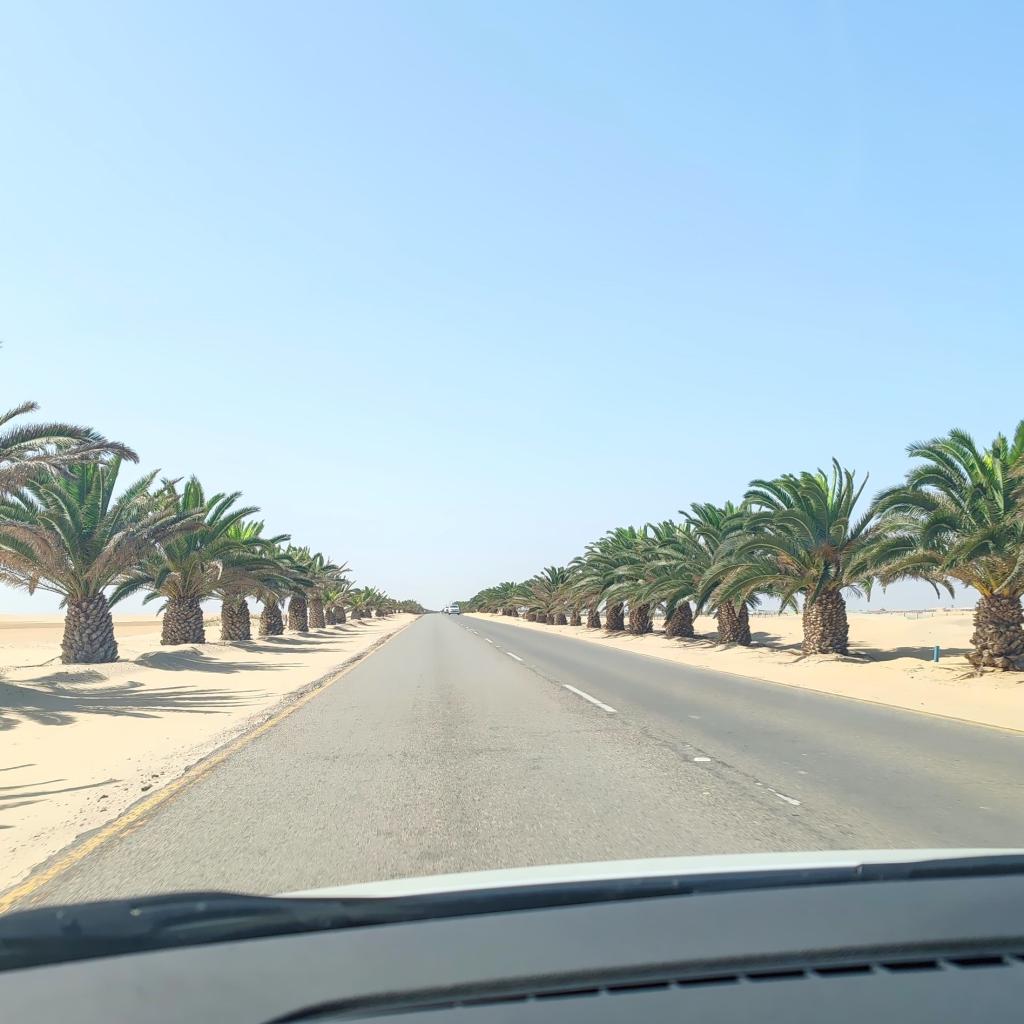
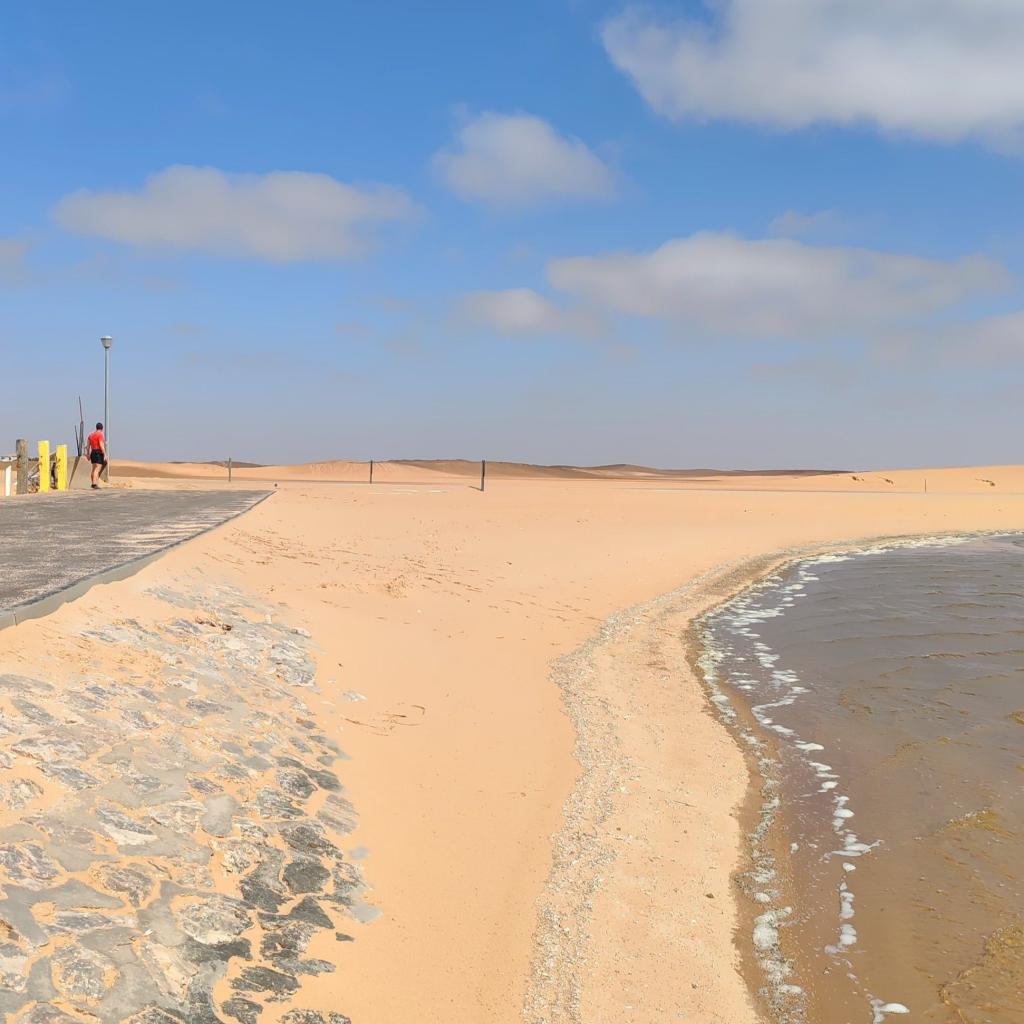
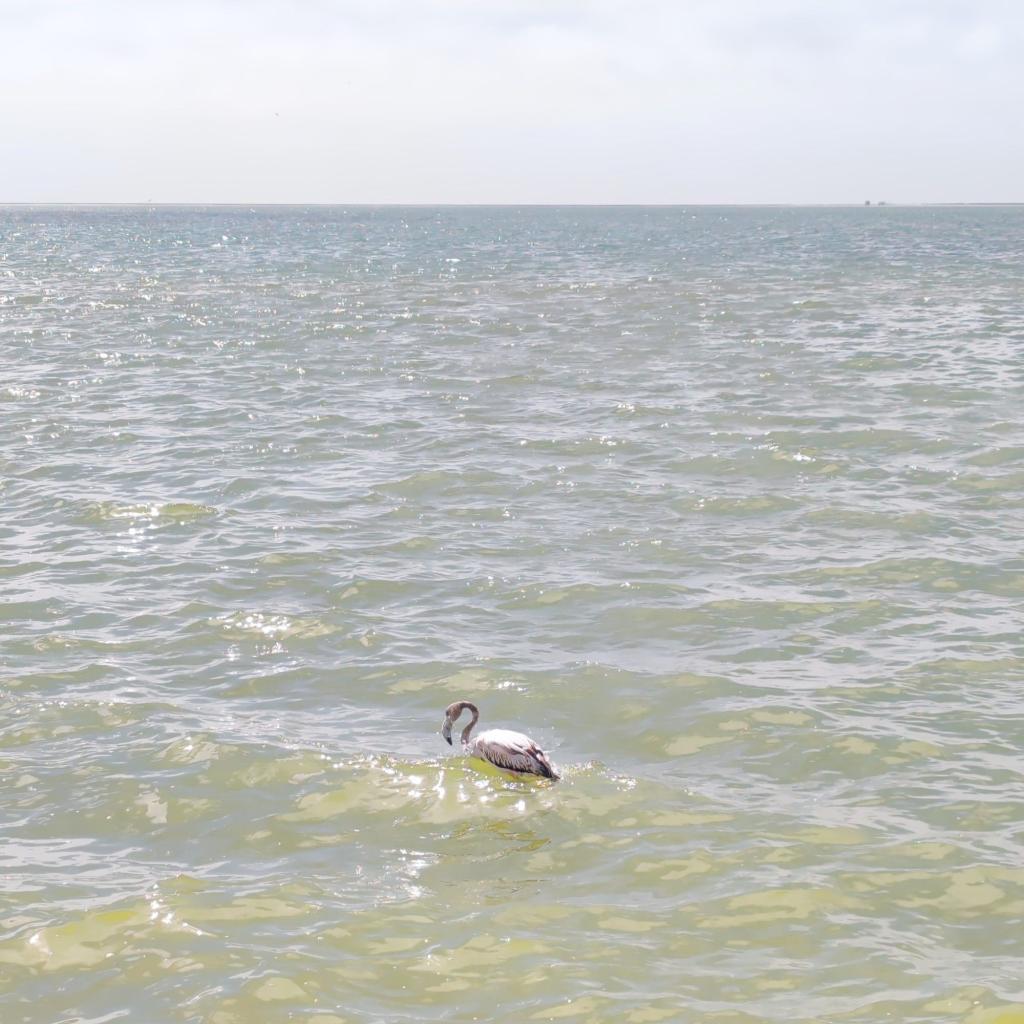
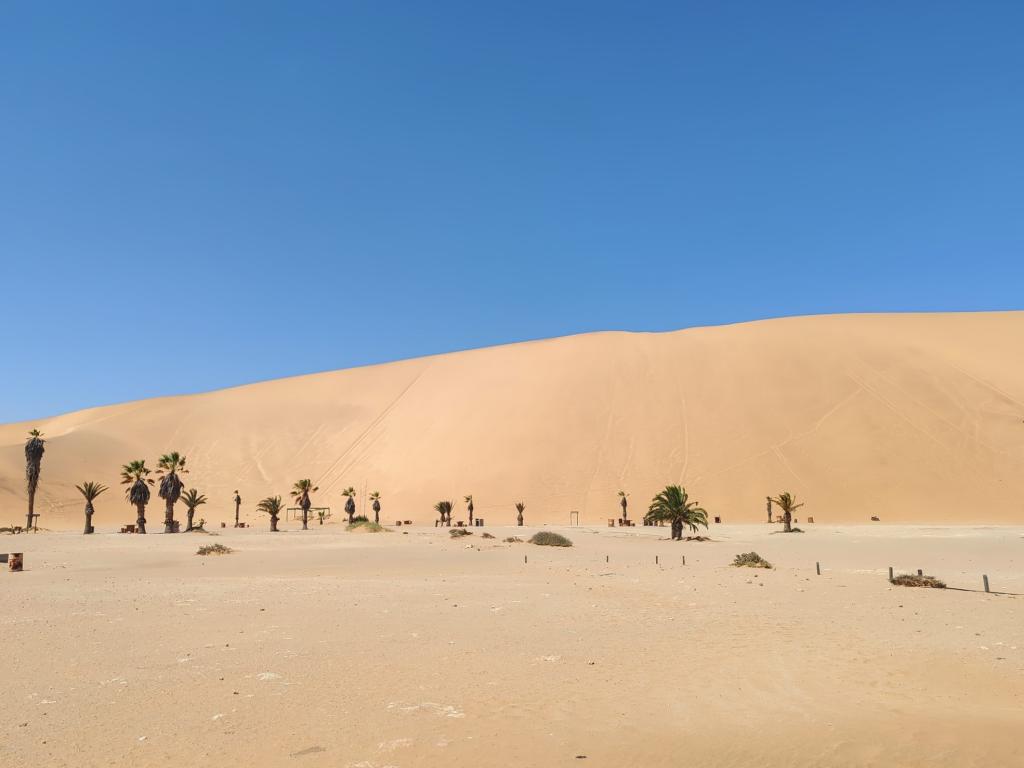
We followed the coast and the dunes from Swakopmund south to Walvis Bay, Namibia’s largest coastal town and port. We stayed in Walvis Bay for only one night, in a really nice, fairly large yet affordable apartment*. Despite the short time, we still managed to get to know the town a little by walking along the lagoon shore and taking an evening stroll, and we visited the nearby, popular Dune 7, which should not be confused with another, much taller Dune 7 located near Sossusvlei.
A bumpy journey to Namib-Naukluft National Park
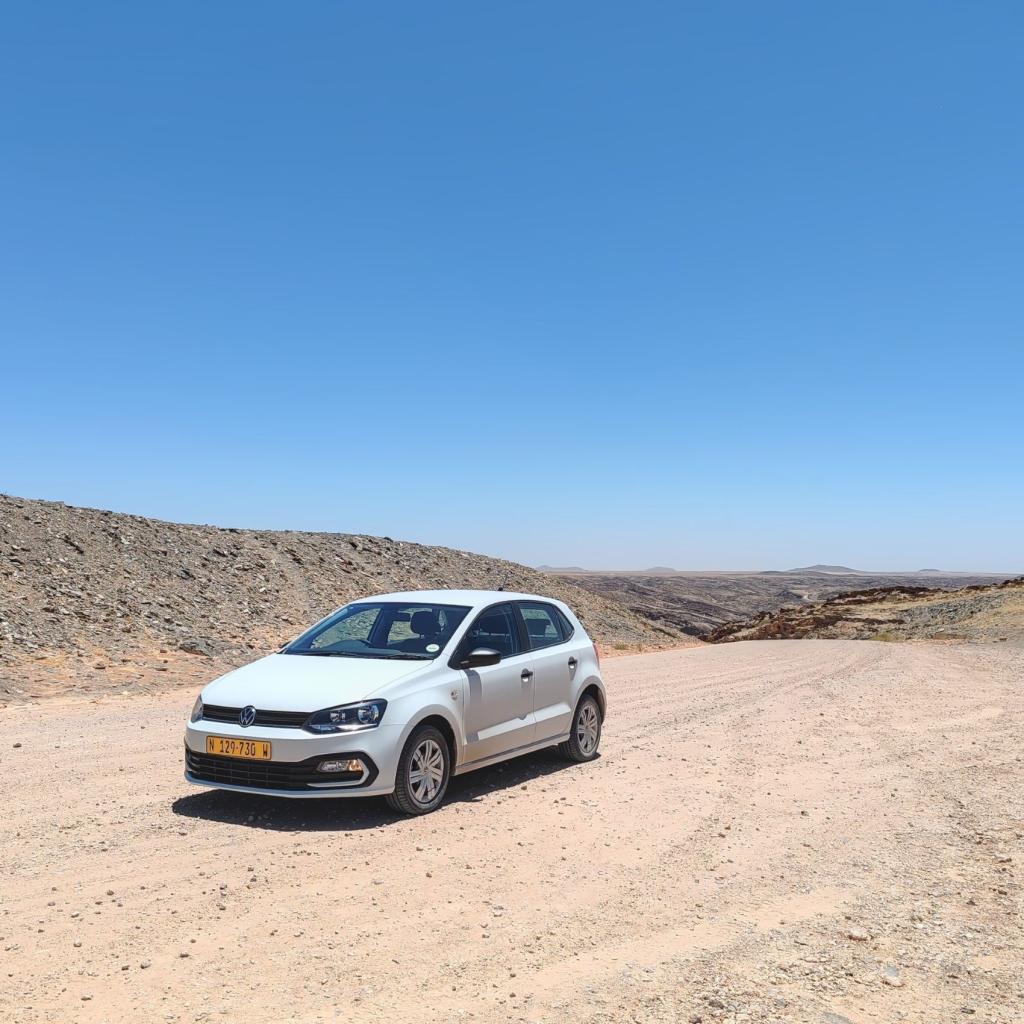
Having left the coast behind, we headed for Namib-Naukluft National Park to marvel at the Namib Desert’s most famous sand dunes and clay pans at Sossusvlei. The first stretch took us through dry landscapes, at first along a perfectly decent gravel road, which however became rather tricky to drive a little later. If we had known in advance that only the first part of the road leaving Walvis Bay and the road from Sesriem to Sossusvlei are paved, we would have considered renting a bigger car; as it was, we were getting around in a little VW Polo.
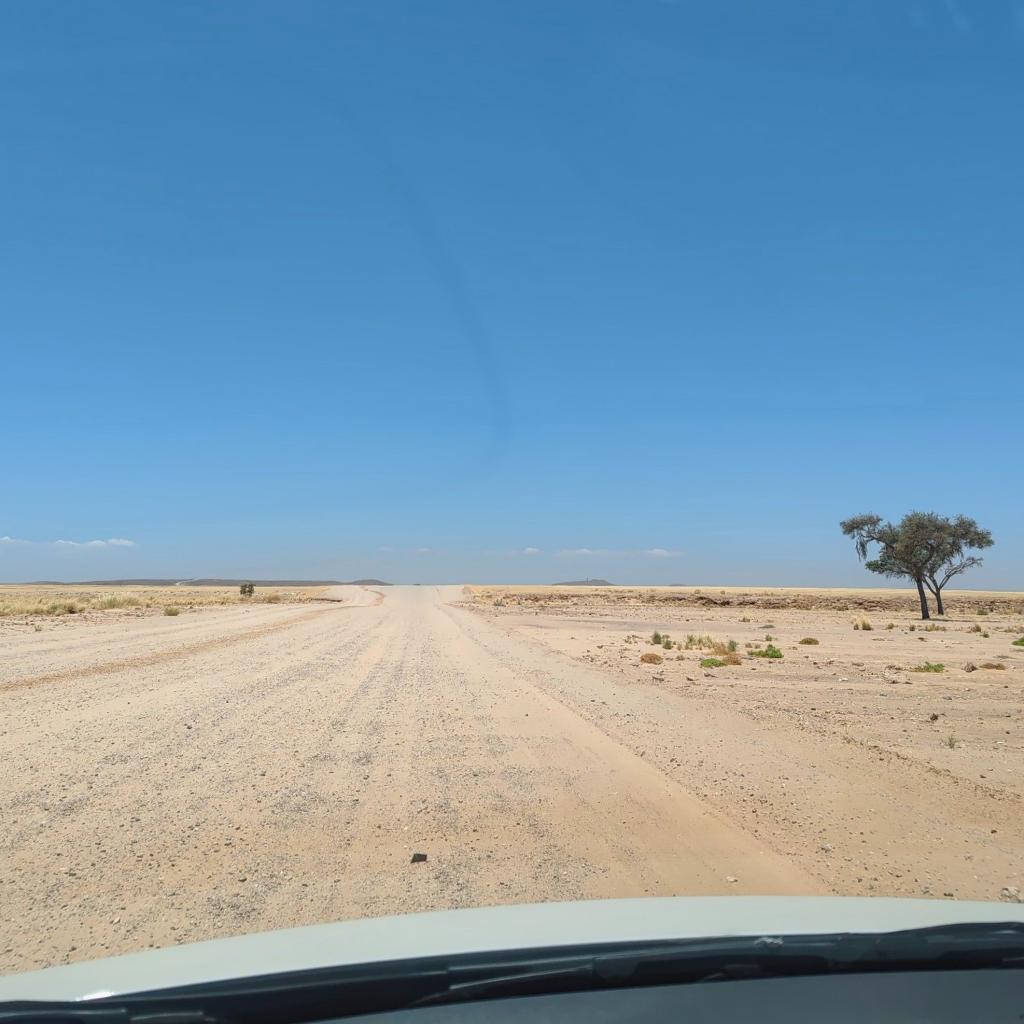
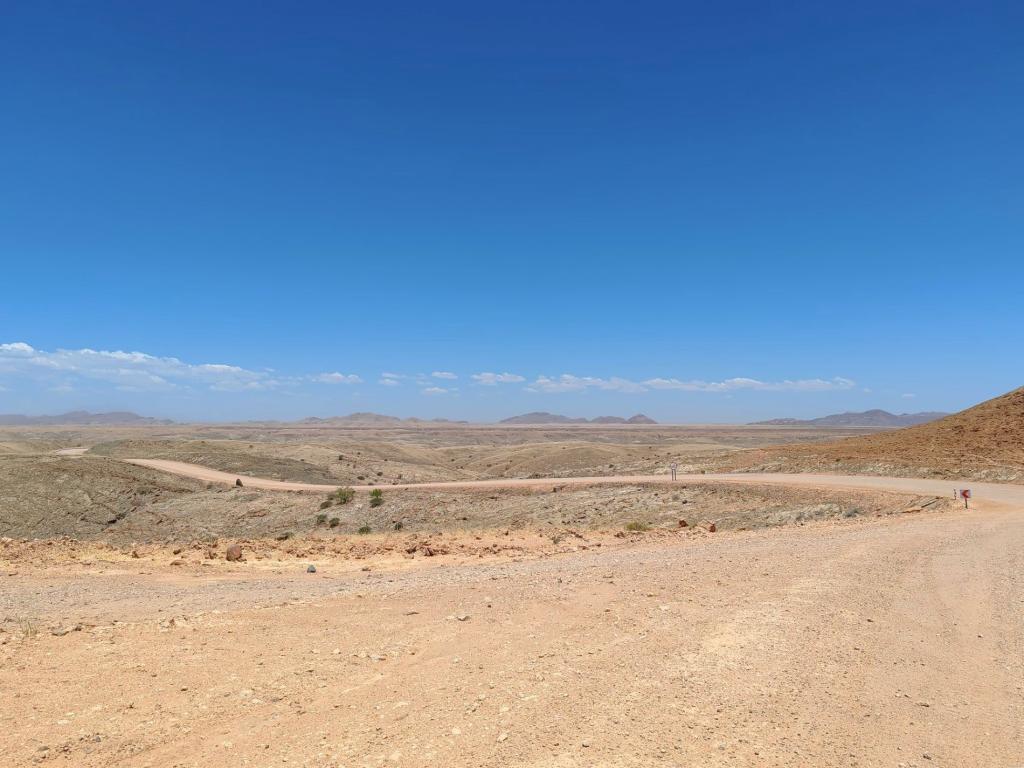
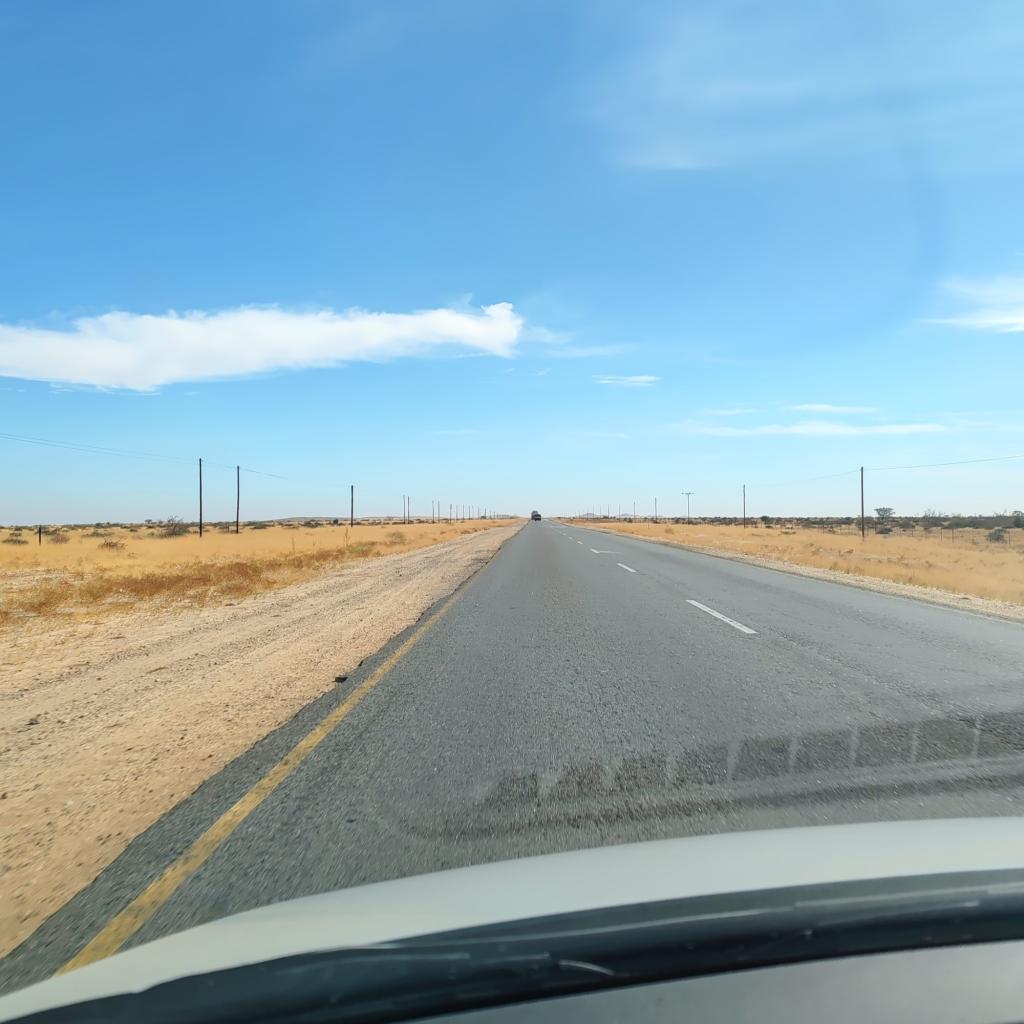
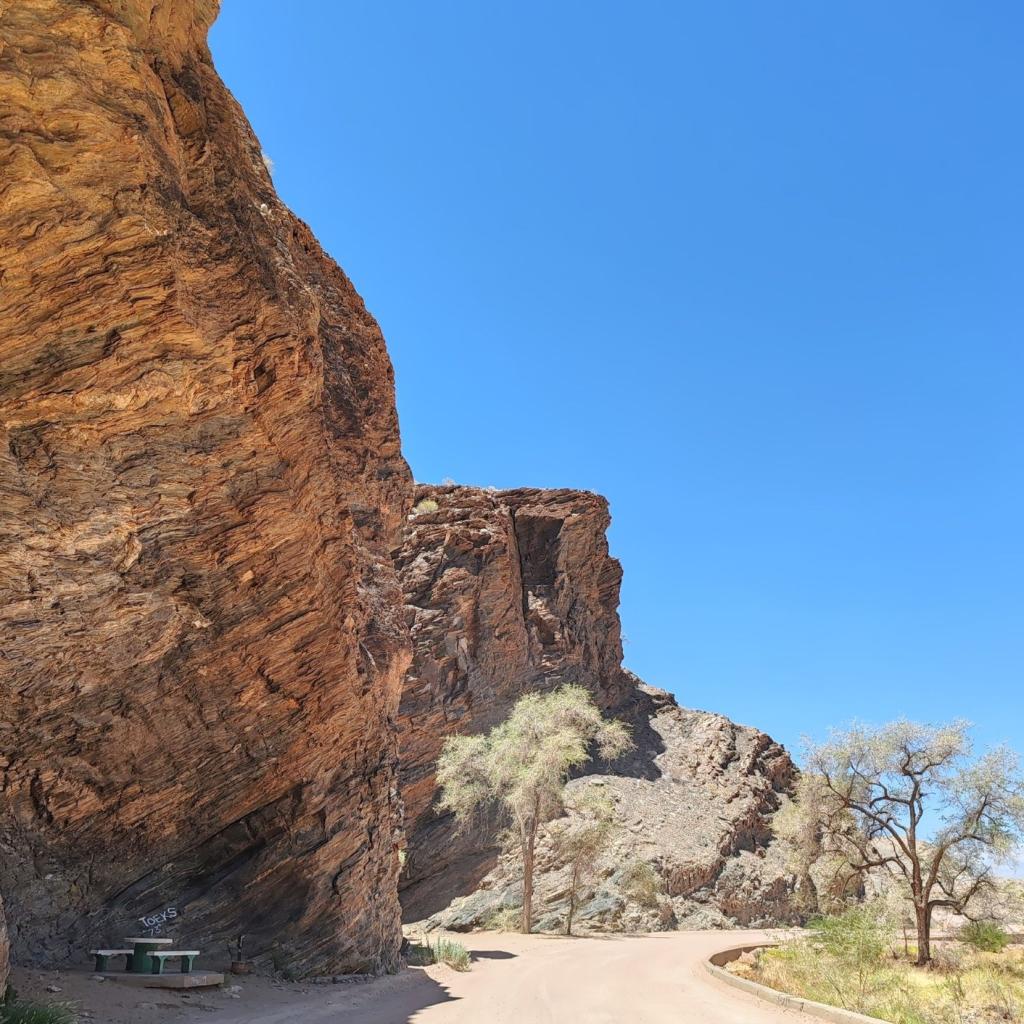
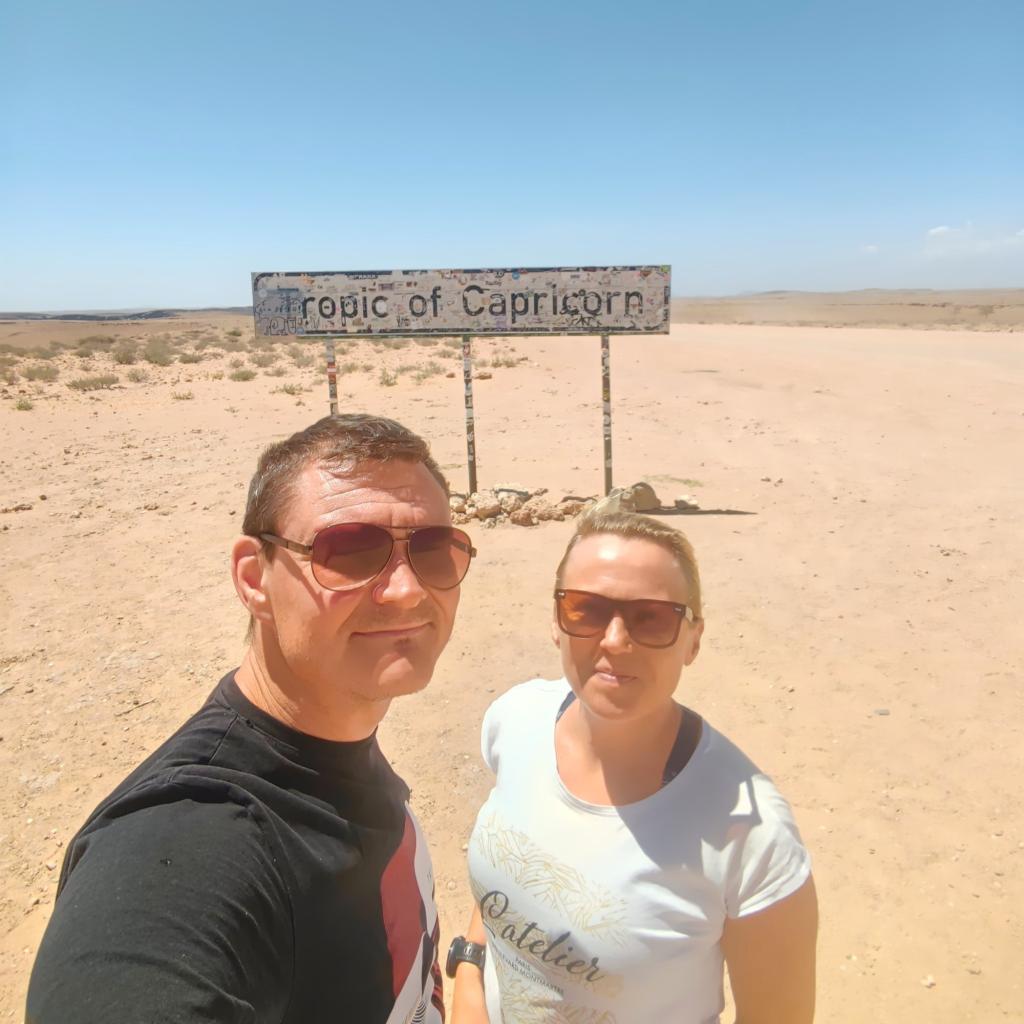
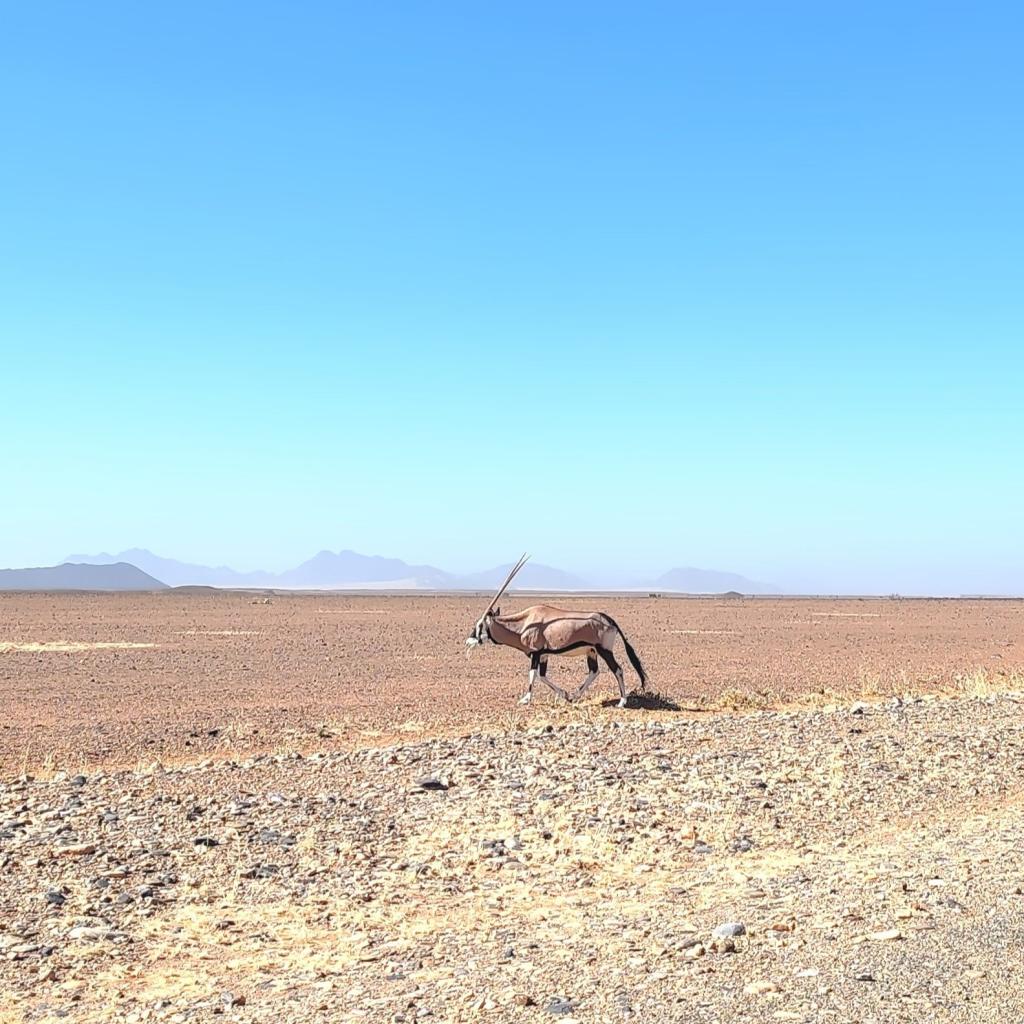
The journey from Walvis Bay to our accommodation near Solitaire was about 250 kilometres, but it took us hours. The scenery along this stretch is mostly endless, deserted plains: no towns, no roadside settlement of any kind, and no big sand dunes either. The landscapes are still fascinating, and the most memorable spots were the canyon scenery opening up near Oase and the popular photo spot, the Tropic of Capricorn sign. Among wildlife, we managed to spot a few gemsbok – this species has adapted well to the harsh, dry conditions of the desert.
Where to get travel insurance for a longer trip?
Over more than eight years of nomad life, we’ve searched for cost-effective and reliable solutions, especially for travelers’ health insurance.
In the article Nomad Travel Insurance: 3 +1 Easy Options, we present international insurance options suitable also for extended trips.
A tent camp under the starry sky
Finding cheap accommodation near the famous Sossusvlei was not that easy. The cheapest option would be to travel in a car with a rooftop tent, but on the other hand rental prices for those are quite steep. We ended up booking a kind of glamping tent outside the actual Namib-Naukluft National Park, even though it meant we wouldn’t get to the dune landscapes right at sunrise.
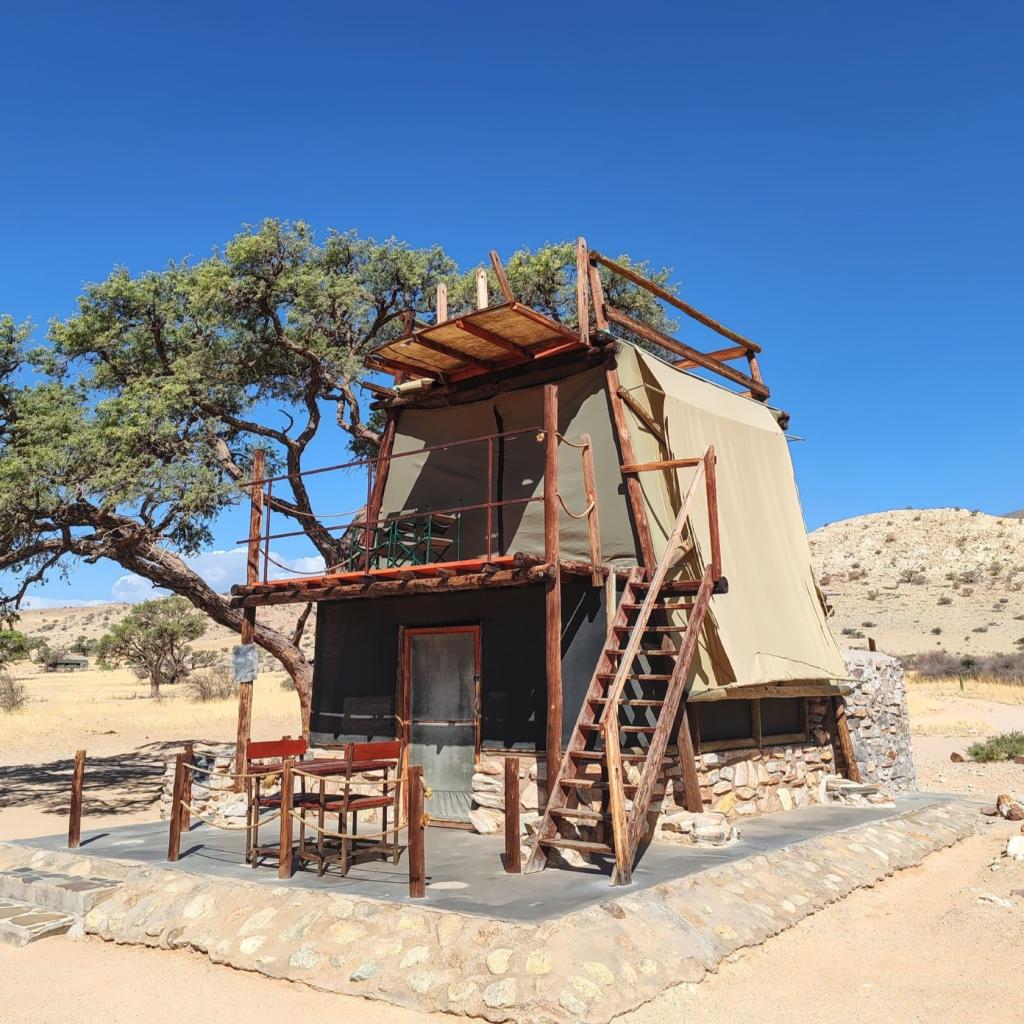
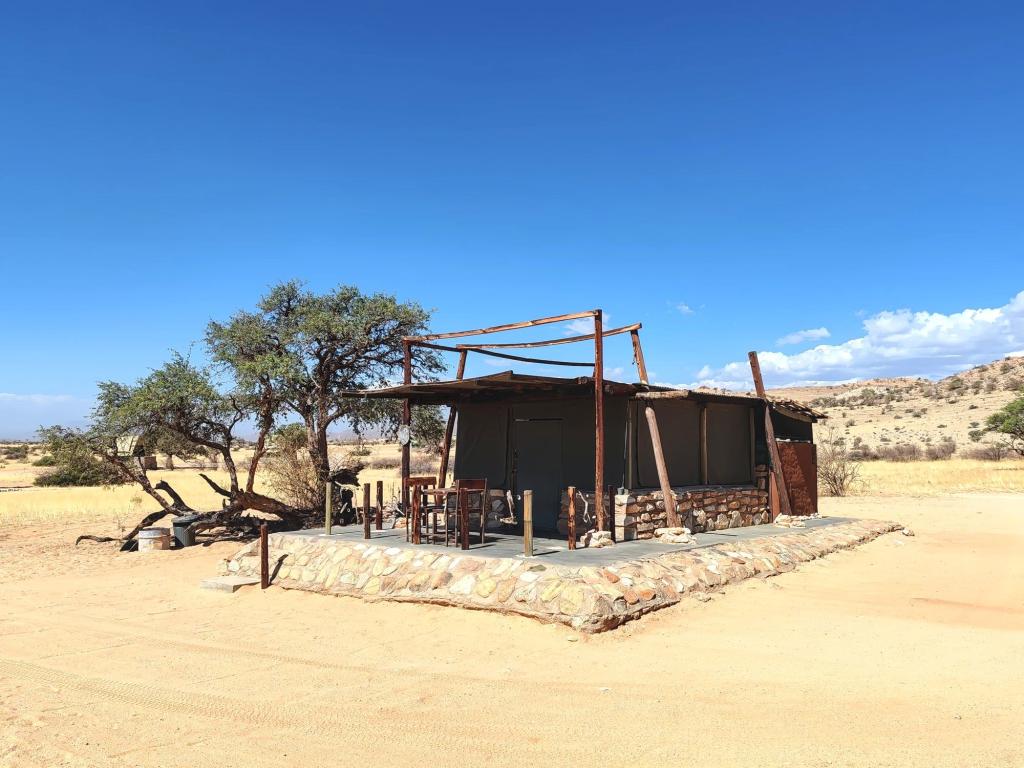
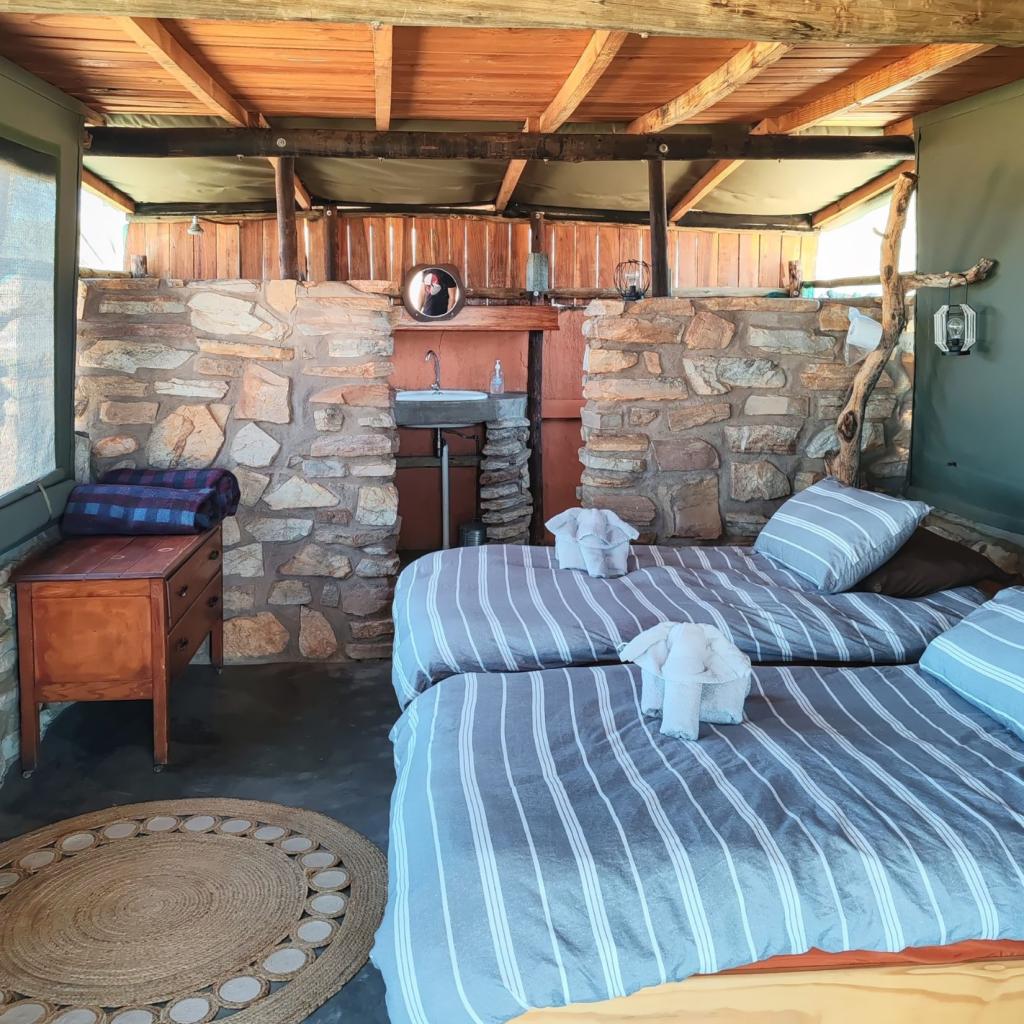
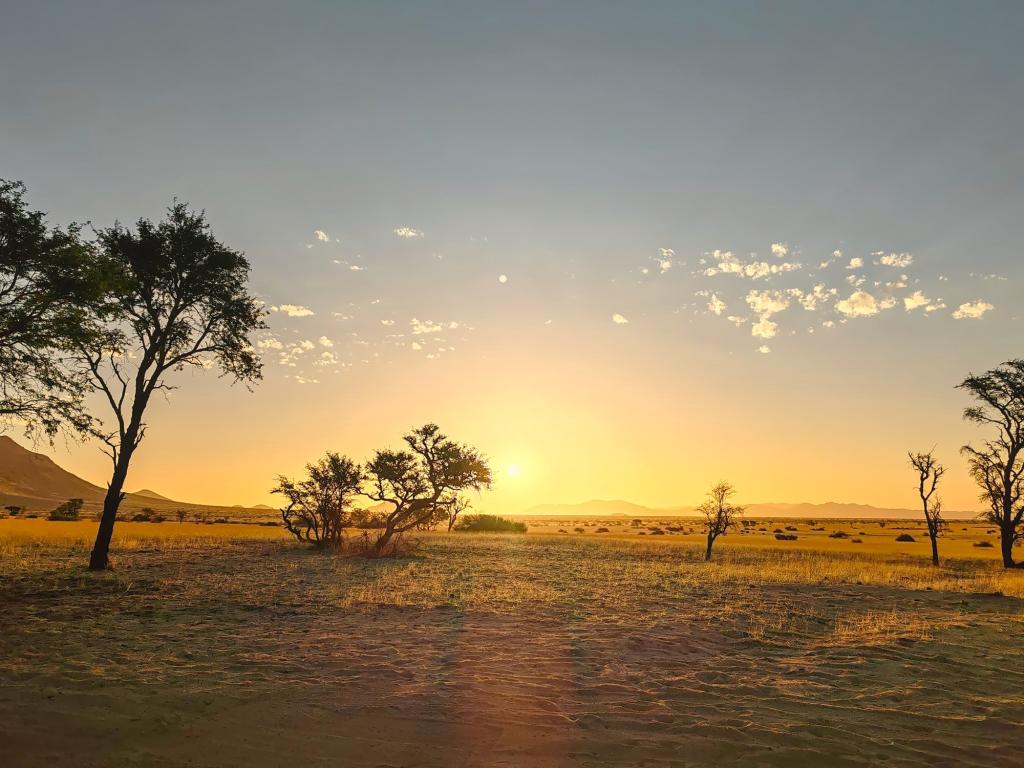
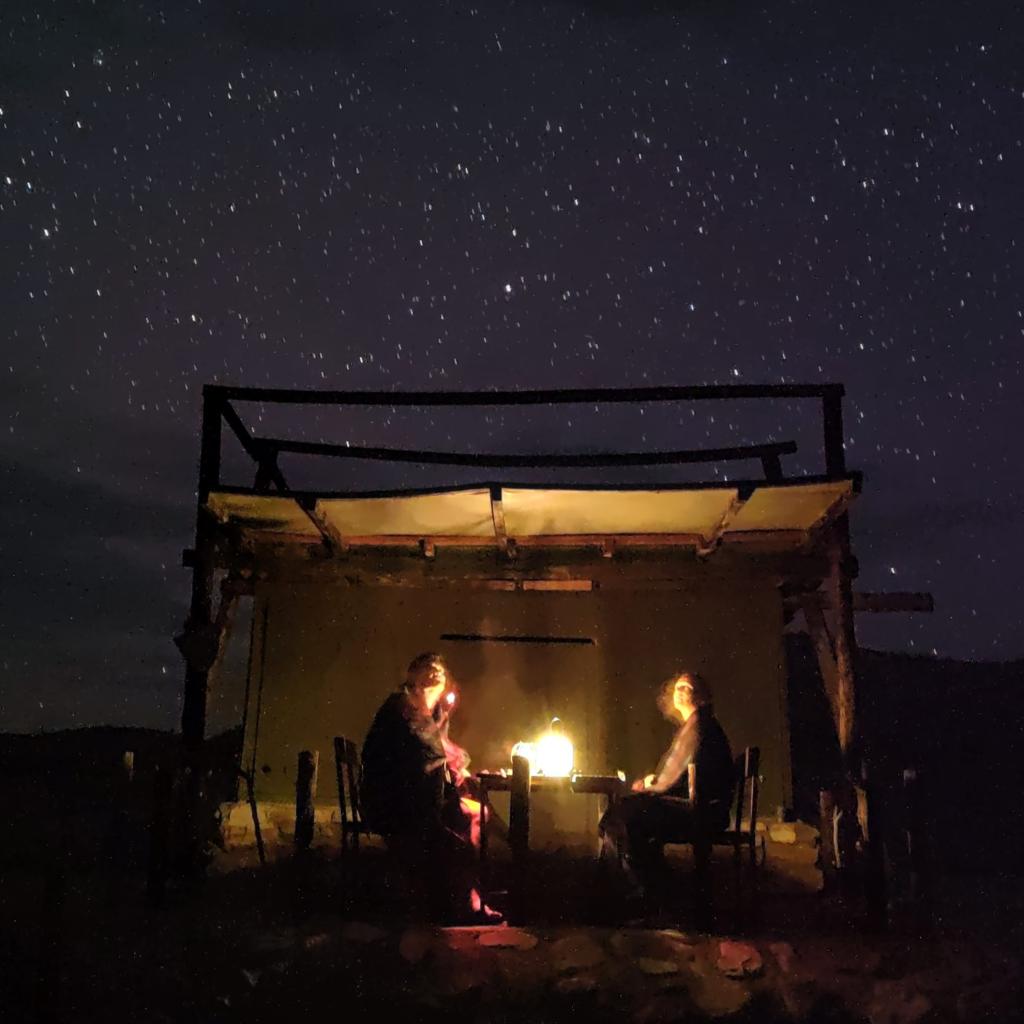
The choice fell on a camp called Camp Gecko, near the village of Solitaire, and I must say it turned out to be a great choice. Camp Gecko* is a peaceful campsite on a savannah surrounded by mountains, made up of sparsely placed tented cabins and spots for cars and tents. Our single-level cabin, which cost about 73 euros a night (booked directly through the camp’s own website the price would apparently have been about ten euros cheaper), had wonderful views over the savannah at sunset, a comfortable double bed, a bathroom and a barbecue area. There is no electricity in the cabins, but there were plenty of battery-powered lamps. By the reception there is a small shop where you can buy cold drinks, as well as a kind of fish pond that doubles as a swimming pool.
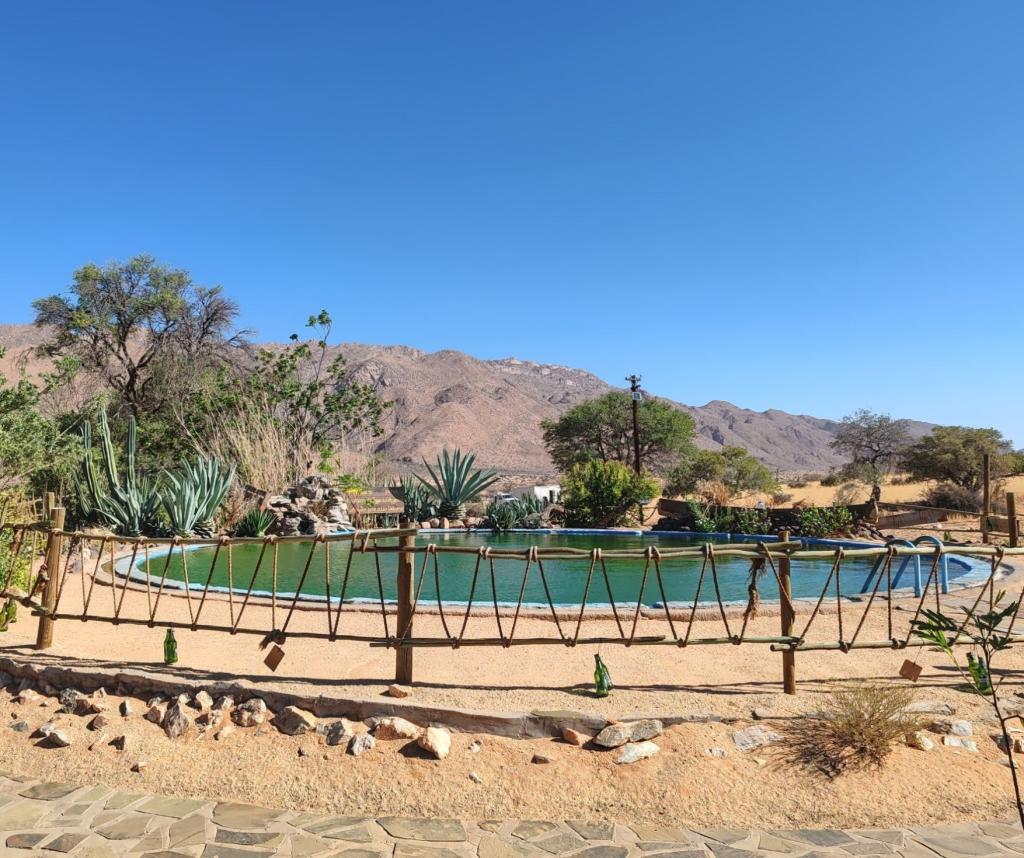
We first relaxed by the pool (in the desert, temperatures are quite different from the coast: it can be really hot during the day, but the nights are relatively cool), then grilled some food and admired the sunset. Later in the evening we lay outside wrapped in blankets, gazing at the starry sky.
A morning coffee stop in atmospheric Solitaire
To reach the national park and the dunes at least reasonably early, we set off around sunrise. Right at the start of the journey we spotted giraffes and antelopes by the roadside. For morning coffee we stopped at Solitaire, which is a rather peculiar place in the middle of nowhere.
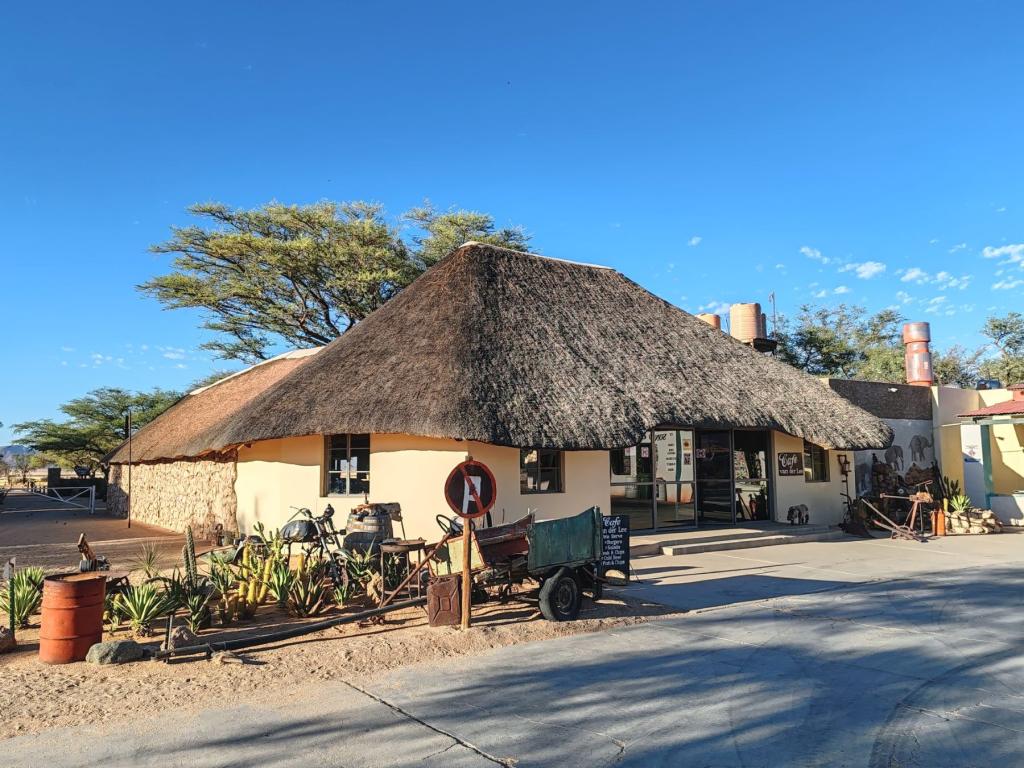
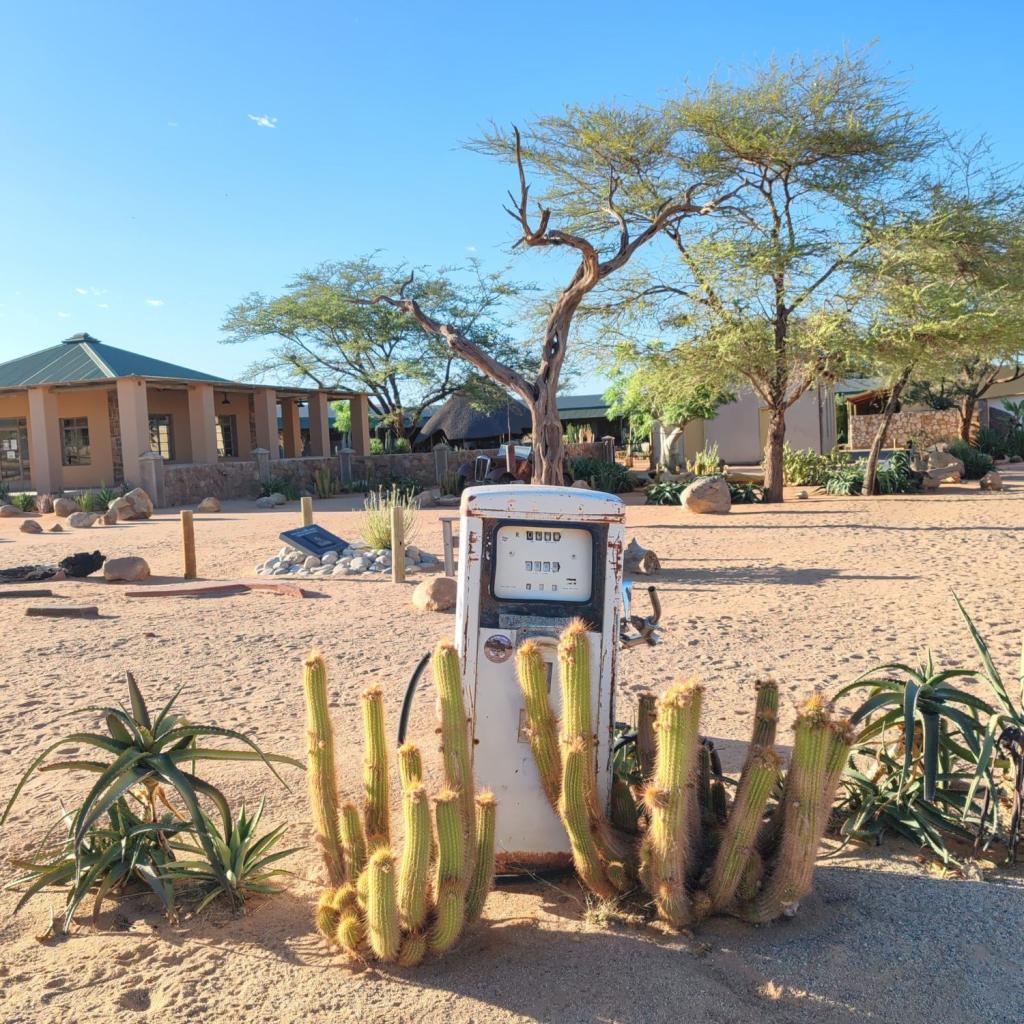
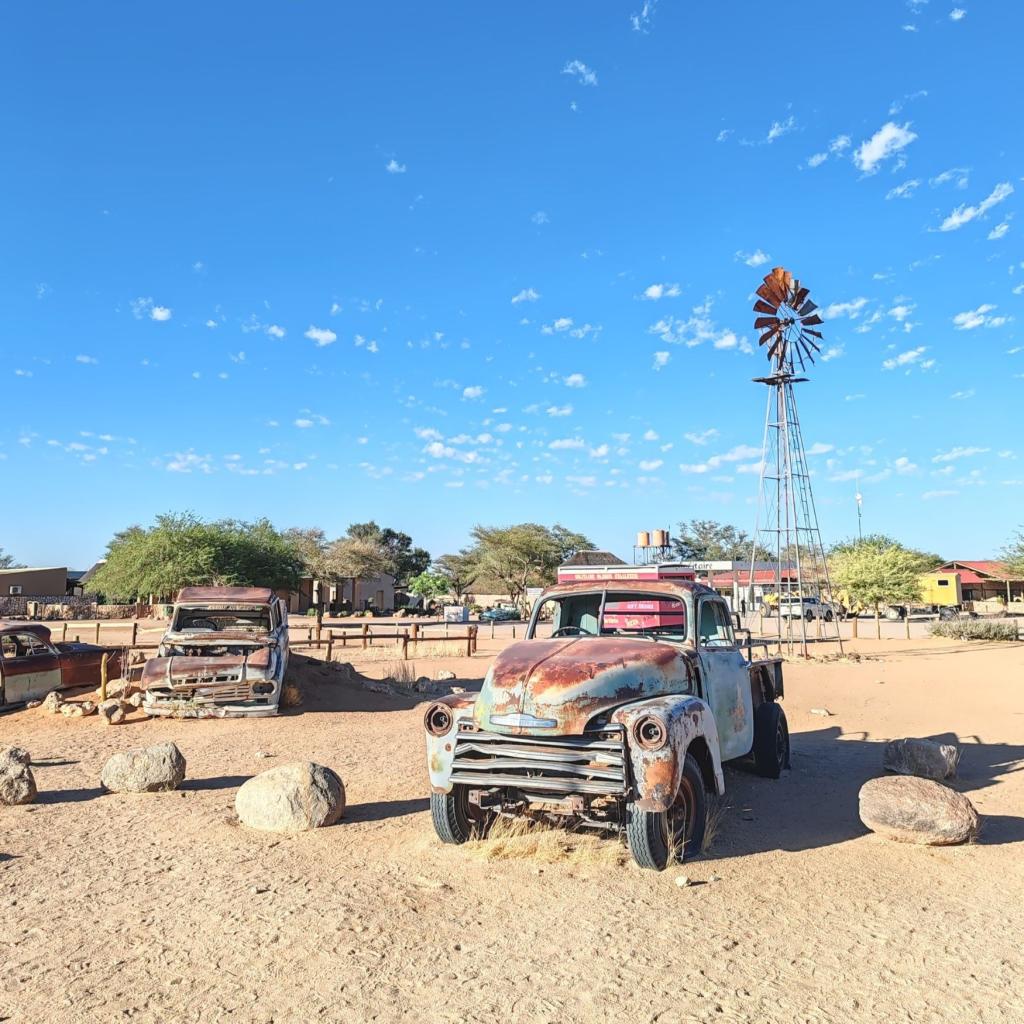
Solitaire is a small, remote hamlet on the road to Sossusvlei, next to Namib-Naukluft National Park. The key services in the place are a petrol station, a garage and a café (the coffee was excellent!), as well as a bakery and a chapel, and some accommodation is also available. The atmosphere of Solitaire is somehow special, timeless and “Wild West”, and the peculiarity is added to by old vehicles lying around everywhere – or rather their abandoned, rusty carcasses.
The Sossusvlei dunes and the famous dead trees of Deadvlei
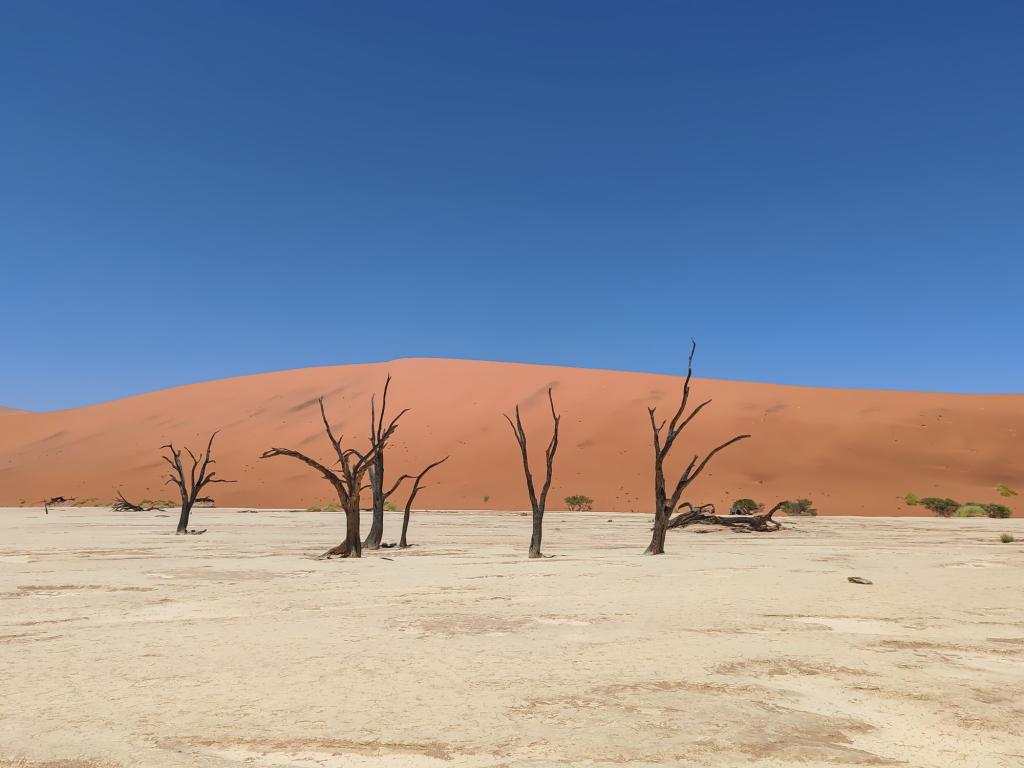
The most photographed sight in the Sossusvlei area – and probably in the whole Namib Desert – is the magnificent, surreal-looking white clay pan of Deadvlei, surrounded by tall reddish sand dunes and dotted with dry, skeletal trees.
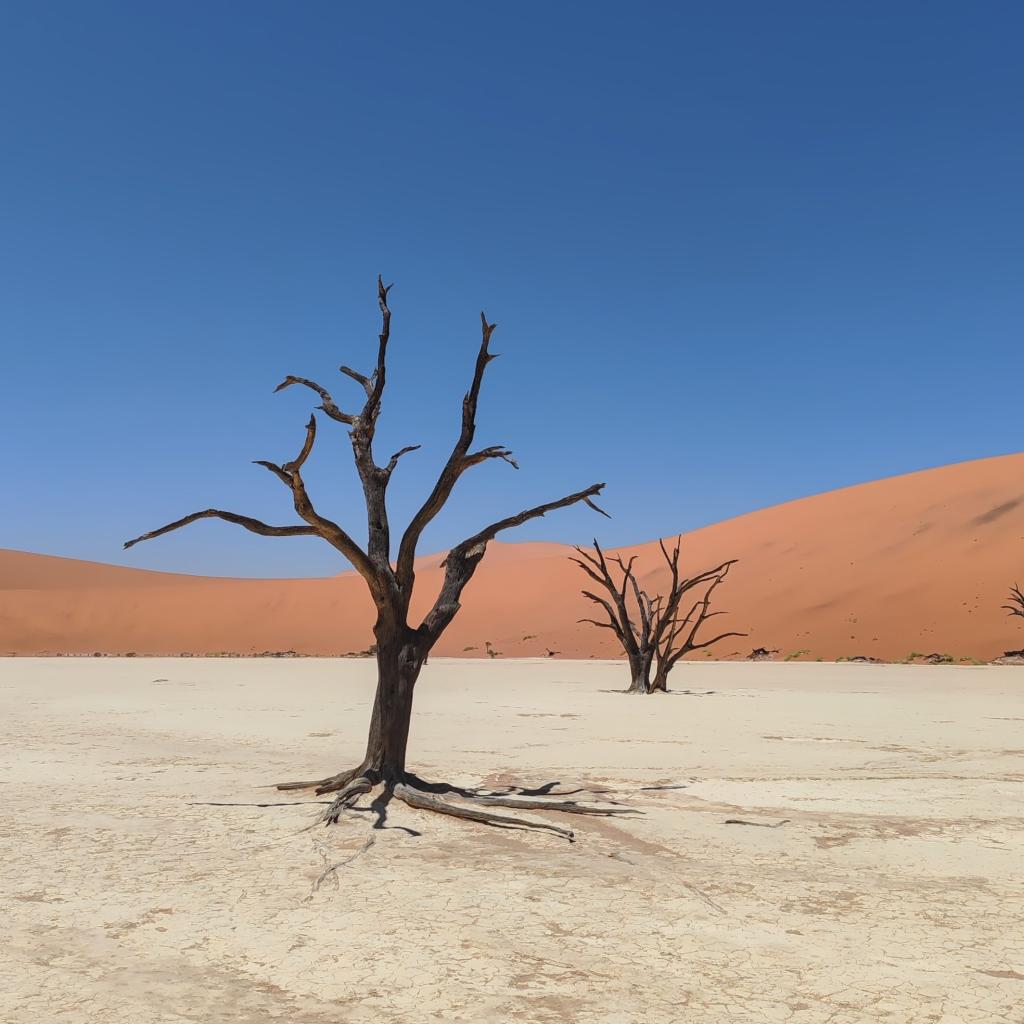
Visiting Deadvlei was the highlight of our road trip too. We had seen a lot of pictures of this unique place, but no photos or videos quite manage to convey its atmosphere and uniqueness.
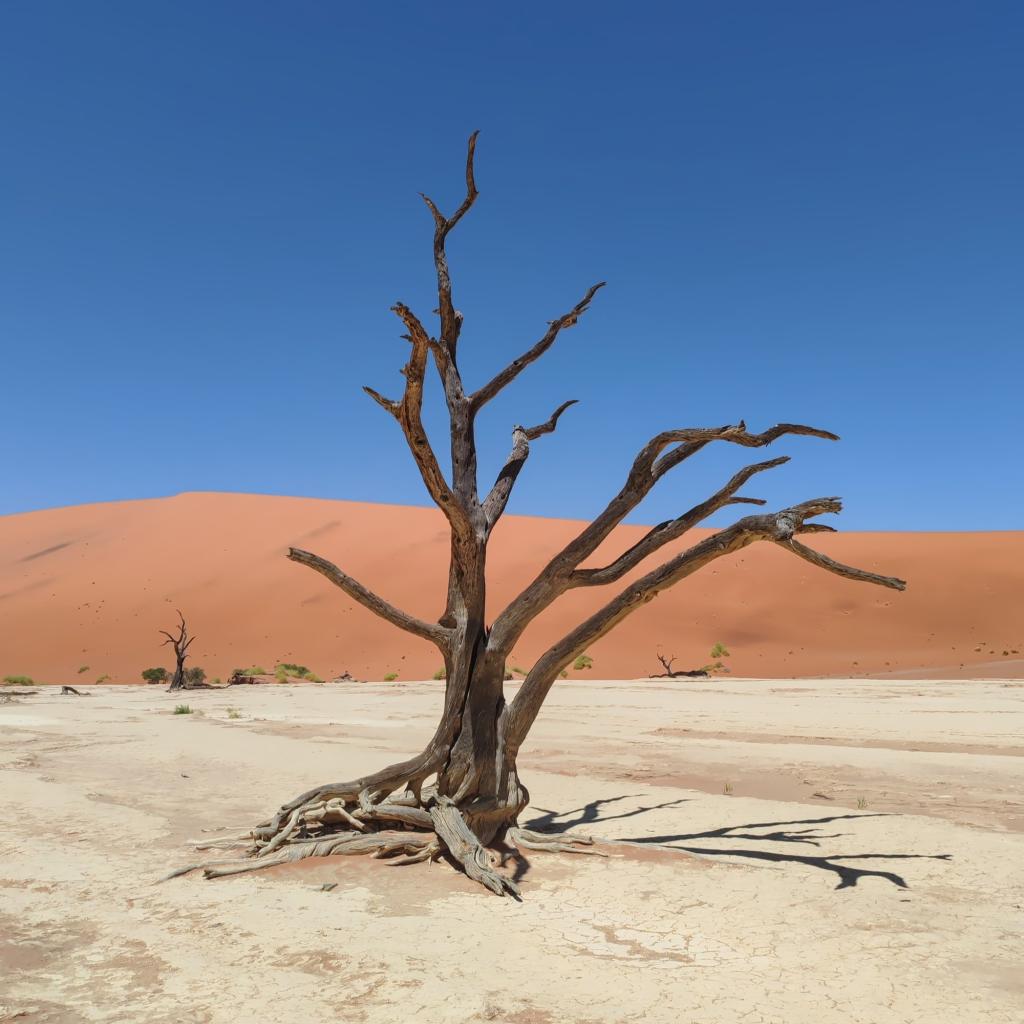
The Sossusvlei area of the Namib Desert is known for its beautiful sand dunes, over 300 metres high, which are said to be among the tallest in the world. The area’s dunes and dry white clay pans are the most popular attraction in Namib-Naukluft National Park.
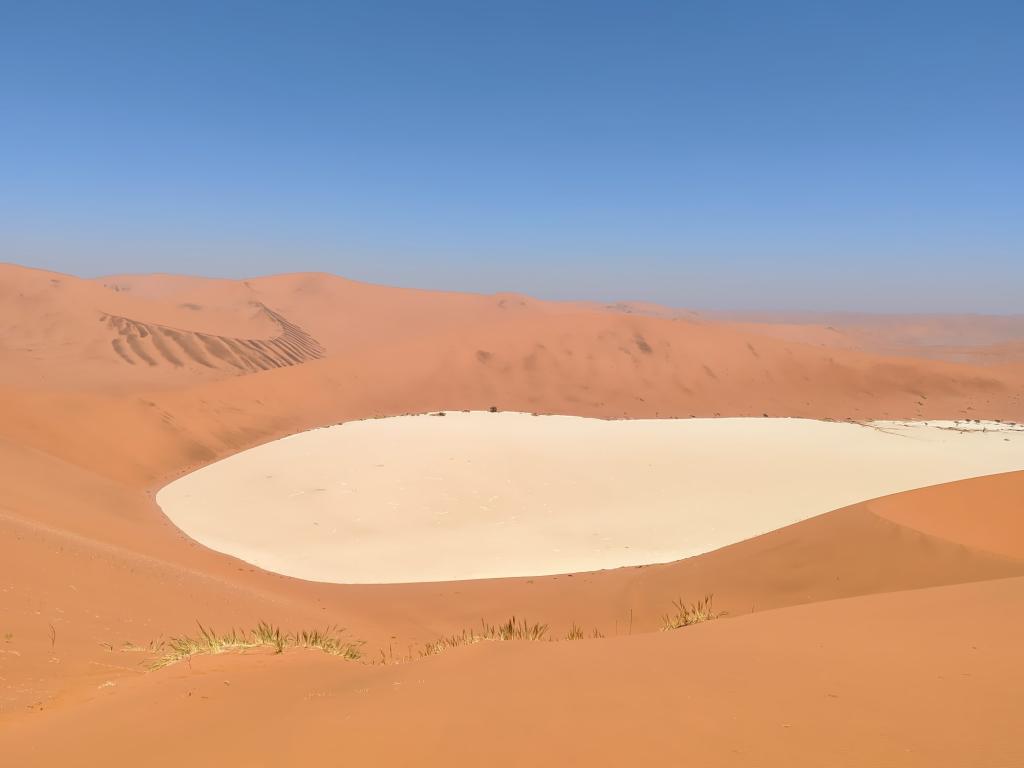
Deadvlei’s clay pan was formed when the Tsauchab River flooded and created temporary pools, which allowed camel thorn trees, a kind of acacia, to grow. When a long dry period then arrived, about 900 years ago, the pan dried out and sand dunes cut the area off from the river. The trees died, but because of the heat they did not rot; instead they dried into impressive, black skeletons.
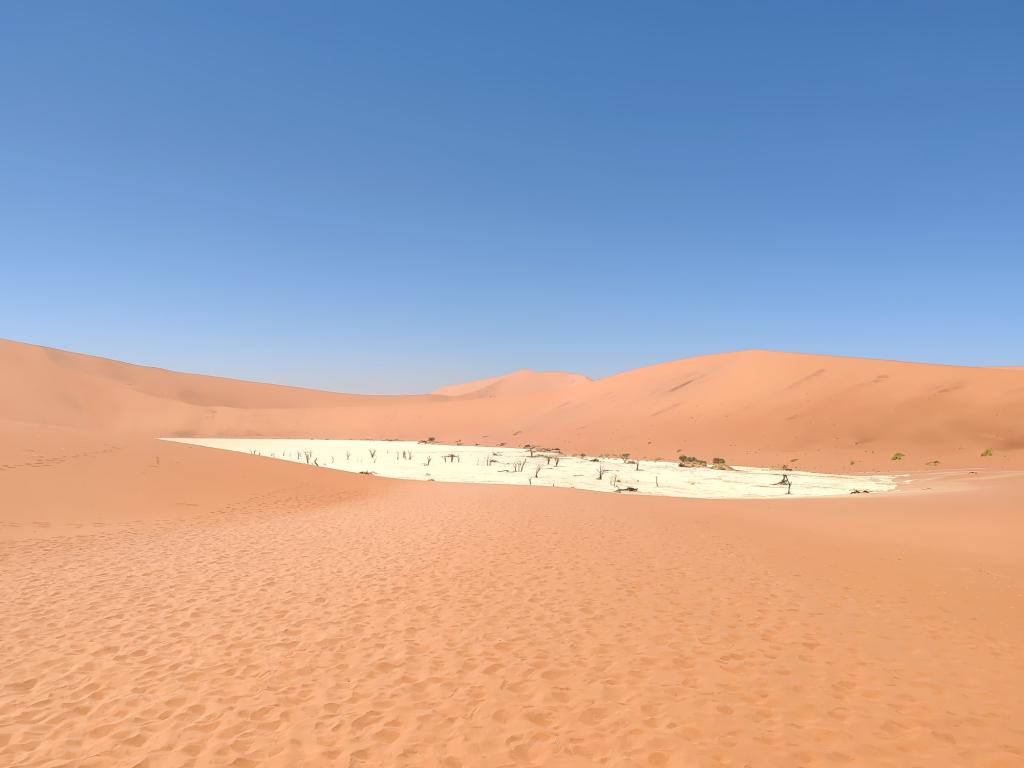
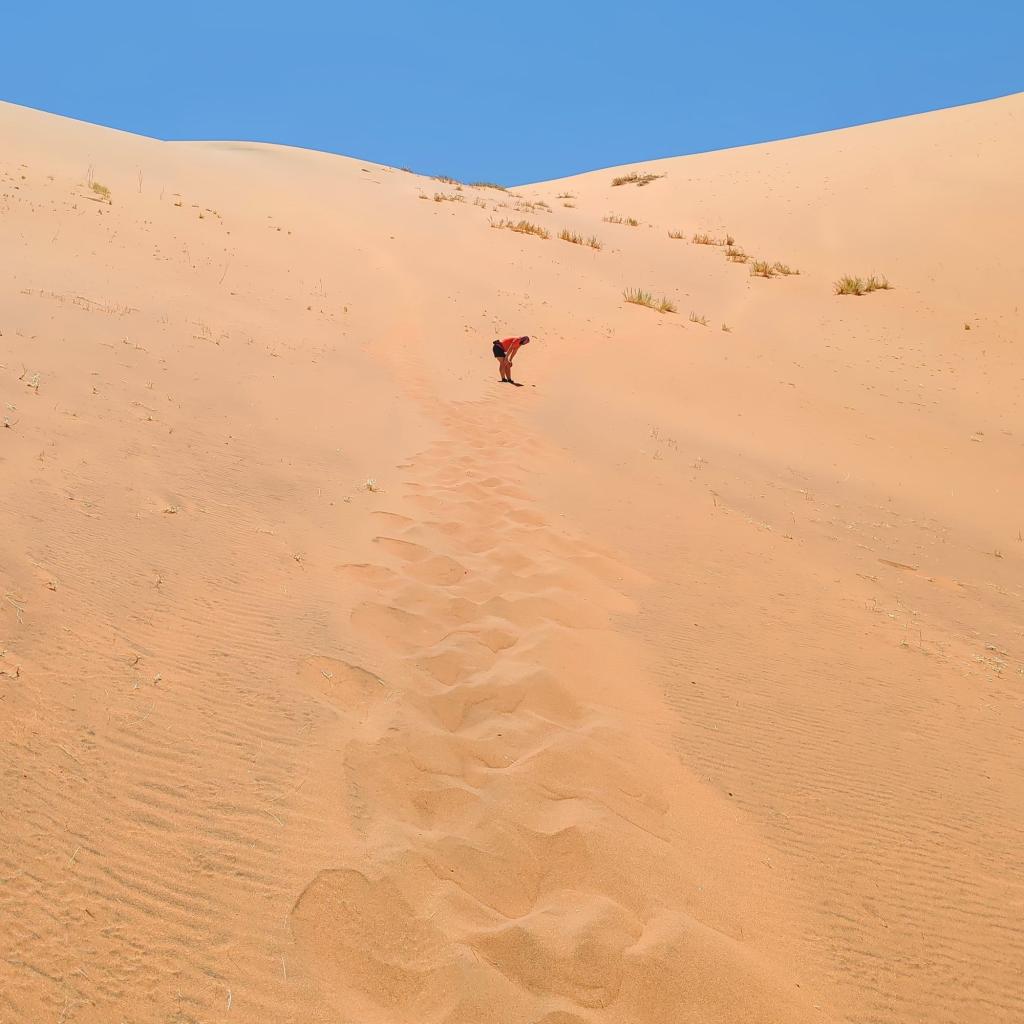
Right next to Deadvlei’s dry clay pan rise several impressive dunes, the tallest of which is called Big Daddy. Climbing to the top of Big Daddy is an important part of a visit to Sossusvlei for many, and we too set off up the ridge leading to the dune’s summit. One important tip here: if you plan to climb, set off early. We, after all, walked across Deadvlei in the scorching midday heat, with the temperature approaching 40 degrees. Perhaps the worst time, but on the other hand, there were hardly any other visitors around.
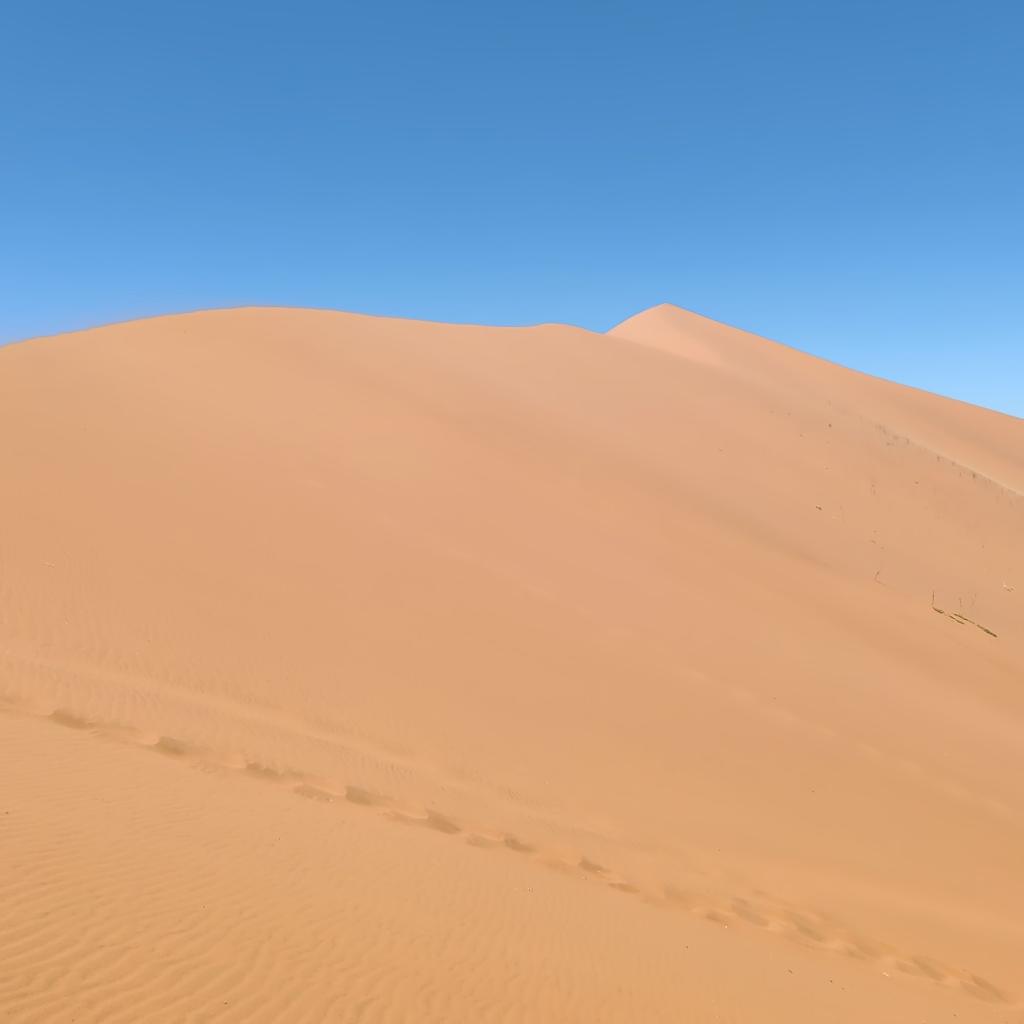
The climb in the burning hot sand was steep and sweaty; we were close to turning back, as the whole thing began to feel not only terribly strenuous but also a bit dangerous, but we finally made it to the top of the ridge. And I’d say it was worth the effort, because the views over the dunes and plains were stunning! From the ridge we descended at a half-run down the other side and walked back to the car park across the dry plains.
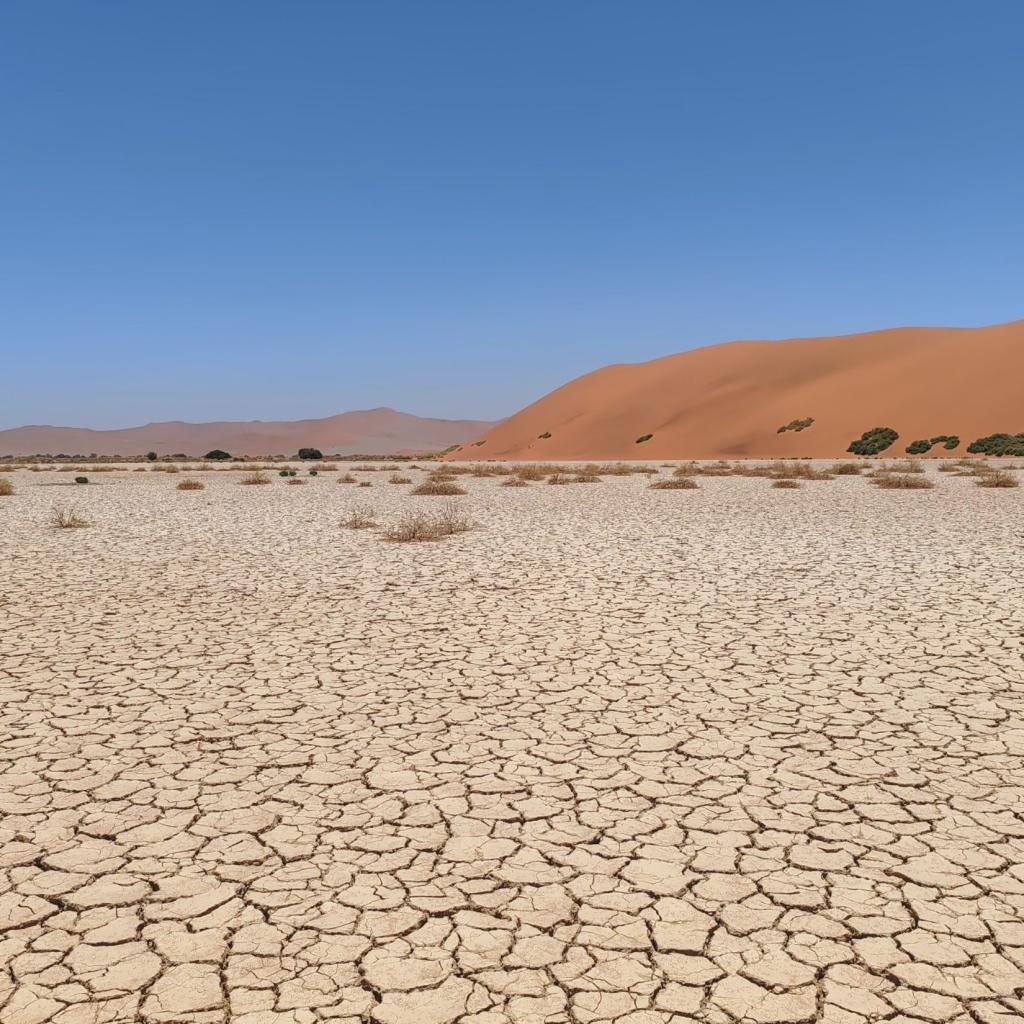
Sossusvlei and Deadvlei can be explored independently, after first checking in at the national park gates at Sesriem. The entrance fee in January 2026 was about 7.5 euros per person and 2.5 euros per car. From the gate to the car park it is about 60 kilometres of asphalt road. The first of the car parks is for non-4×4 vehicles, and from there you can buy a shuttle bus ride along a really sandy road to the second car park, closer to Deadvlei. We skipped the bus trip, which cost 9 euros (return), and decided to walk – in the extreme temperatures a walk of a good 8 kilometres including a dune crossing was perhaps a slightly crazy decision, but on the other hand we got to go our own way, and we also saw a wonderful gemsbok again right up close.
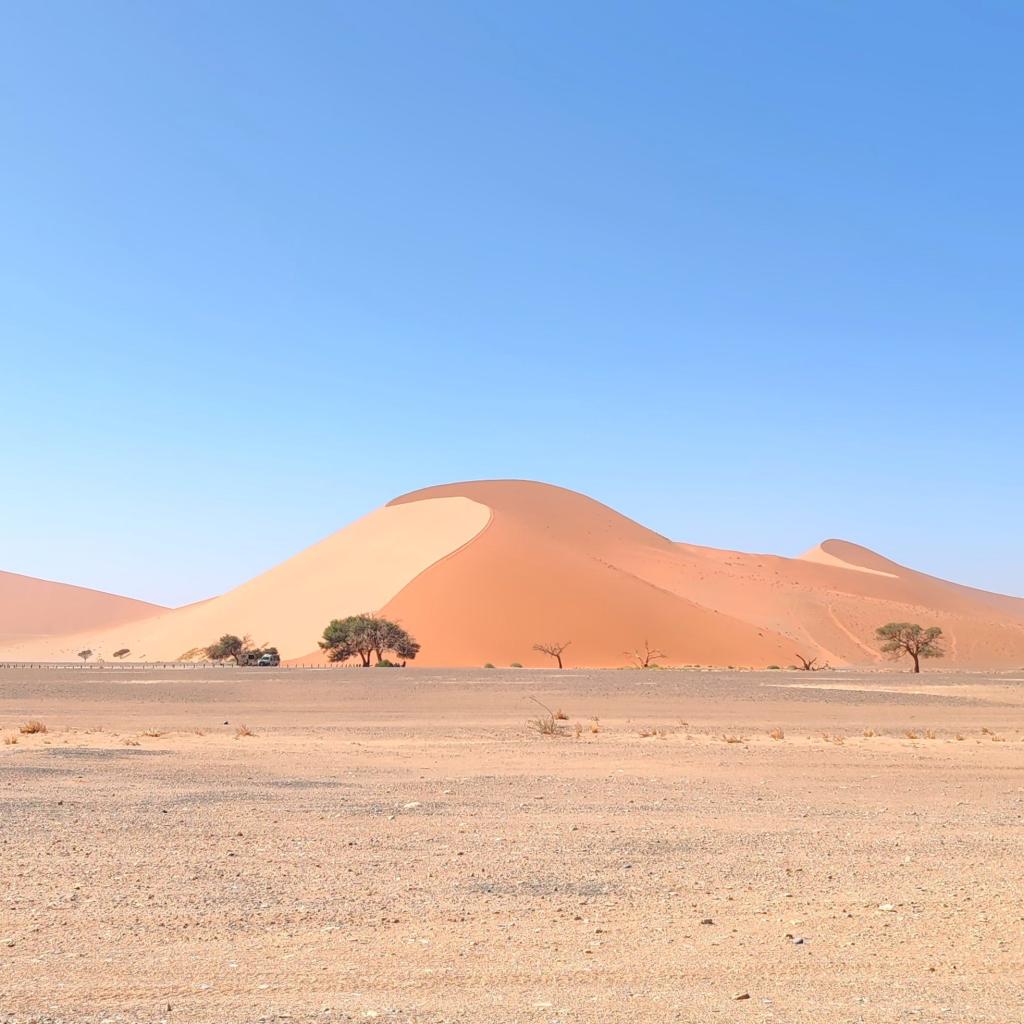
On the way back to Sesriem and the park gates we stopped once more to admire the famous Dune 45, a beautifully shaped sand dune that is said to be especially spectacular in the light of morning or sunset. This dune too is a popular climbing spot, especially very early in the morning.
Back to Windhoek via Maltahöhe
In Sesriem we returned to the bumpy gravel roads and rattled out of the desert to the small town of Maltahöhe, where we had booked accommodation for one night. Unfortunately we didn’t really have the time, or the energy, to visit Sesriem Canyon, which lies inside the national park gates and where you can hike between steep walls. There isn’t really much to say about Maltahöhe – a dusty little town with a really nice guesthouse*. A shower after all that desert sand felt amazing, and the accommodation also had a kitchen where we cooked dinner from the local shop’s offerings. After Sossusvlei we clearly had a bit of sightseeing / scenery overload, and not a single photo of Maltahöhe ended up on the camera.
Renting a car in Namibia
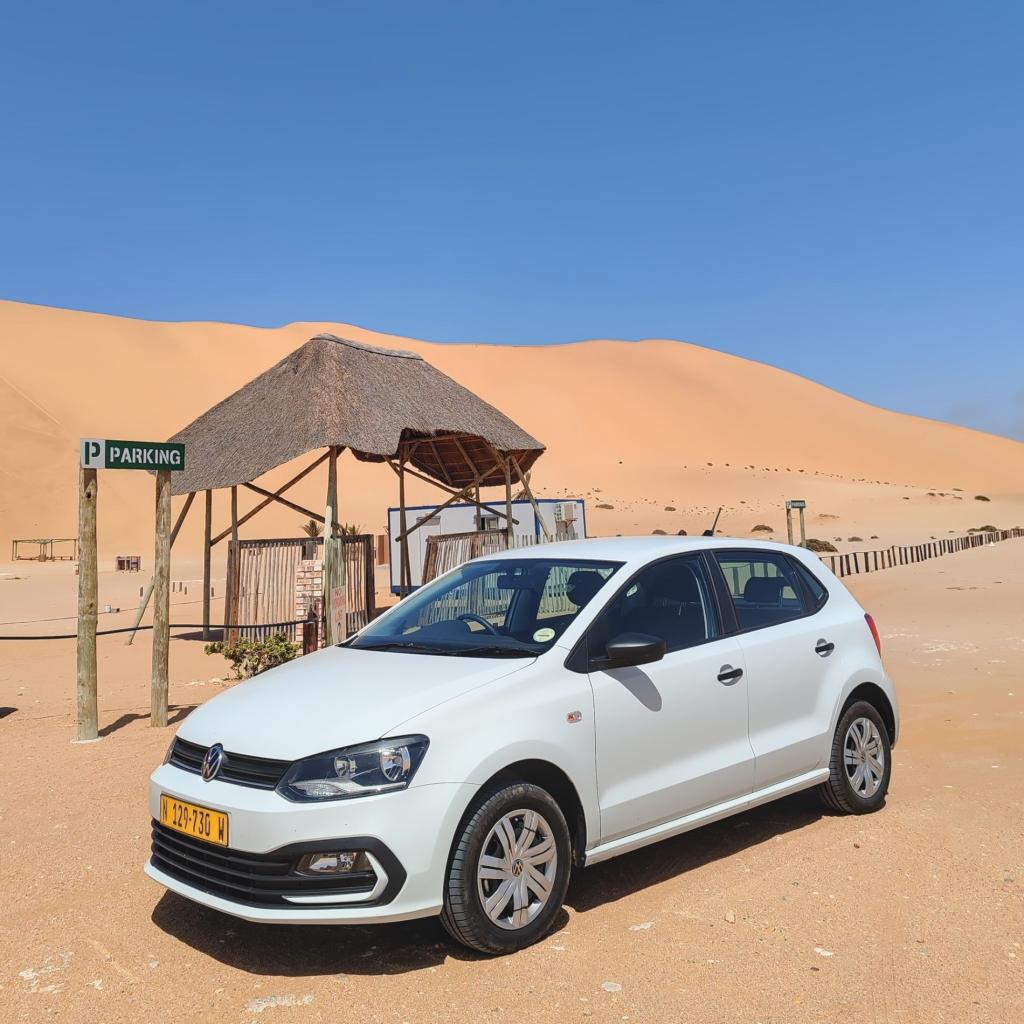
Renting a car in Namibia is easy and common. Prices are expensive compared with South Africa, and they vary a lot depending on the size and equipment of the car. We rented our car in Windhoek, which has numerous rental companies to choose from, and there are some in places such as Swakopmund and Walvis Bay too. After comparing prices we ended up with Sixt, where we got a Volkswagen Polo Vivo for five days for 161 euros (without any extra insurance). But as said, if you’re heading to somewhere like Sossusvlei, then because of the poorly maintained, bone-shaking gravel roads that often cause punctures, you should seriously consider a bigger, off-road-capable car, and perhaps four-wheel drive too.
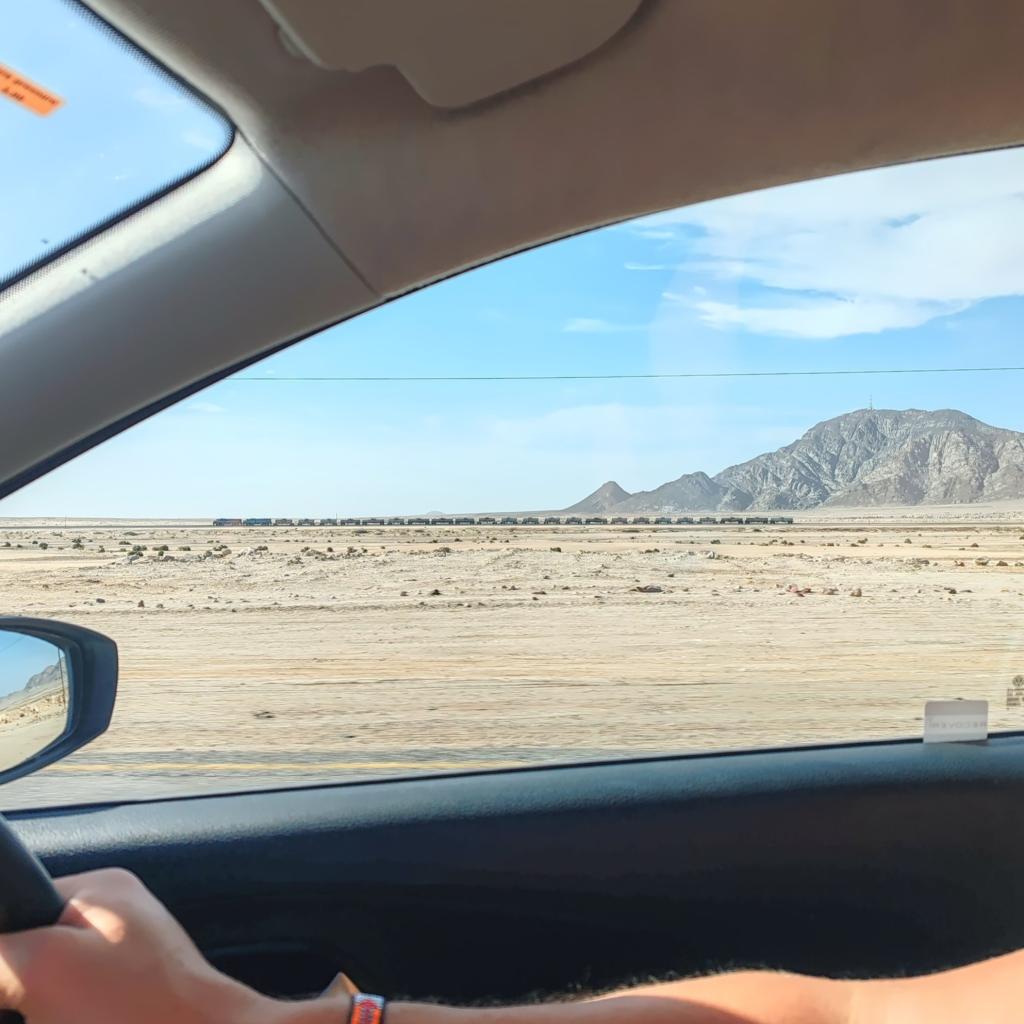
Driving in Namibia is quite relaxed, although you do of course have to remember that traffic drives on the left. There is little traffic; even in Windhoek there are no major traffic jams. It makes sense to avoid driving in the dark and at dusk, when wildlife is on the move far more than during the day. Fuel prices in Namibia have also fluctuated a bit lately, but in September 2026 the price of diesel appears to be about 1.50 euros per litre, which is quite moderate compared with prices in Europe and especially in Finland.
In the next post we continue with the Namibia theme, with an unforgettable dog-sitting assignment in the capital Windhoek and its surroundings.
Where to get travel insurance for a longer trip?
Over more than eight years of nomad life, we’ve searched for cost-effective and reliable solutions, especially for travelers’ health insurance.
In the article Nomad Travel Insurance: 3 +1 Easy Options, we present international insurance options suitable also for extended trips.
Namibia’s vast, open landscapes are best explored at your own pace – just pick a sturdy car, get an early start on the dunes and keep an eye out for wildlife at dusk. Safe travels!