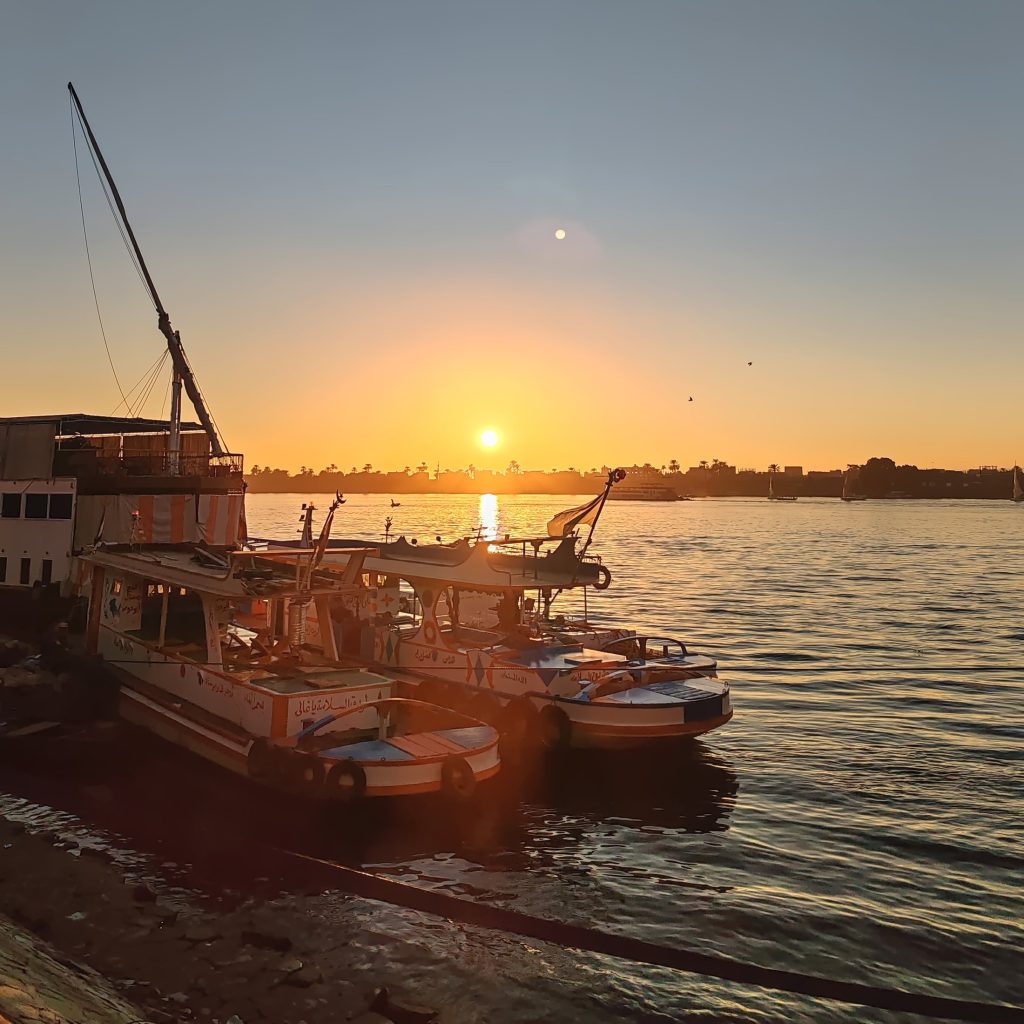
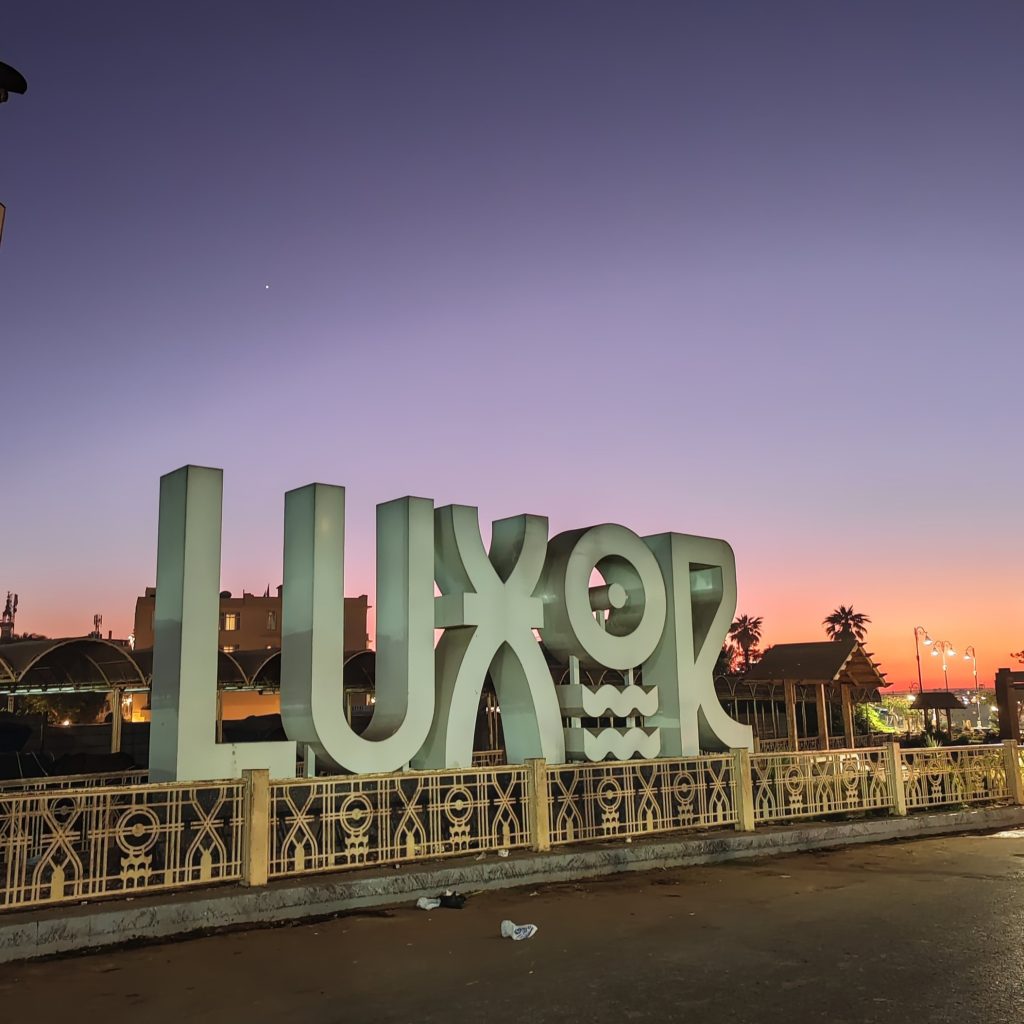
Our trip in Egypt in November 2024 continued from Giza and Cairo further south along the Nile to Luxor, and from there on to Hurghada, best known for beach holiday resorts and diving. In this post, we marvel the magnificent temples of Luxor and the richly decorated tomb chambers of the Valley of the Kings, and also make a short visit to the Red Sea coast in Hurghada and El Gouna.
Night bus from Giza to Luxor
As we usually do everywhere, we handled intercity travel in Egypt in true budget-travel style, by bus. In the case of traveling from Giza to Luxor, this meant taking a night bus. The fastest option would have been flying, but at the time of our trip in November, flights were not available at a reasonable price on short notice. There is also a slow train to Luxor, apparently running twice a day, but instead we decided to try the cheapest option, the night bus.
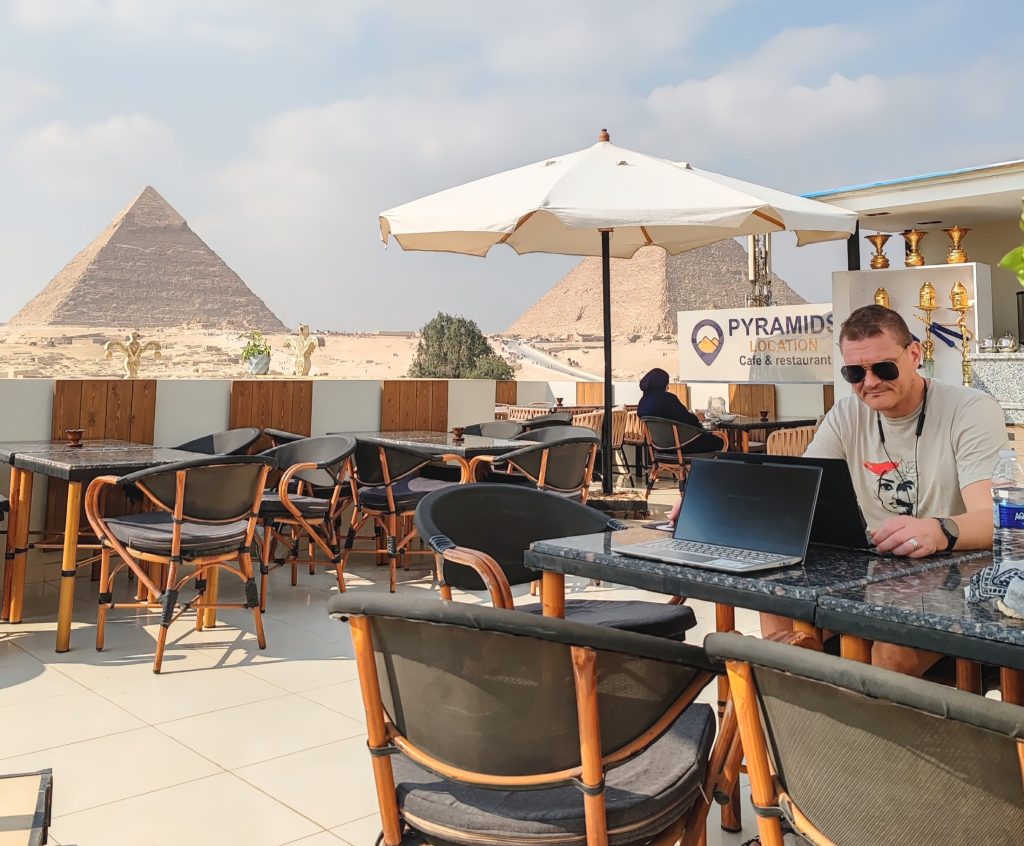
We had booked our tickets online in advance for Blue Bus’s 9 pm departure and boarded the bus in front of the company’s office in Giza. Somewhat surprisingly, the bus left right on time for Luxor. Leaving the greater Cairo metropolitan area took longer than expected, as the route passed through several satellite cities. West of Giza there were quite nice residential areas, and the scenery was very different compared to driving through central Cairo. The bus seats were reasonably comfortable, and we managed to sleep for a few hours.
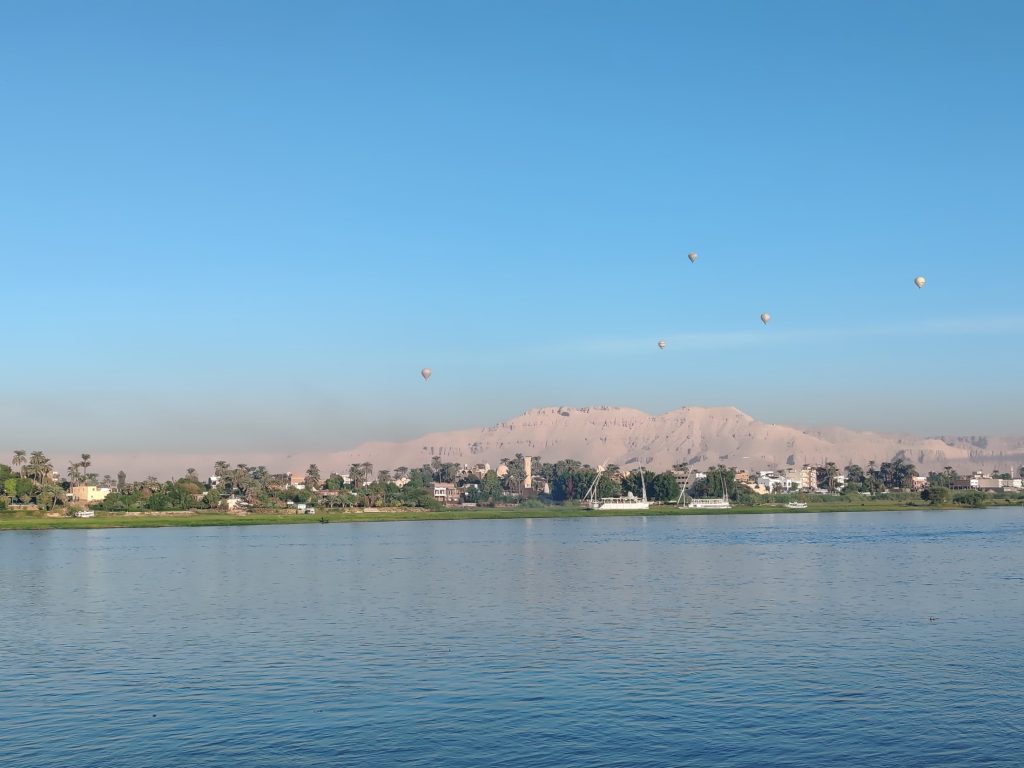
In the morning I had barely managed to open my eyes and realize that we were surrounded by the green riverside landscapes of the Nile, when we suddenly arrived in Luxor. Stepping out of the bus, we spotted hot air balloons over the river, and briefly wondered whether we should take a flight ourselves one morning. After gathering our belongings, we negotiated a ride to our accommodation with a taxi driver. The opening price for the roughly four-kilometer trip was 15 dollars, which made us laugh out loud, and we eventually settled on 50 Egyptian pounds (about one dollar).
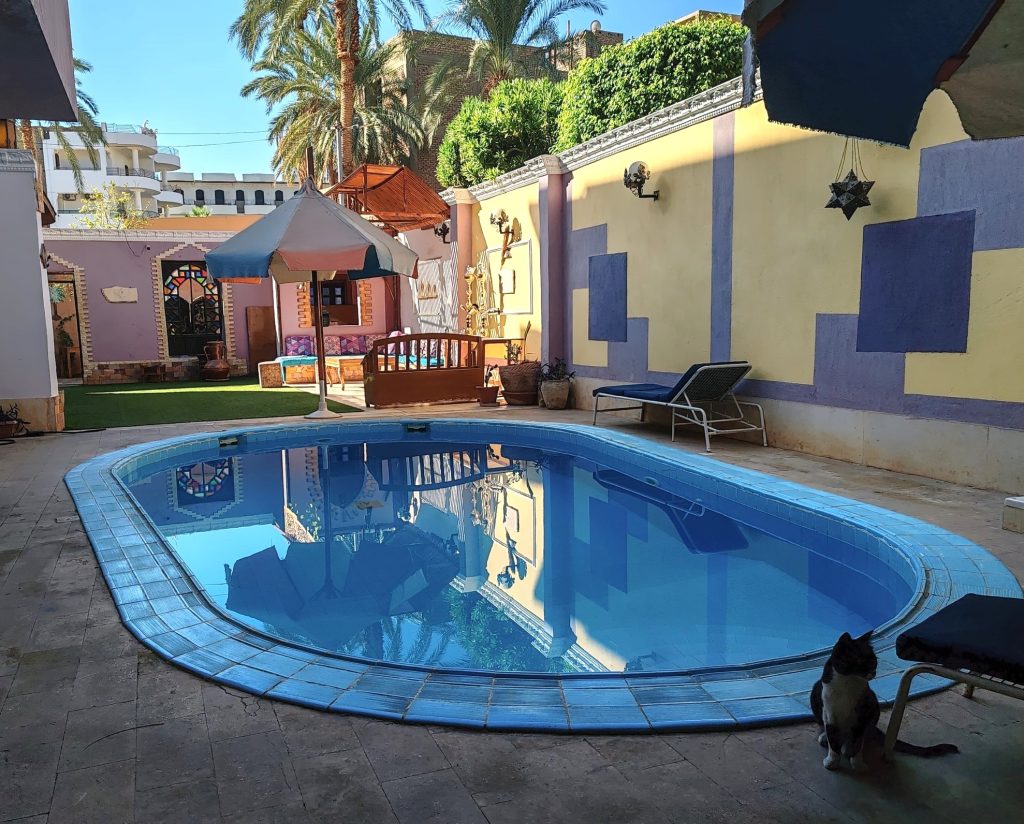
It was only around eight o’clock, but the host of the small Hoppa Sweet Home guesthouse, located outside the city center on the east bank, welcomed us warmly and let us check in straight away. Compared to our hotel in Giza, the place was somewhat worn, but the large room with a private bathroom was still quite cozy, and there was even a swimming pool.
Where to get travel insurance for a longer trip?
Over more than eight years of nomad life, we’ve searched for cost-effective and reliable solutions, especially for travelers’ health insurance.
In the article Nomad Travel Insurance: 3 +1 Easy Options, we present international insurance options suitable also for extended trips.
On the first day we didn’t venture far from the guesthouse. We spent some time on laptop work, went for a run, wandered through the alleys, and relaxed briefly in sun loungers that had seen better days. We also did a bit of shopping at a fruit stall, a bread kiosk and a small local shop. Of course, nothing had prices displayed, and we probably paid a little extra for everything, but no one tried anything outrageous.
Tomb chambers in the Valley of the Kings
The second day in Luxor was dedicated to sightseeing. This time, instead of joining a prearranged tour, we decided to explore the sites independently. We started the day at the Valley of the Kings and booked a ride there using the InDrive app (similar to Uber).
Our first driver, however, refused to take us unless we also booked waiting time and a return trip, claiming we wouldn’t be able to get a ride back because there is supposedly no phone service in the valley. Classic taxi-driver excuses. When we couldn’t reach an agreement, we got out and booked a new ride, which took us there without any hassle.
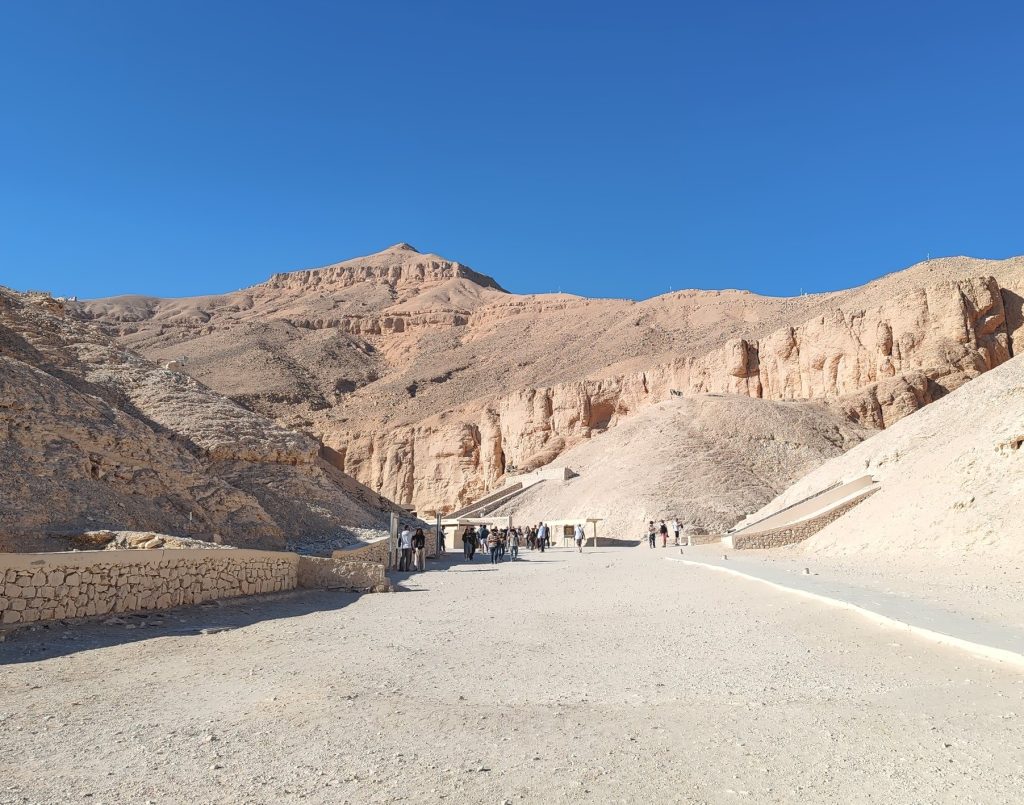
The Valley of the Kings is an ancient Egyptian burial site located on the west bank of the Nile, a narrow valley nestled between rocky cliffs. Around 1500 BCE, Egypt abandoned building pyramids as the final resting places for pharaohs and began carving tomb chambers into the cliffs of this remote valley instead. The initiative came from Pharaoh Thutmose I, likely to protect tombs from grave robbers. Thutmose I is believed to be the first pharaoh buried in the valley’s rock-cut corridors, and after him, many of Egypt’s most famous rulers were laid to rest there. Soon, the pharaohs’ wives and children were also buried nearby in what became known as the Valley of the Queens.
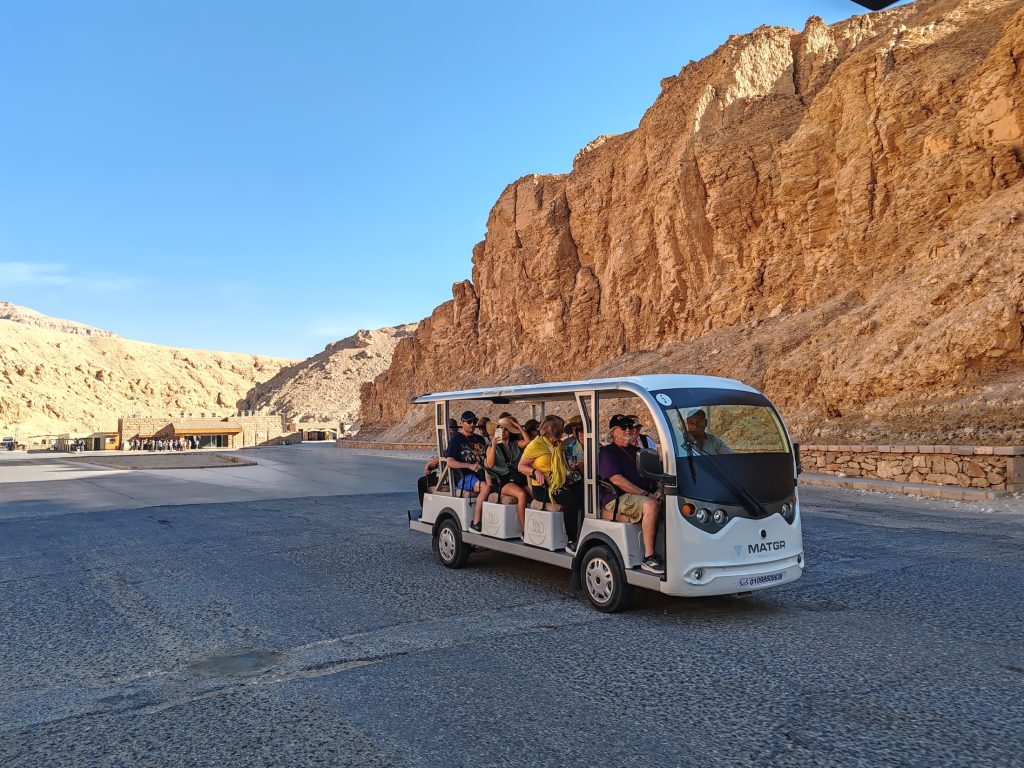
The Valley of the Kings is one of Egypt’s most popular attractions, and a total of 65 tombs have been discovered there so far, some of which are open to the public. To access the Valley of the Kings, you need to purchase a basic ticket, which allows entry to three tombs. Additionally, there are separate tickets available for so-called special tombs, which are considered more significant. We decided to get a ticket for the tomb of Ramses V & VI in addition to the basic ticket.
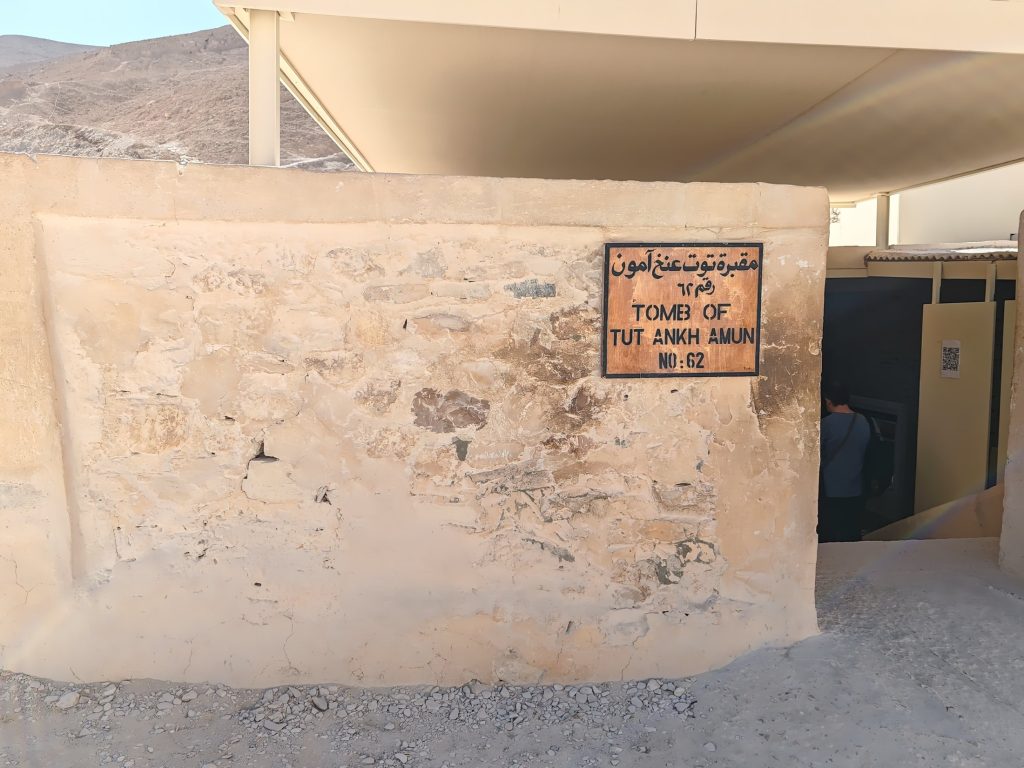
We also considered visiting the valley’s most famous tomb, that of the boy king Tutankhamun, which contains the pharaoh’s mummy, but ultimately decided to skip it. For the three tombs included in the basic ticket, we chose the tombs of Ramses III, Ramses IV, and Tausert & Setnakht, which we had read in advance were impressive and highly recommended. And indeed, they were all magnificent!
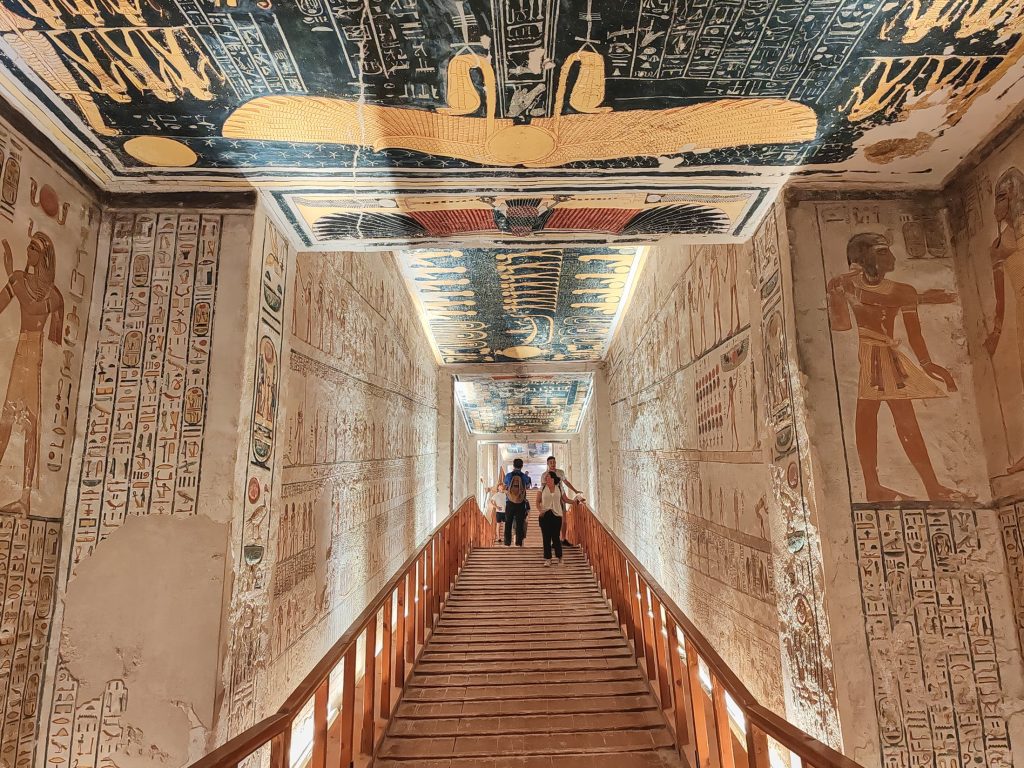
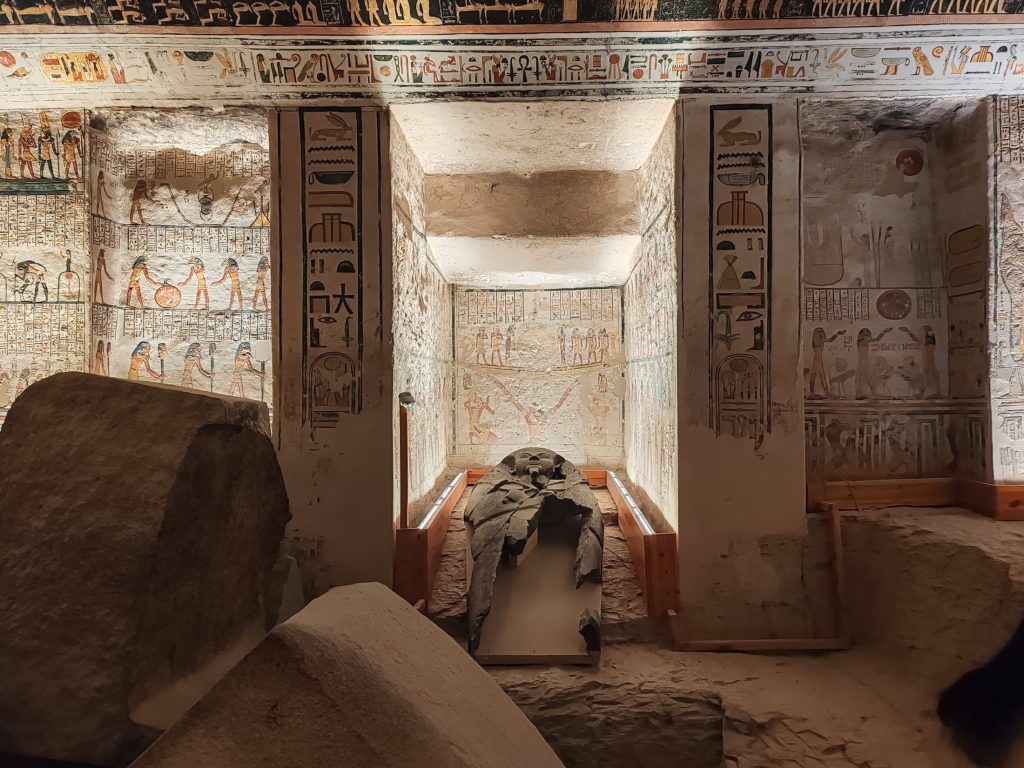
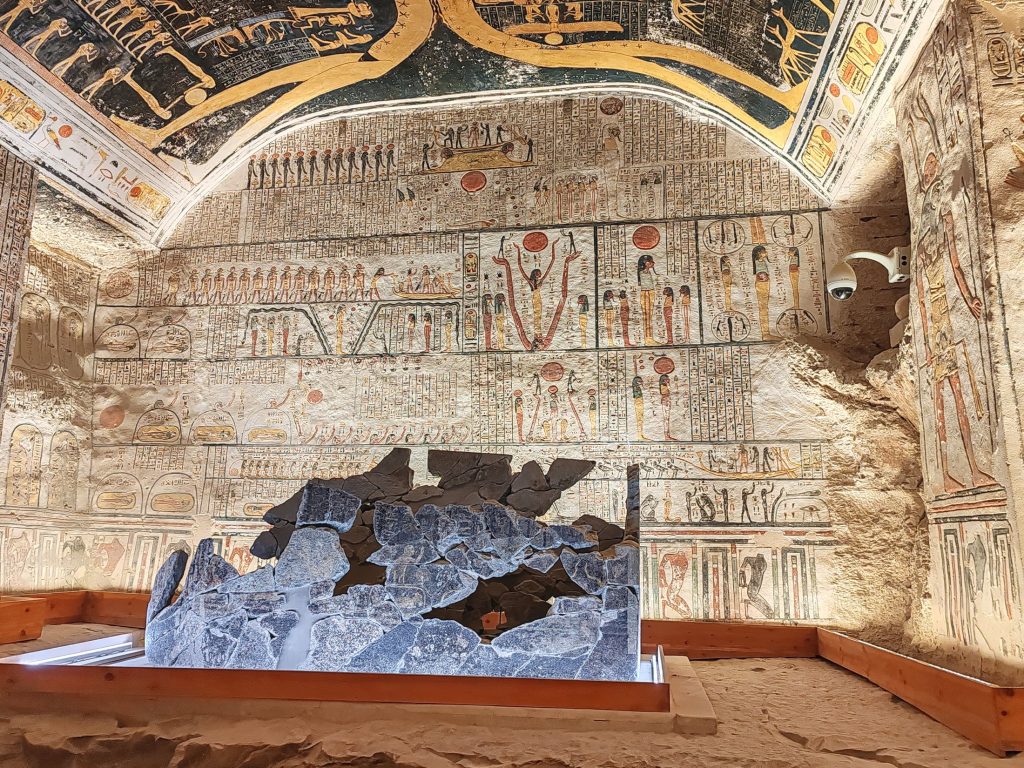
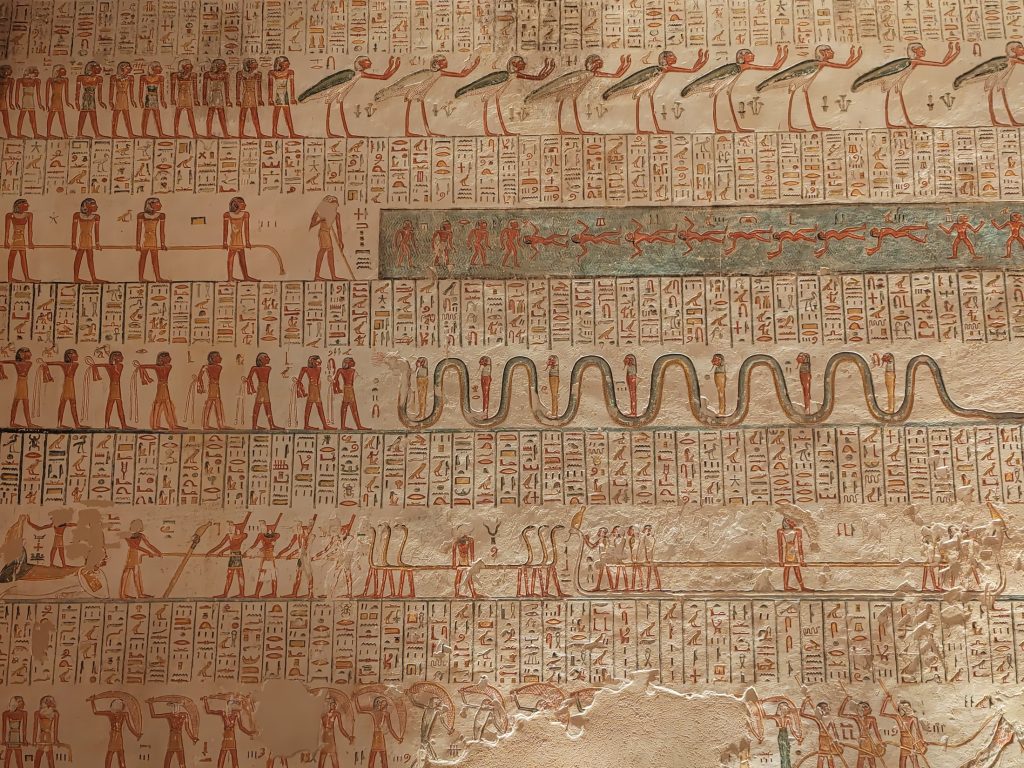
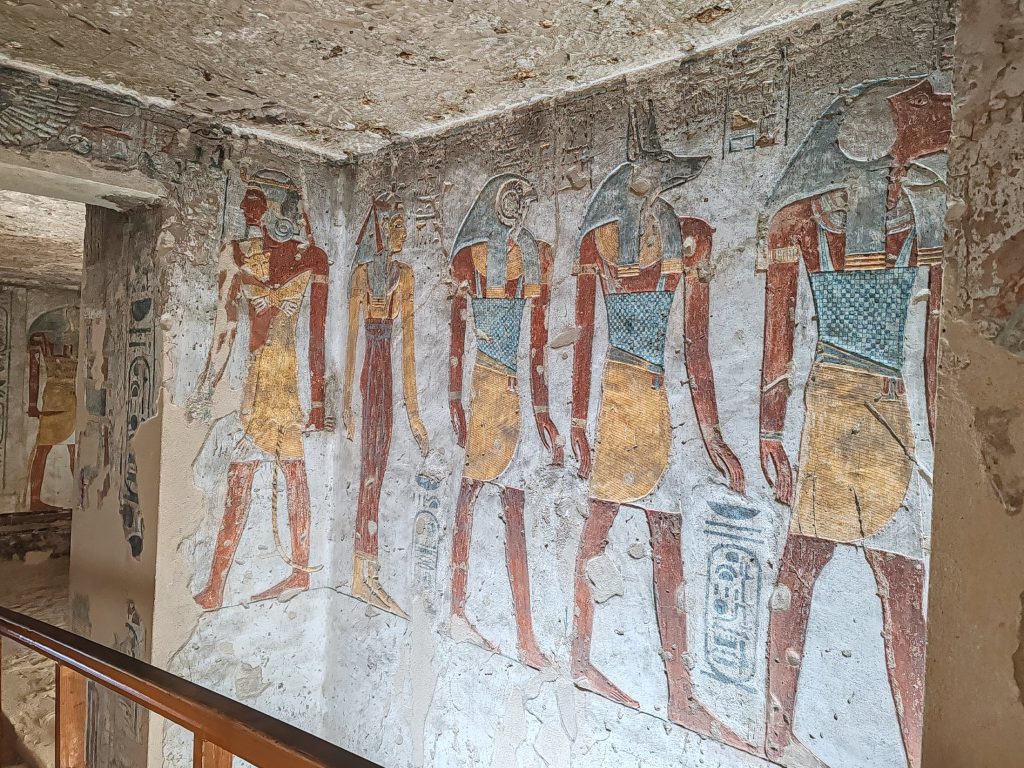
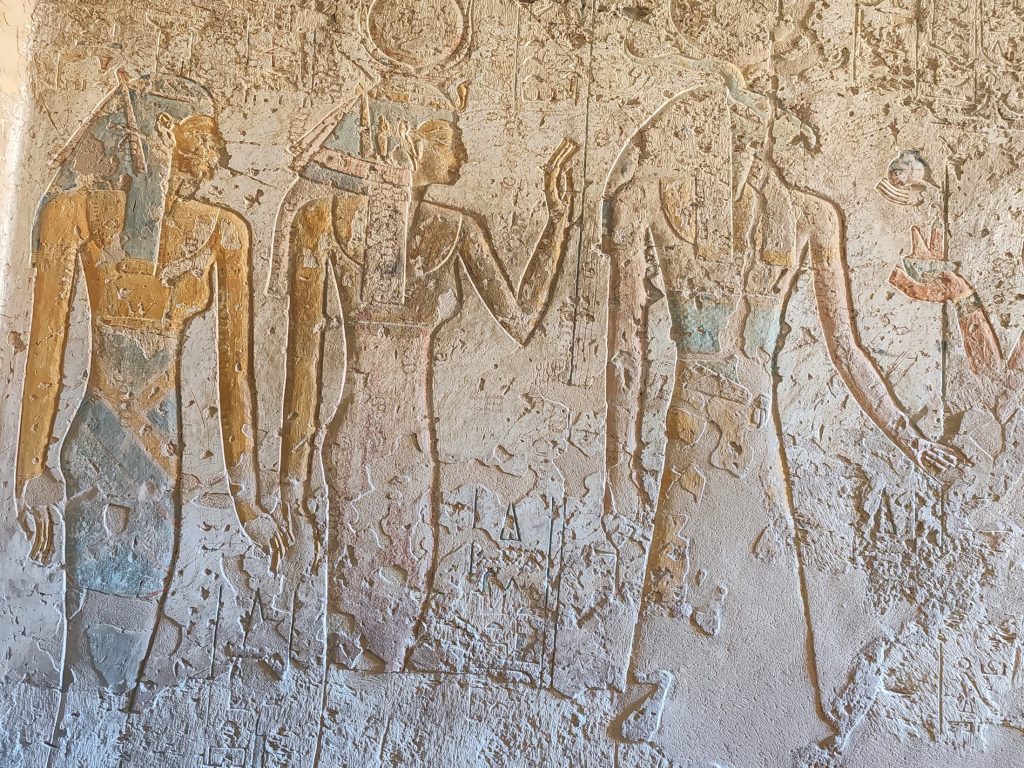
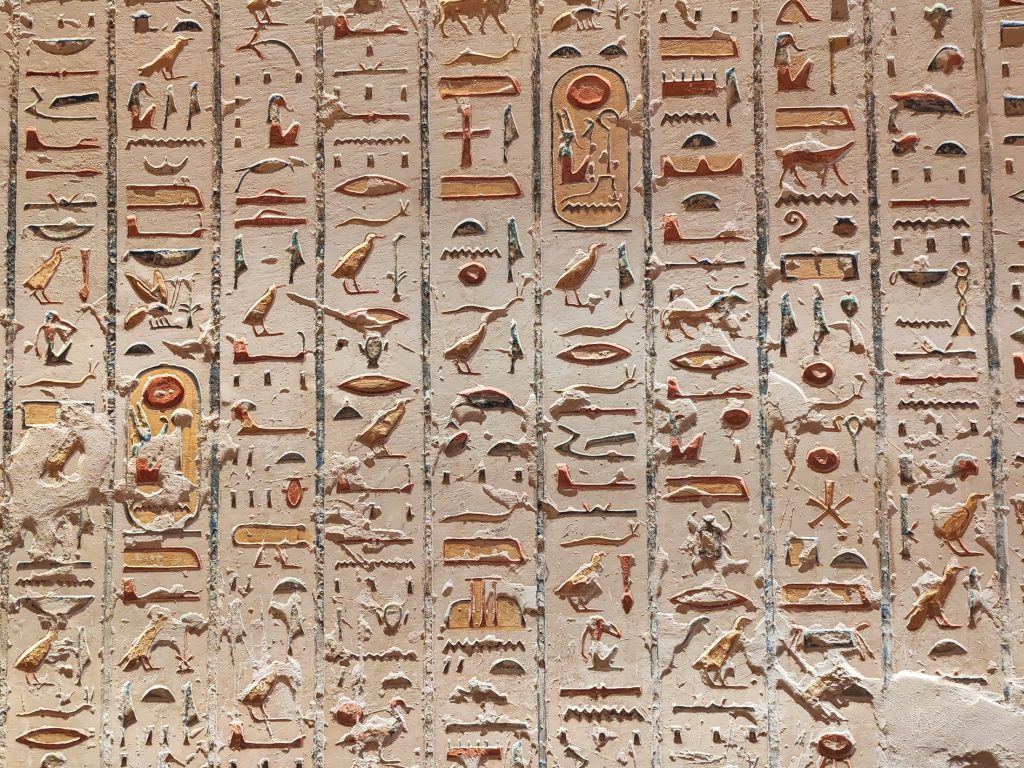
The Valley of the Kings looks rather modest when you first arrive, as the entrances to the tombs are just, well, openings carved into the rock. However, beyond the entrances, you’ll find stunningly decorated corridors, chambers and pillars. Having a guide would probably provide more insight into the tombs, but apparently, guides are not allowed to enter the tombs themselves, so they wouldn’t be there to explain the meanings of the hieroglyphs, the figures in the paintings, or the stories depicted. In this post, I won’t go into detail about the different tombs and their histories, but below is a brief overview of the ones we visited, along with photos, of course.
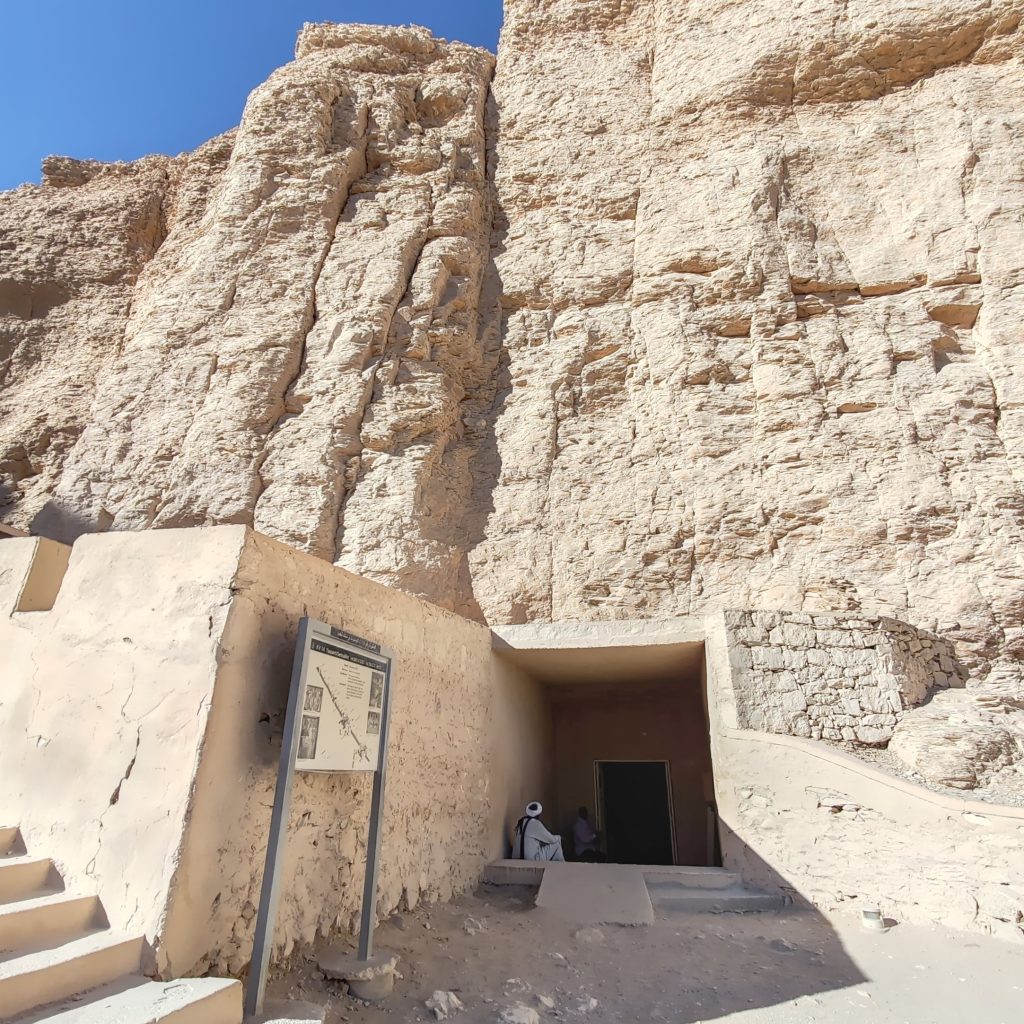
Ramses V&VI, KV 9
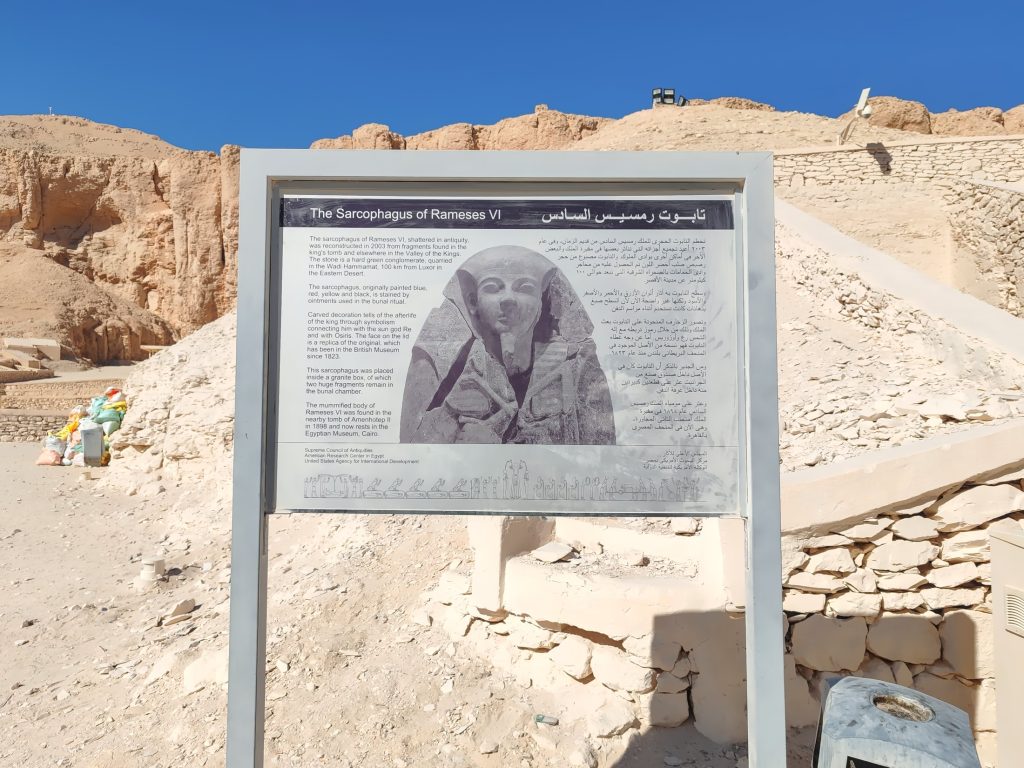
The tomb KV9, originating from the 20th dynasty of the New Kingdom, was initially constructed by Pharaoh Ramses V. However, after his death, his uncle Ramses VI decided to repurpose the tomb. The decoration of the tomb is considered one of the most elaborate in the Valley of the Kings. The tomb consists of a long corridor divided into sections by pillars, leading to a pillared hall. Another long corridor descends from the pillared hall to the burial chamber, which houses the assembled sarcophagus of Ramses VI.
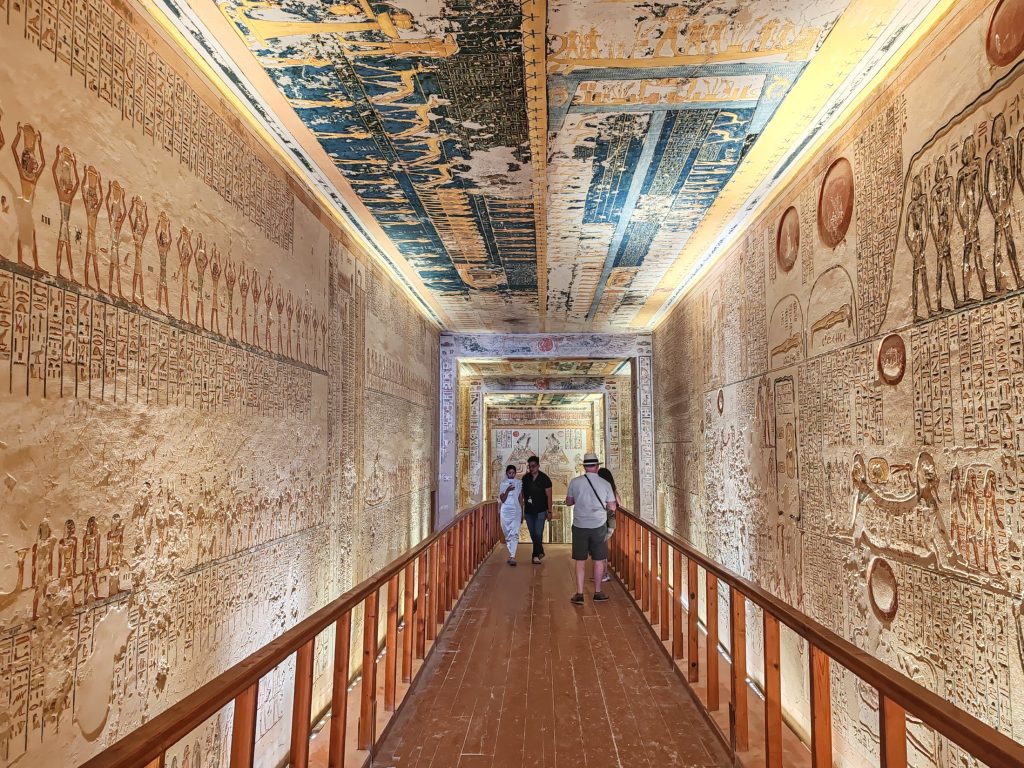
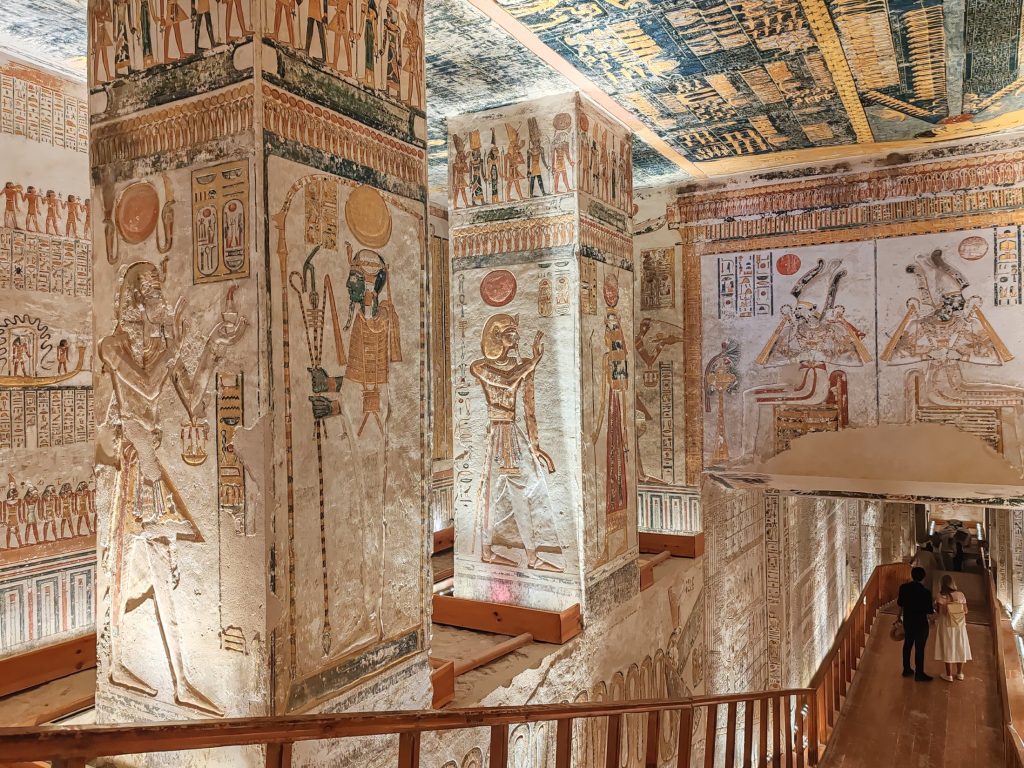
Tausert & Seknakht, KV14
The tomb KV14 was originally built for Queen Tausret (also spelled Tawosret or Tawsert) of the 19th Dynasty of the New Kingdom, who was the consort of Seti II. It is one of the few queen’s tombs in the Valley of the Kings. Later, Pharaoh Setnakhte of the 20th Dynasty decided to repurpose the same tomb for himself. During this time, the tomb was expanded, and parts of the walls in the chambers and corridors were repainted. The paintings and reliefs in the long tomb, which consists of numerous chambers, have retained their vibrant colors, making the tomb exceptionally impressive.
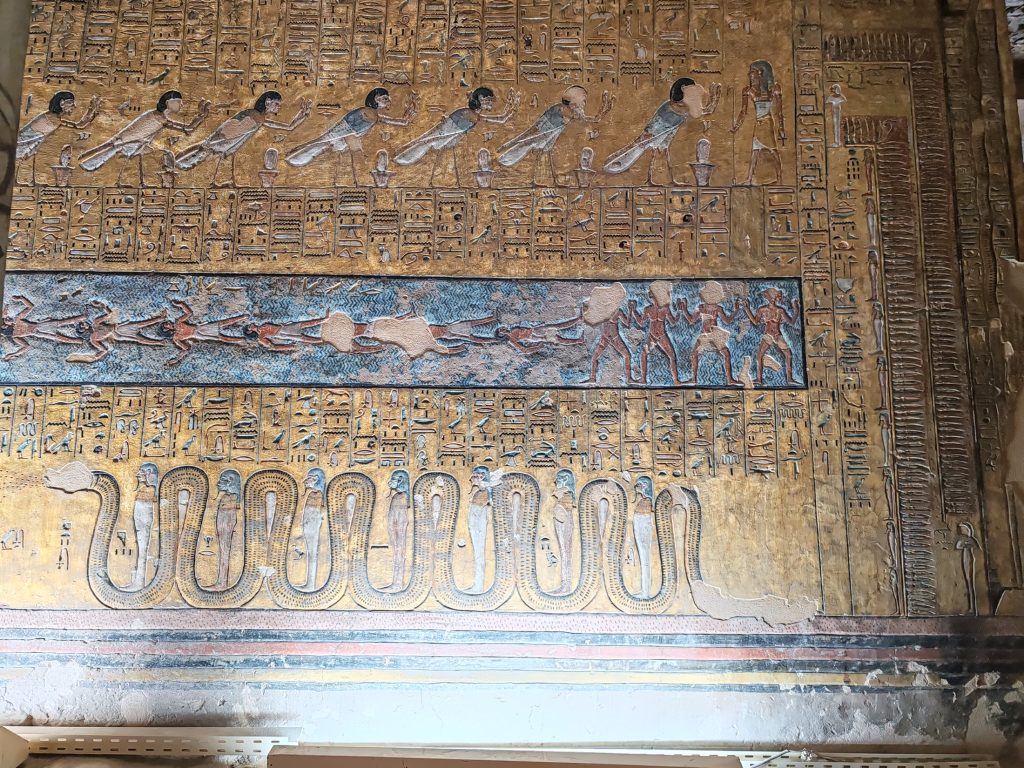
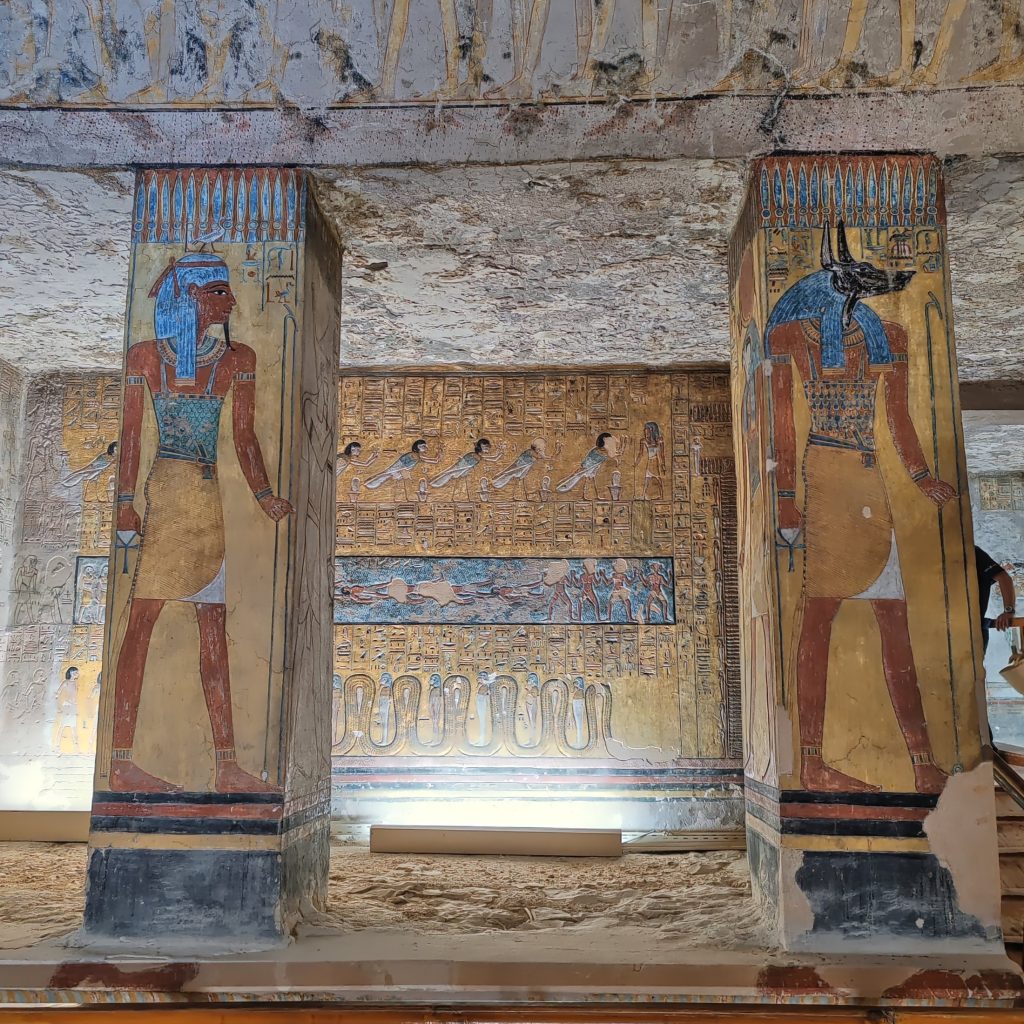
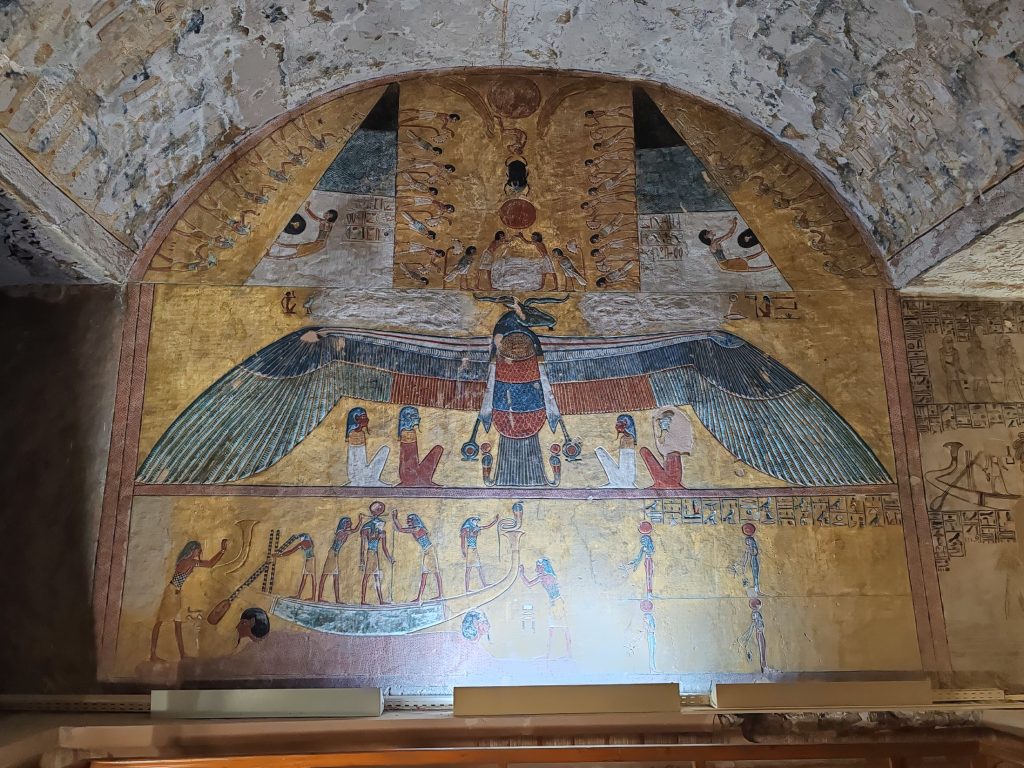
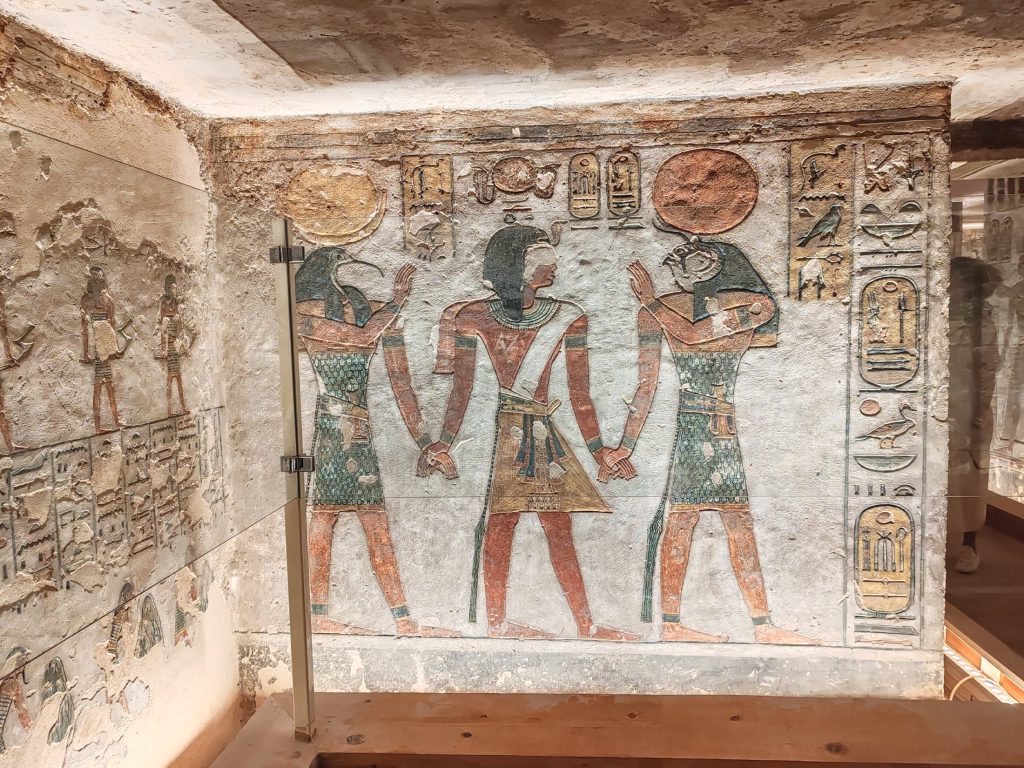
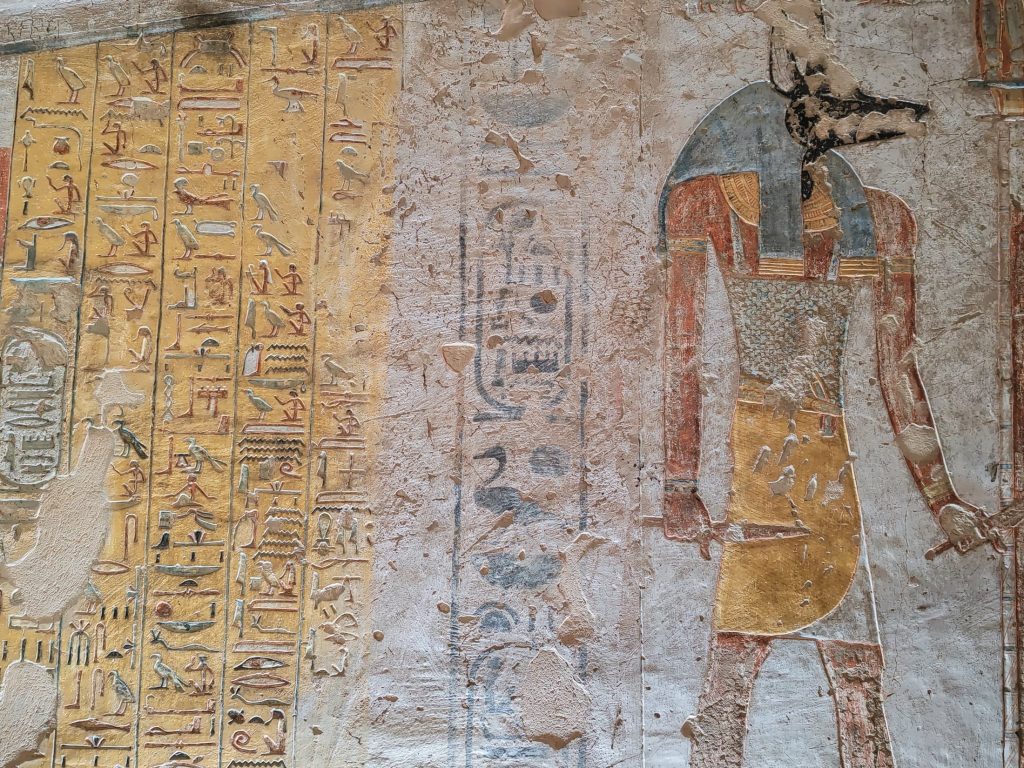
Ramses III, KV11
The tomb KV11 is the final resting place of Pharaoh Ramses III from the 20th Dynasty. Originally, the construction of the tomb was initiated by Setnakhte, but the unfinished excavation was abandoned after a wall broke into the earlier tomb of Amenmesse (KV10). Excavations of the tomb were later resumed, and it was expanded for Ramses III. This tomb is also exceptionally beautiful and ornate, with an impressive eight-pillared hall leading to the burial chamber.
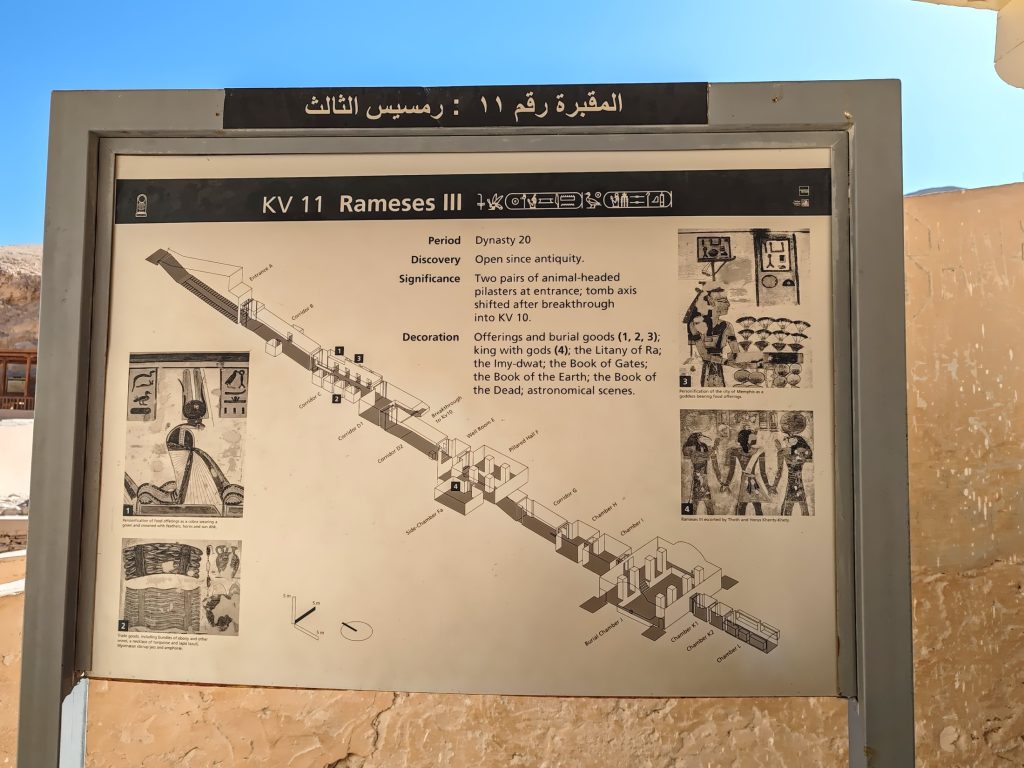
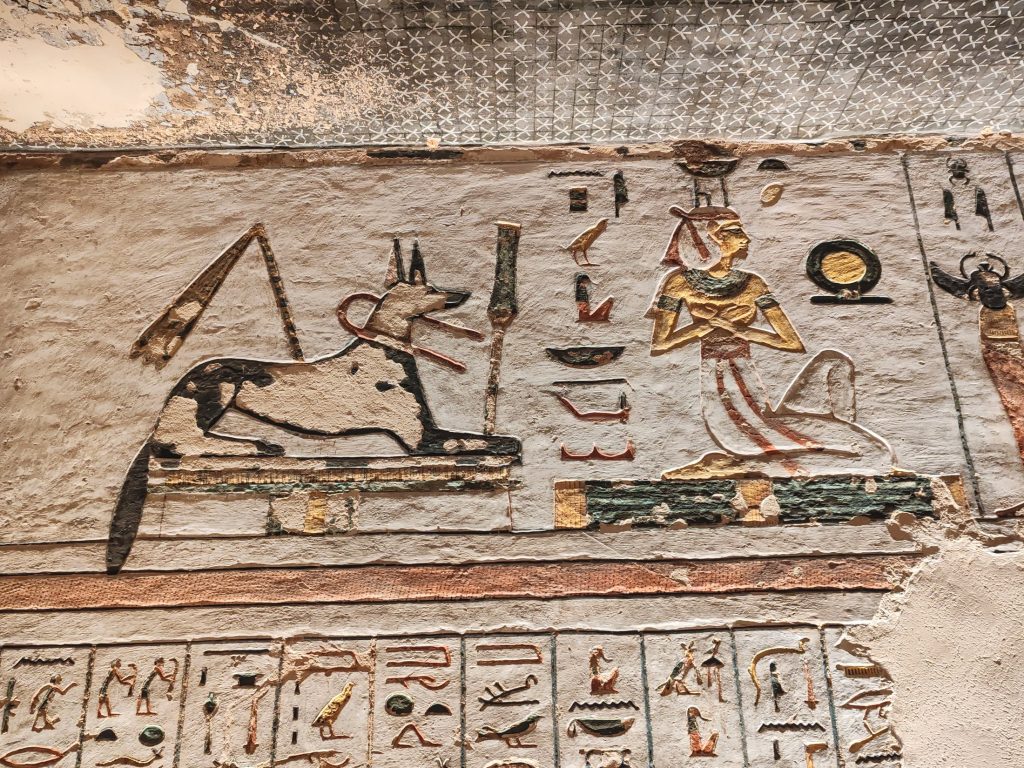
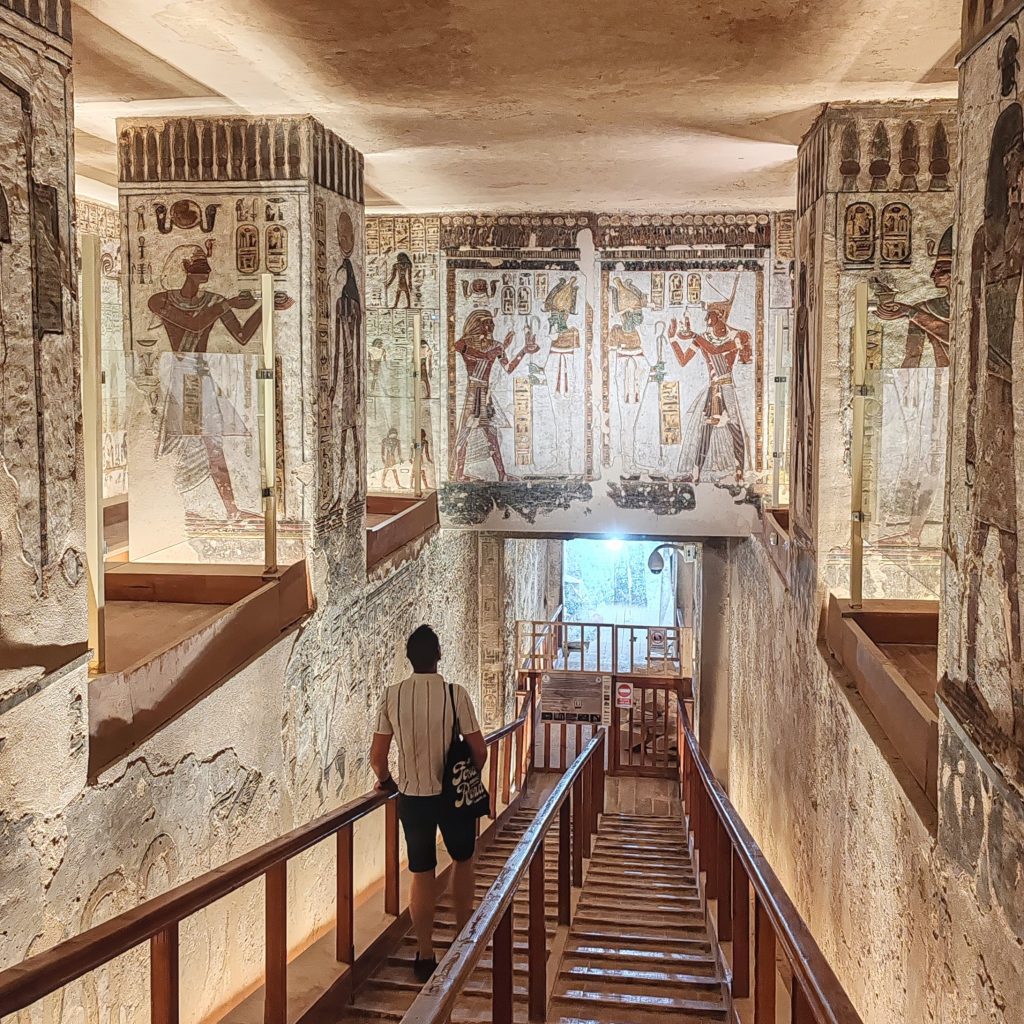
Ramses IV, KV2
KV2 is the tomb of Ramses IV from the 20th Dynasty. This tomb is relatively large but structurally quite simple. The tomb consists of three descending corridors, followed by an enlarged chamber and a burial chamber with side chambers. The beautiful wall paintings, like in many other tombs, depict scenes from the Book of the Dead, among others.
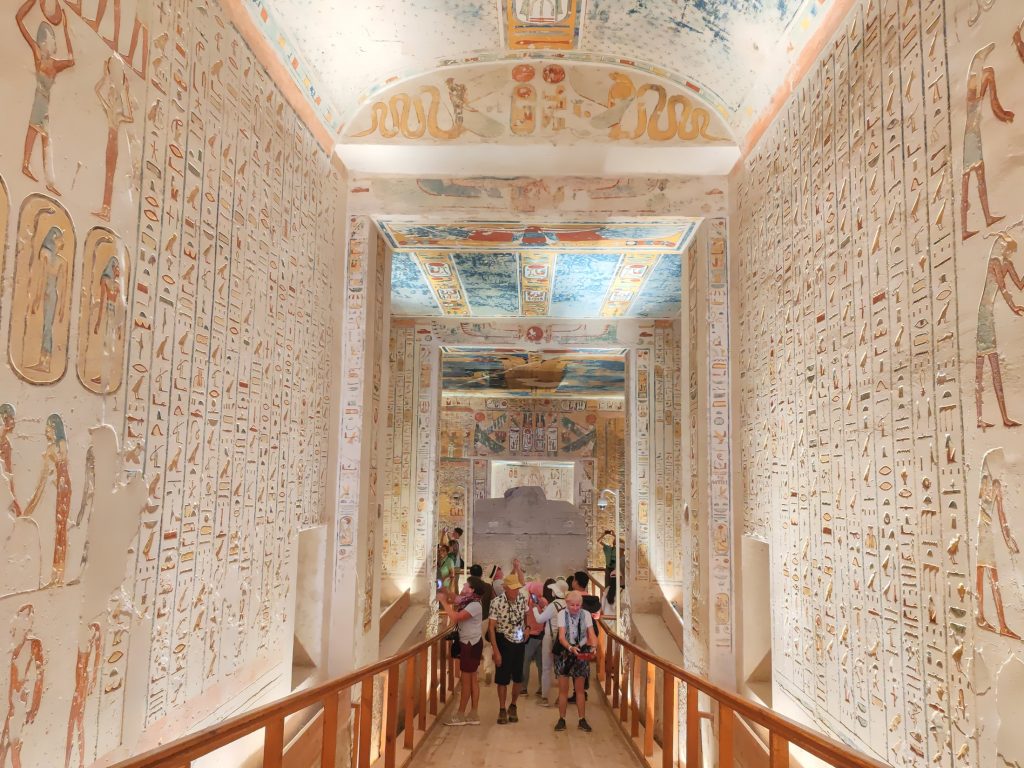
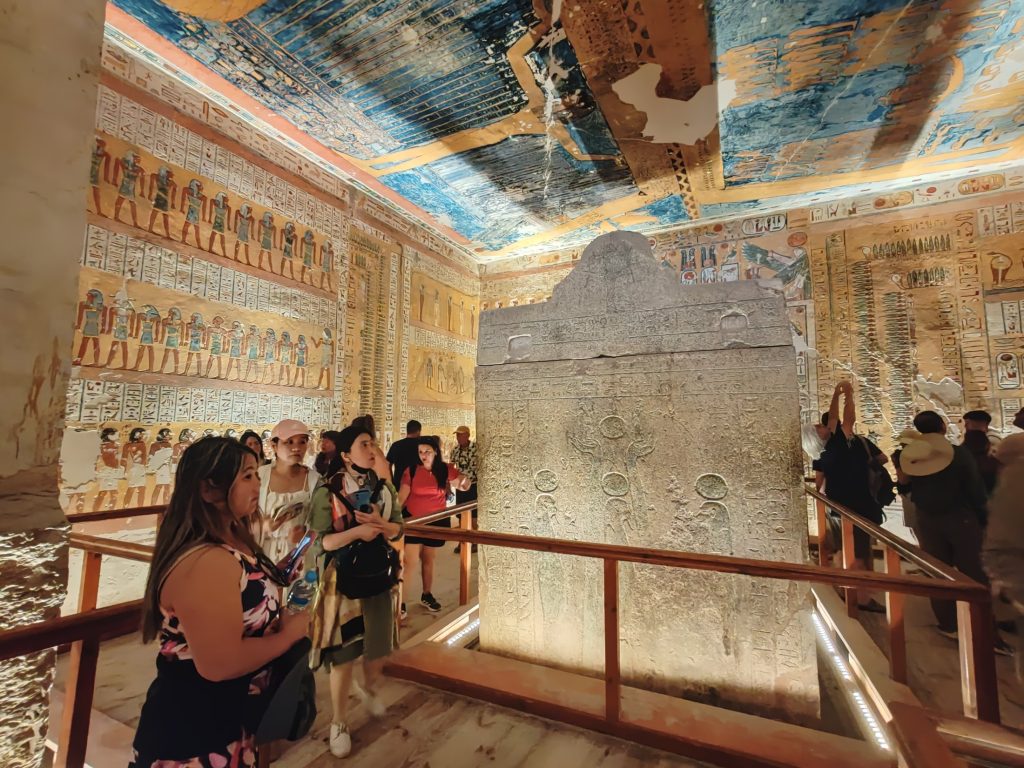

Enchanted by the Karnak Temple Complex
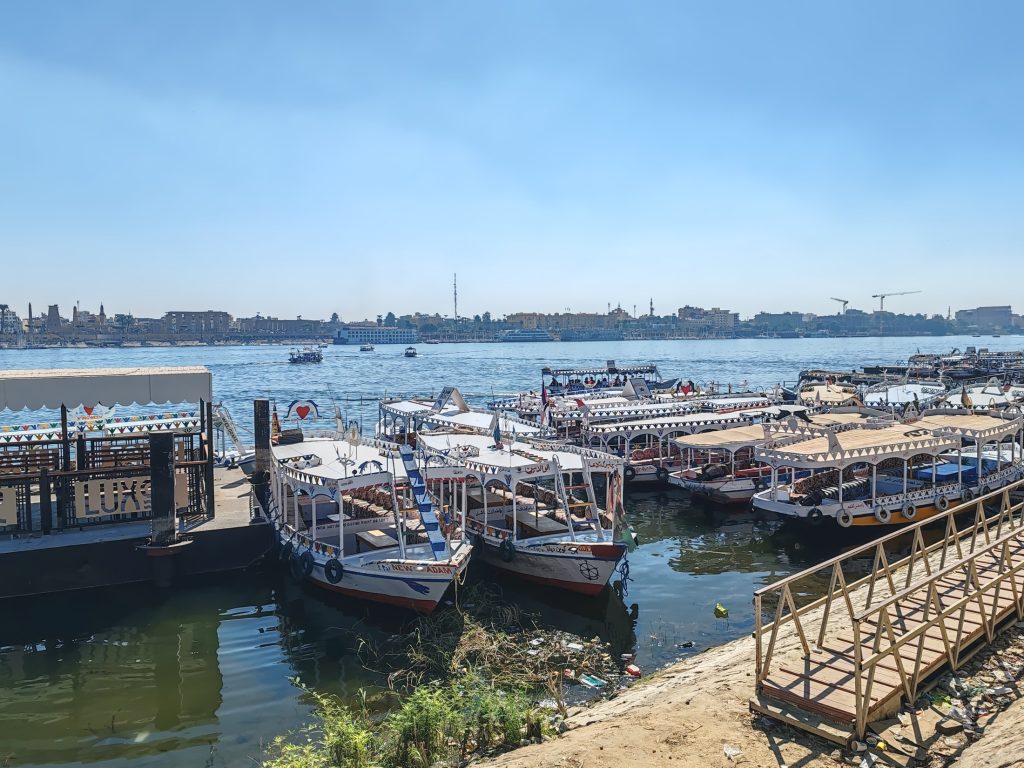
We missed the opportunity to take a cruise on the Nile during this trip, but at least we got on the water for a moment when we crossed back to the eastern side of the river from the Valley of the Kings by ferry. First, we got a ride from the valley to the ferry terminal (this was quite an easy process, as there were plenty of idle drivers in the parking lot), and then we hopped on a local ferry that took us across the river. The second destination of the day was the Karnak temple complex, which we reached by walking along the riverbank.
The Karnak Temple is one of the largest and most renowned religious landmarks in the world. The temple complex spans an area of several tens of hectares. The oldest, now vanished parts of the complex were built during the Middle Kingdom period between 2055–1650 BCE, and additional temples were constructed and expanded numerous times during the reigns of various pharaohs. The largest part of the area, the Amun temple precinct, housed the temple of the god Amun, while the other main sections of the temple complex are the temples of Mut and Montu.
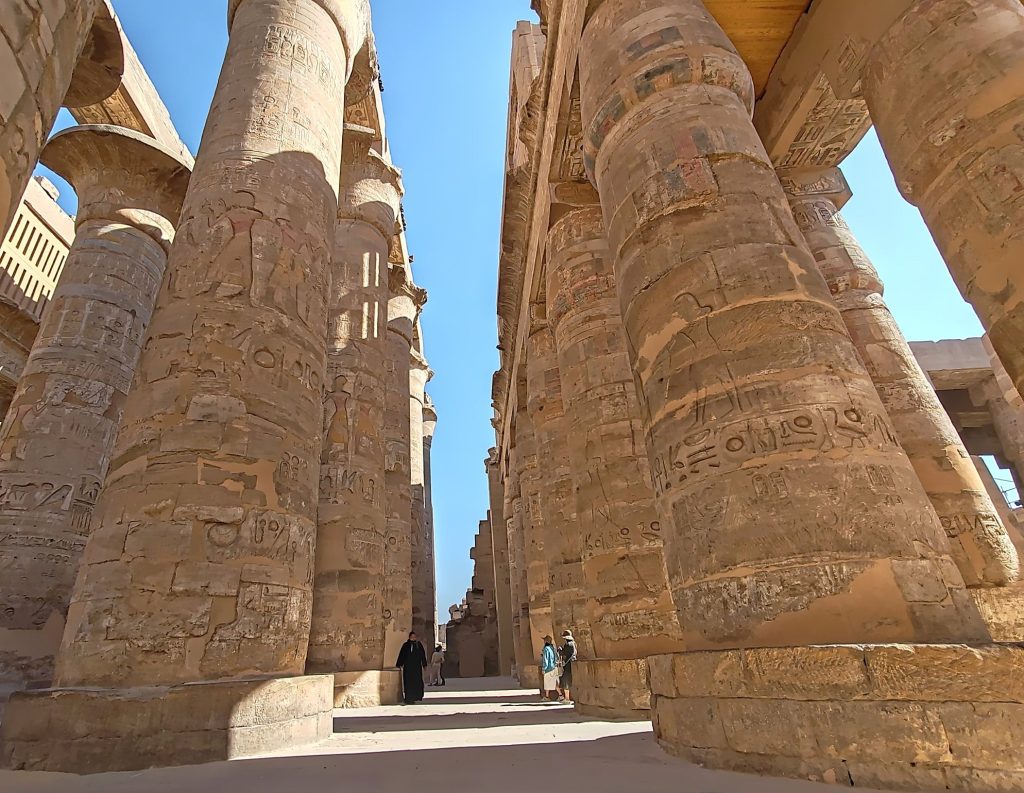
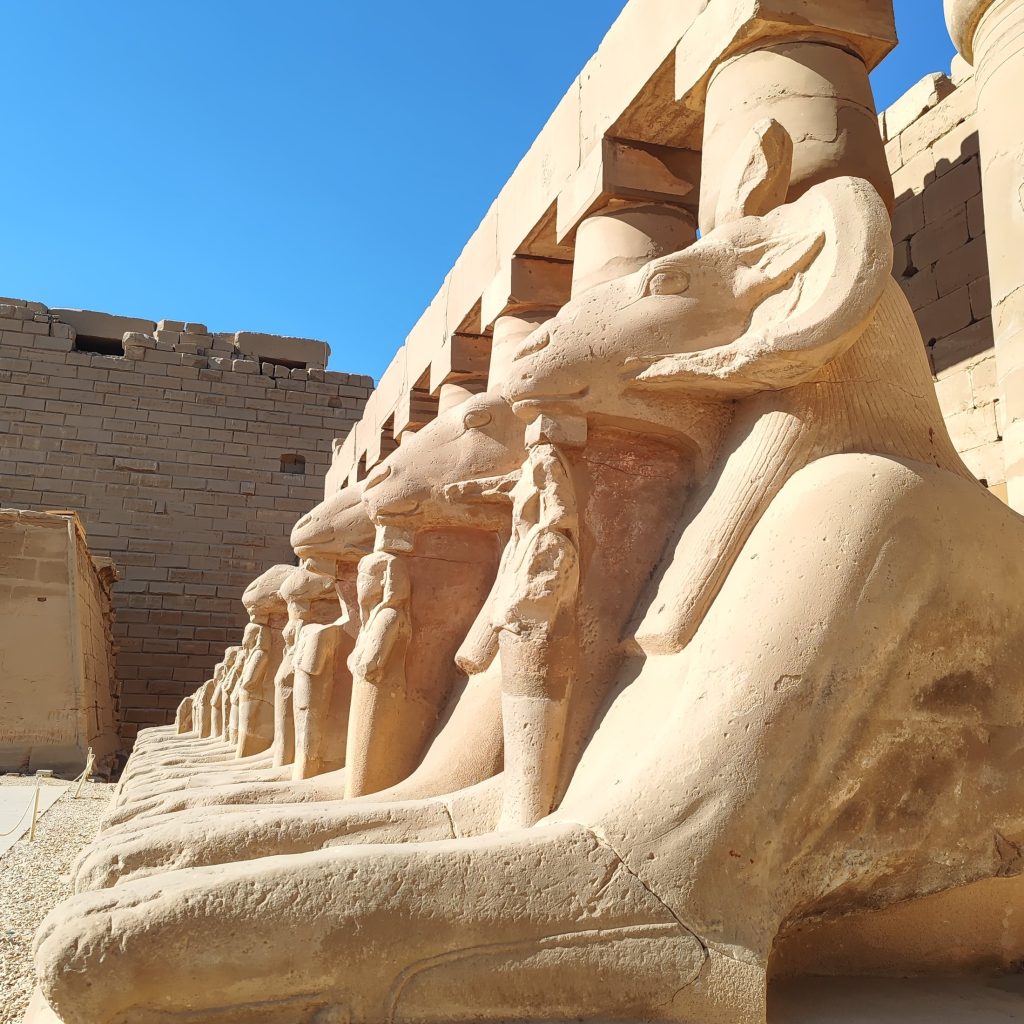
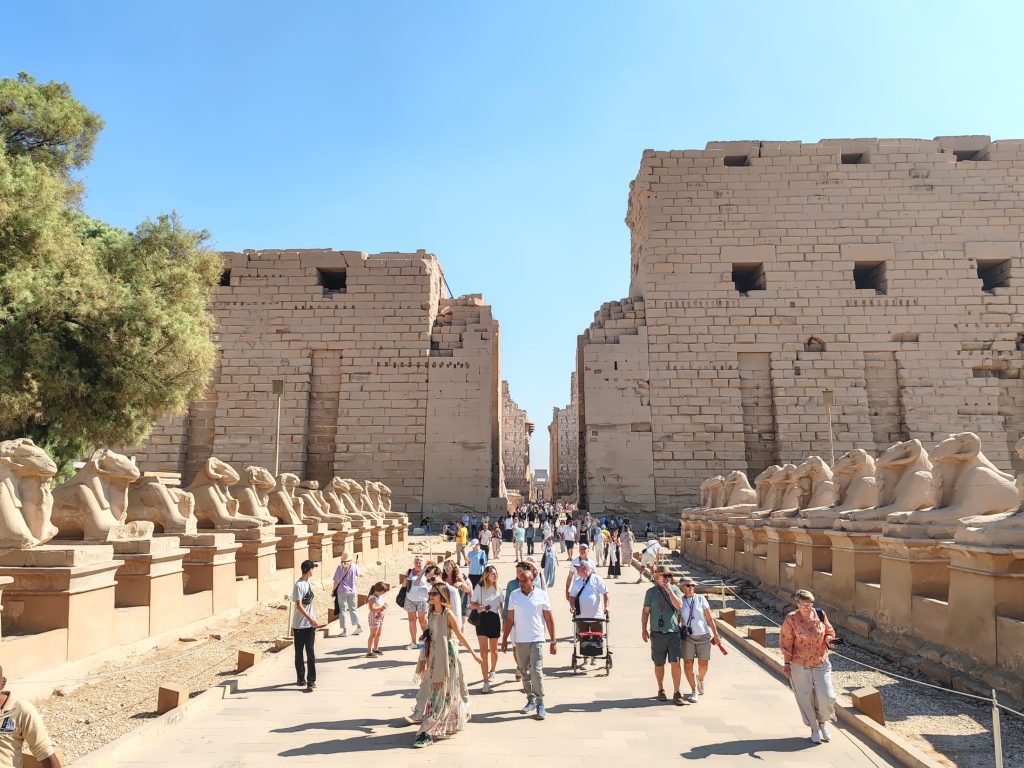
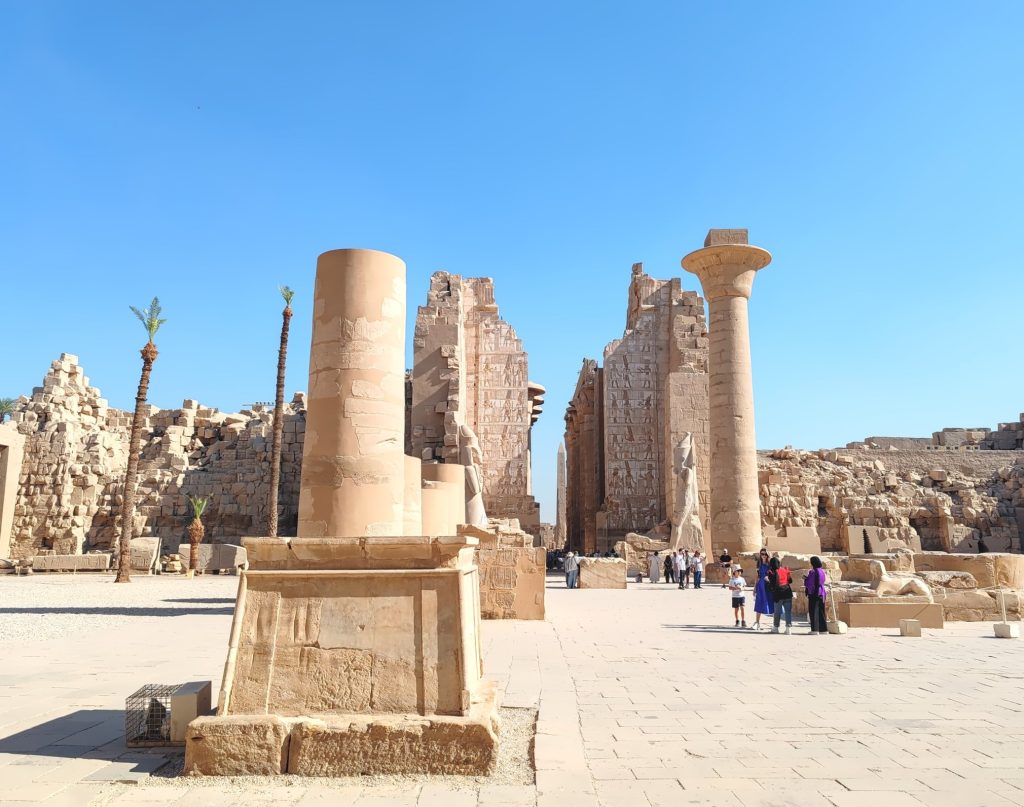
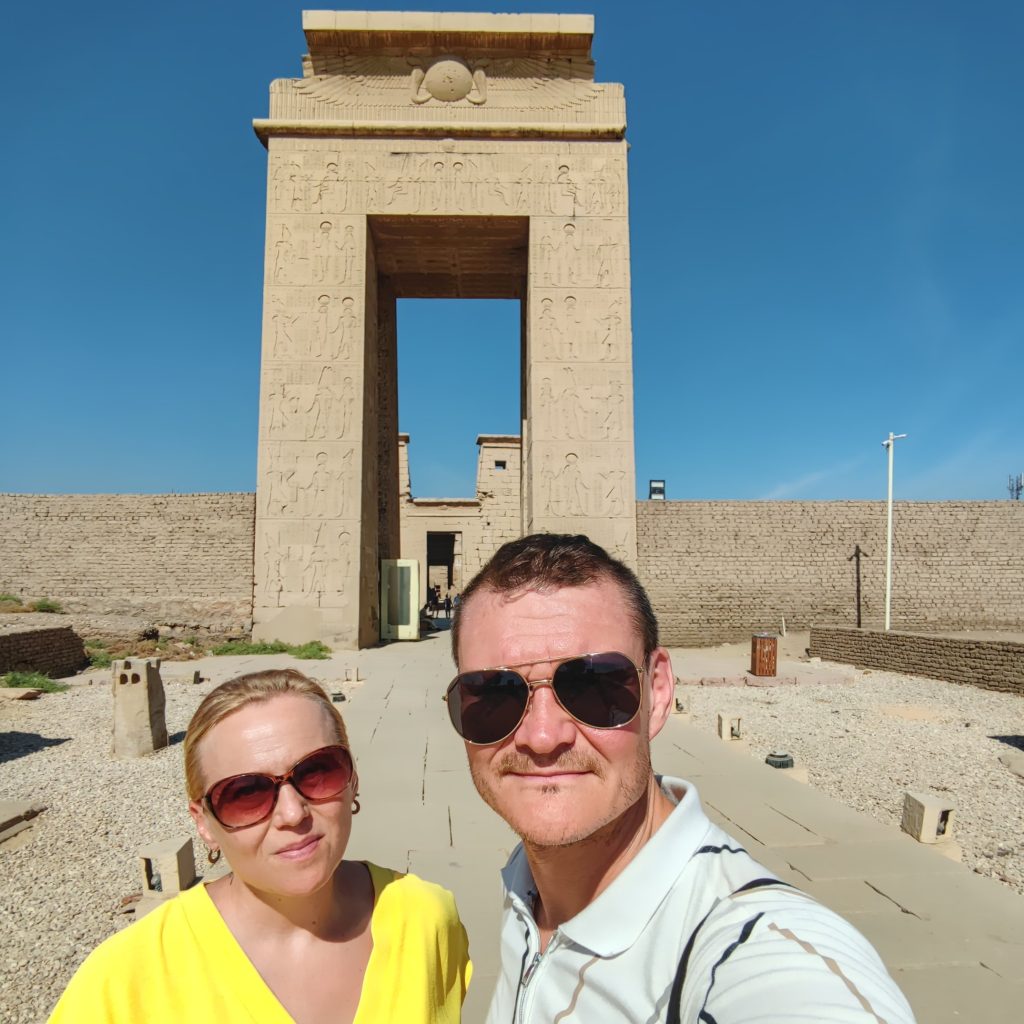
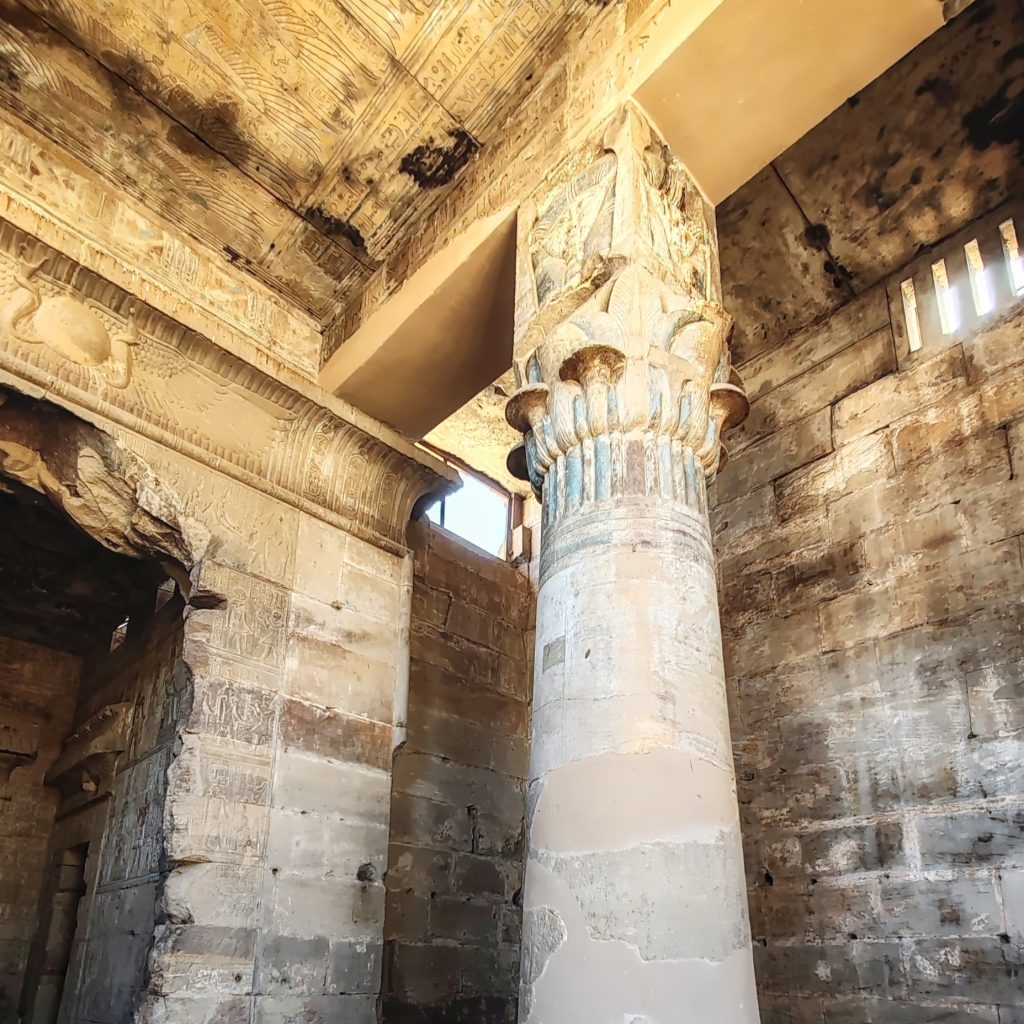
After reading about the temple complex in advance, our expectations were quite high, but Karnak fulfilled all promises – the area is simply stunningly magnificent! The main attraction of Karnak is the massive columned courtyard, but it’s absolutely worth wandering around and exploring the other temples and sights as well, such as obelisks, sphinxes, statues and reliefs. The area is quite extensive, so it’s worth setting aside several hours to visit.
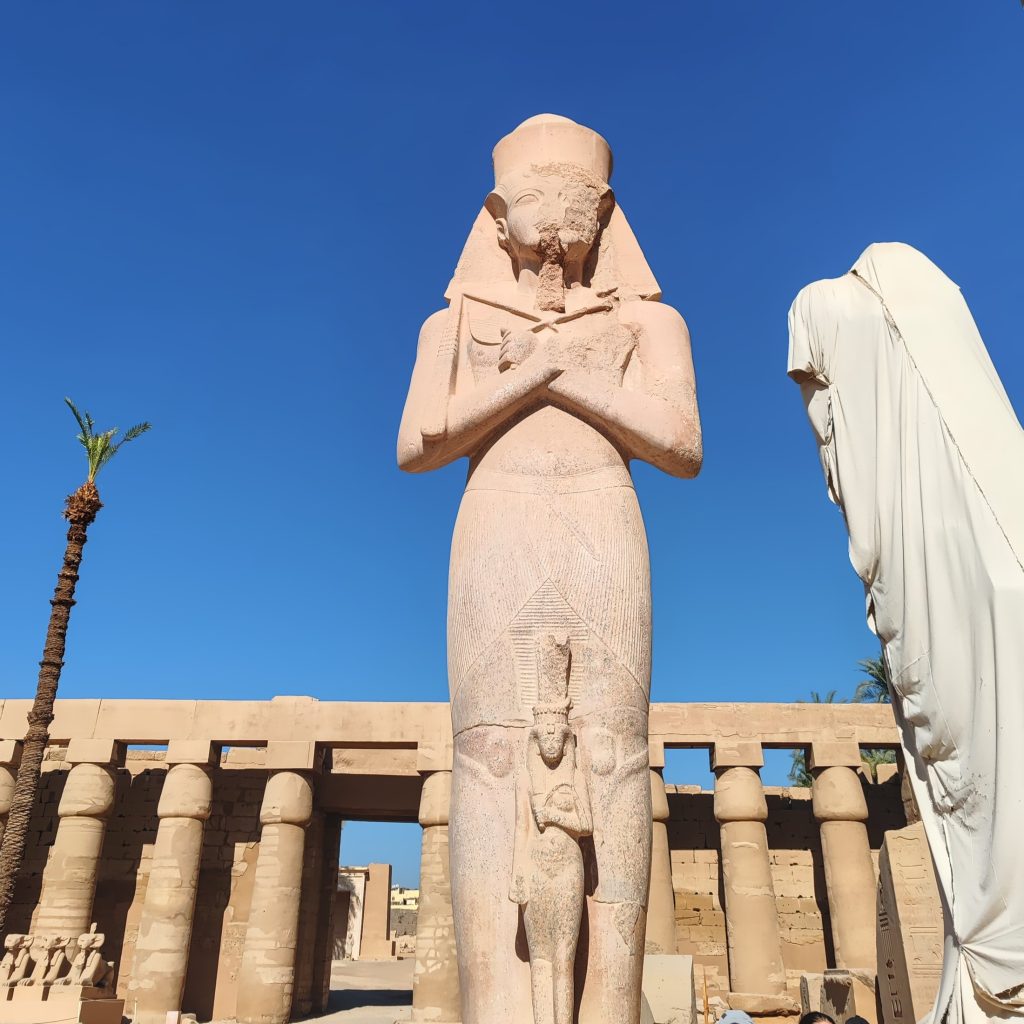
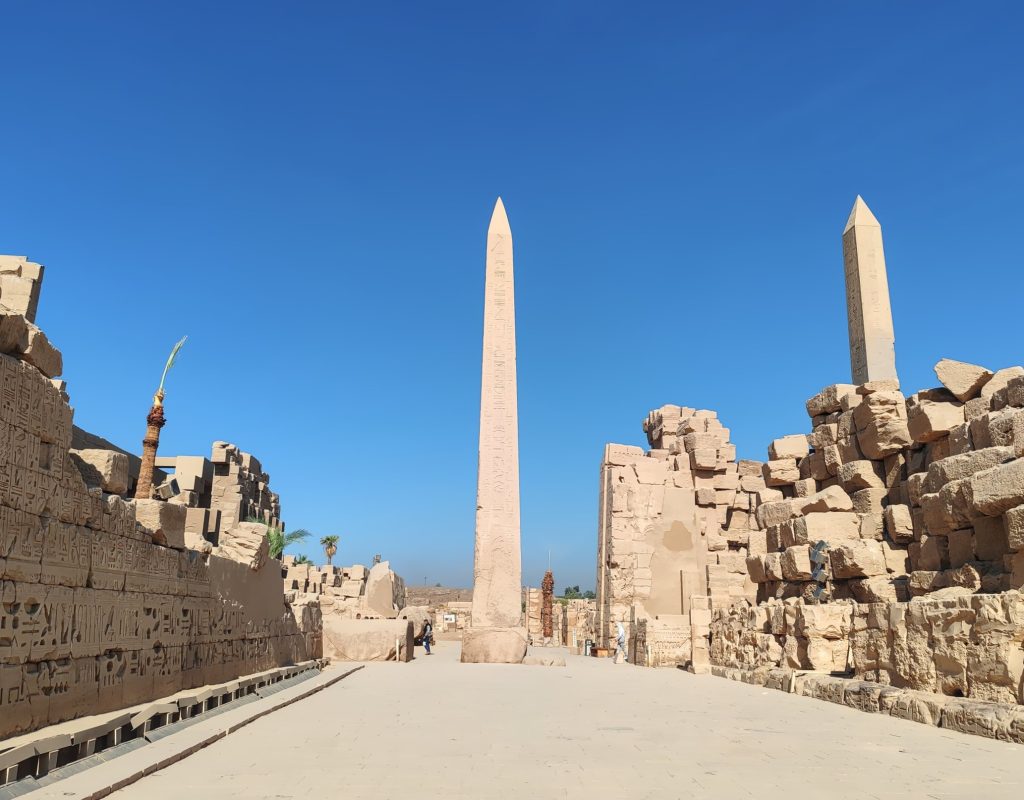
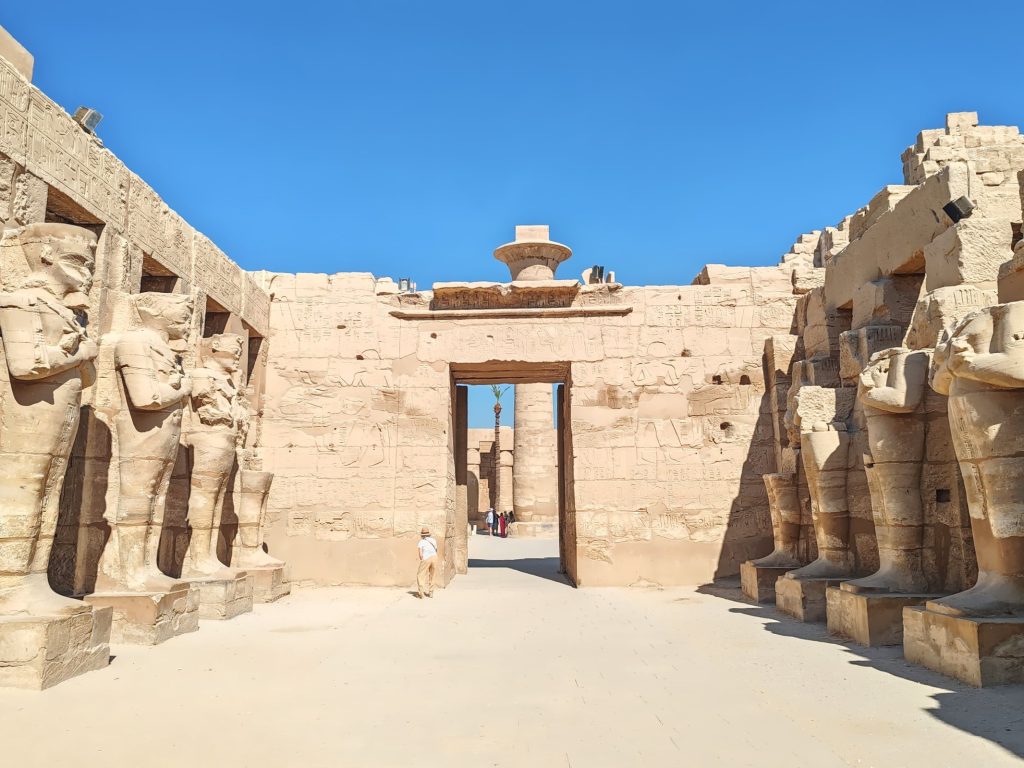
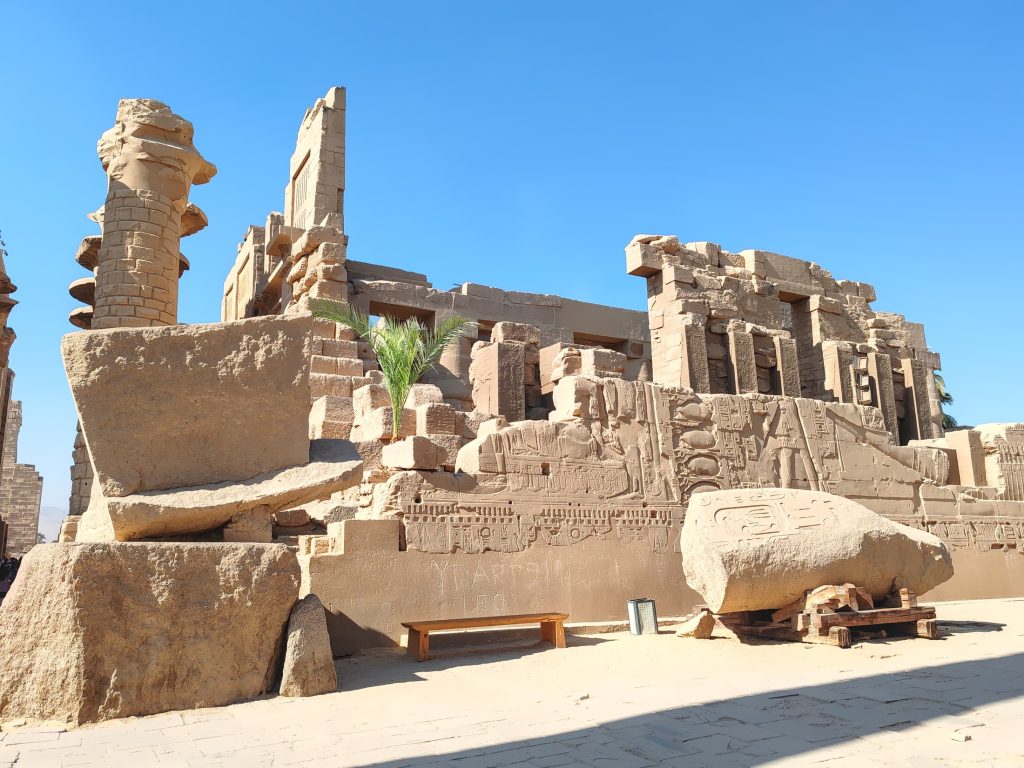
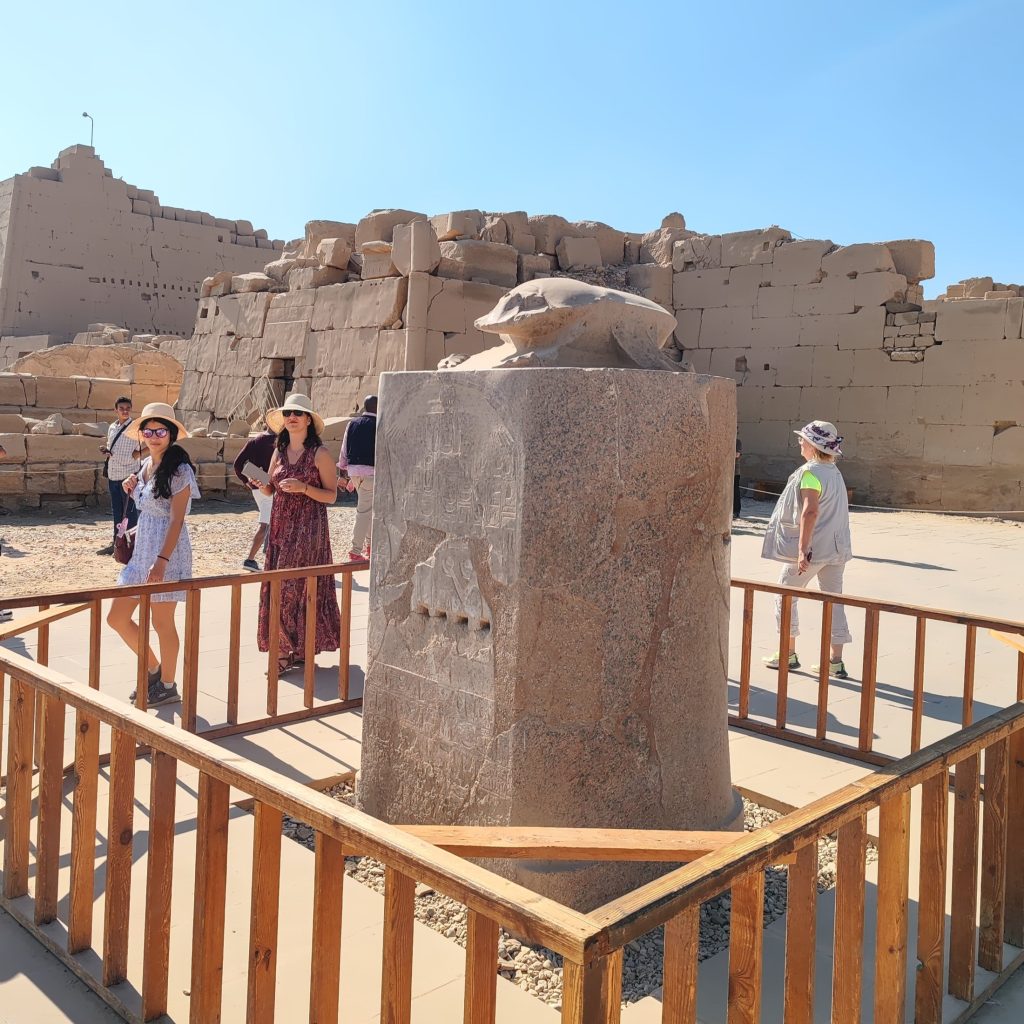
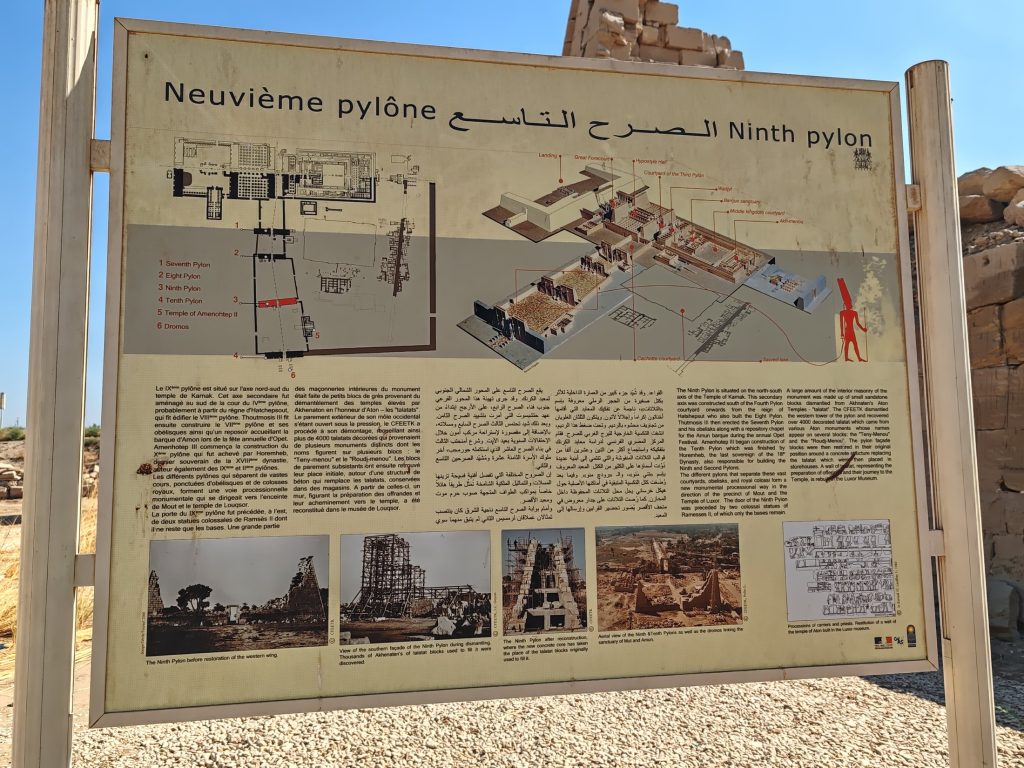
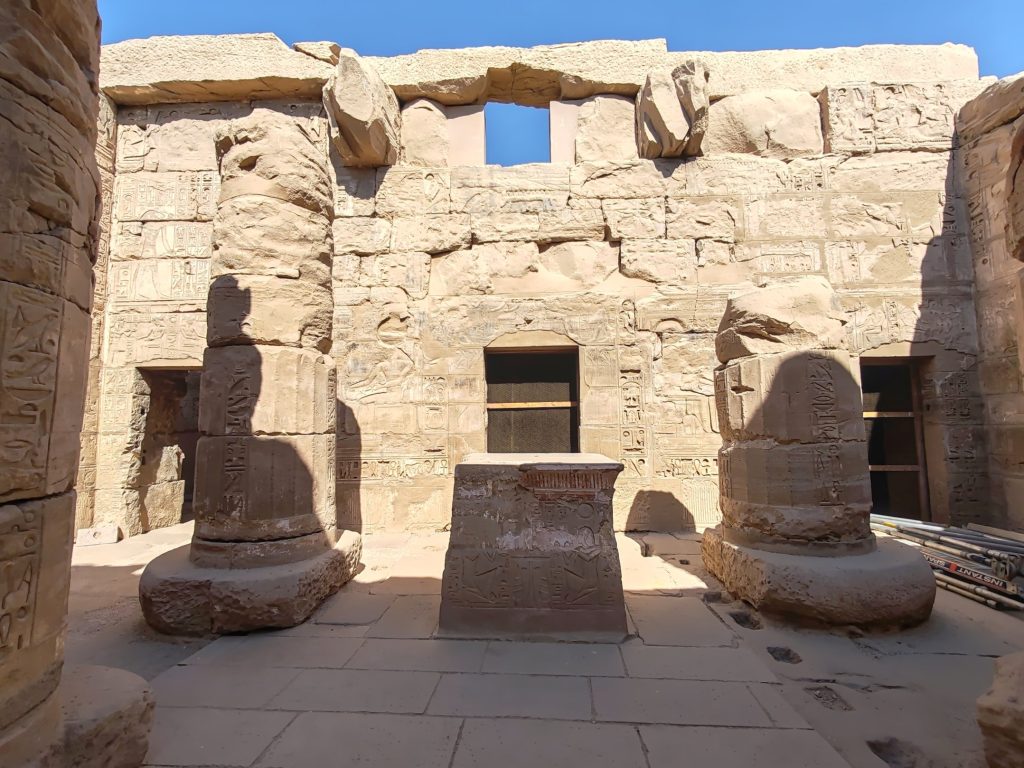
Outside the main temples, there were very few people, and while wandering around, we got to see some truly beautiful places all to ourselves. A unique feature worth mentioning is the “locked” Opetin Temple, which you can enter if/when the “guard” at the door lets you in. This small temple was also quite impressive, and we weren’t required to give a separate tip to visit it. However, it would probably have been polite to offer a small bill, but we simply didn’t have anything suitable with us.
Luxor Temple
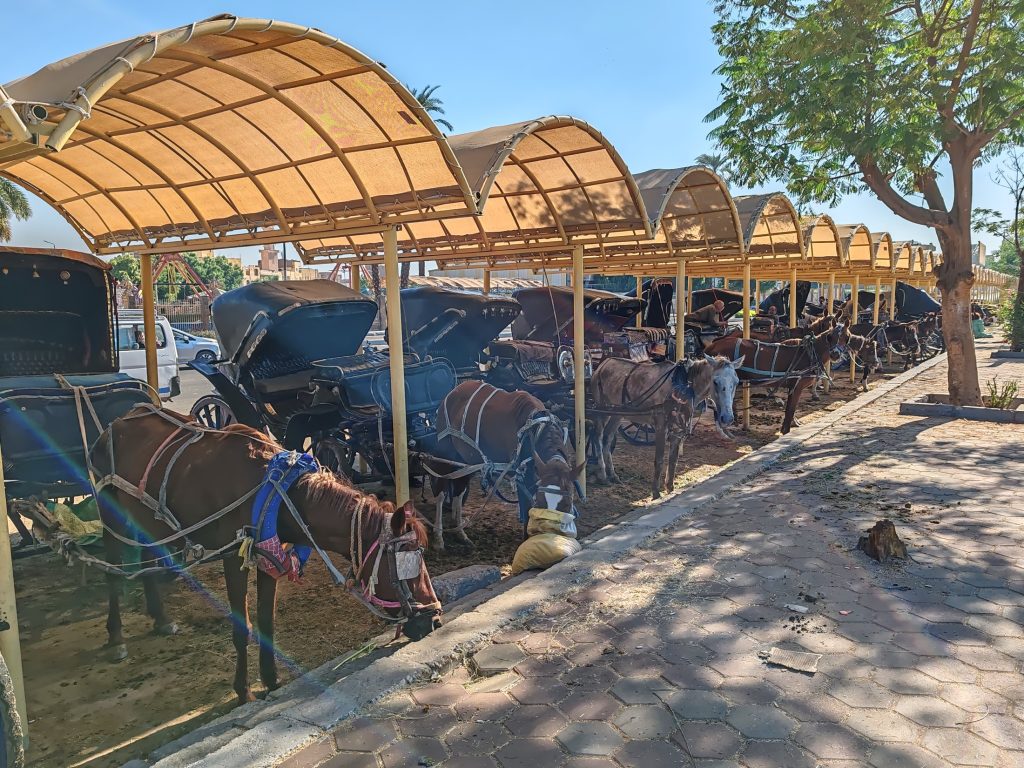
By late afternoon, despite the risk of sightseeing fatigue, we had one more destination left to explore: the Luxor Temple, located right in the heart of Luxor. The construction of this temple was initiated by Amenhotep III, who ruled between 1390–1352 BCE. We walked to this temple as well, ignoring all the men offering horse carriage rides. There are plenty of horse carriages on the streets of Luxor, many of them beautifully decorated. However, the horses’ living conditions might not be the best, although, fortunately, shaded shelters have been built for them.
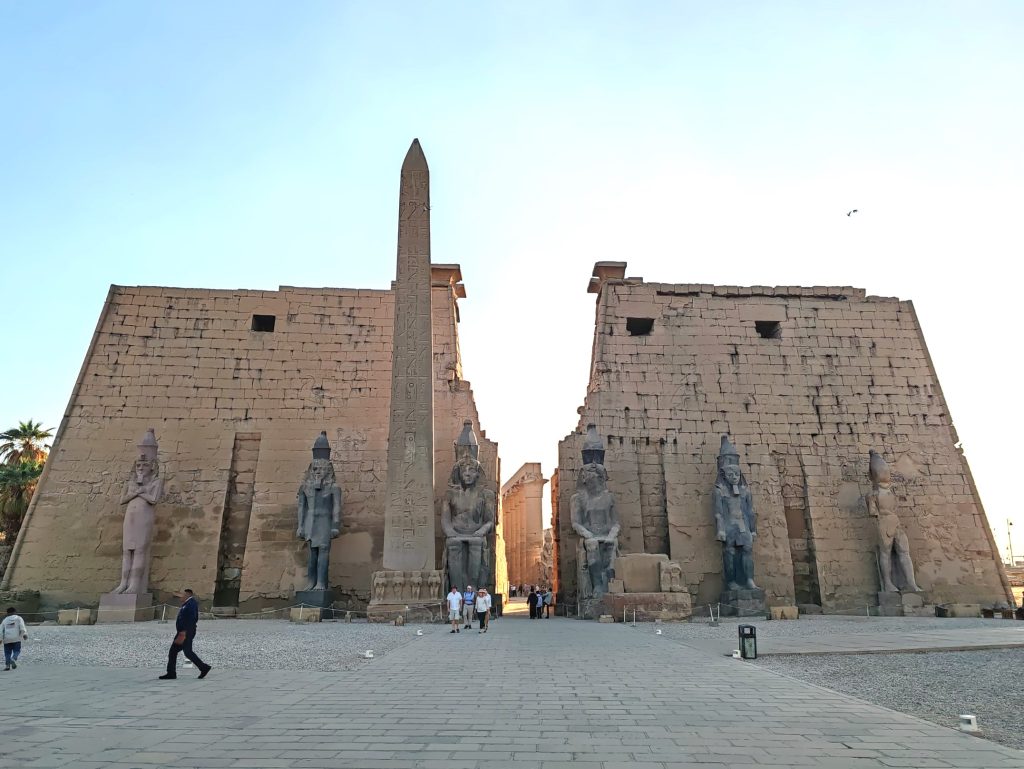
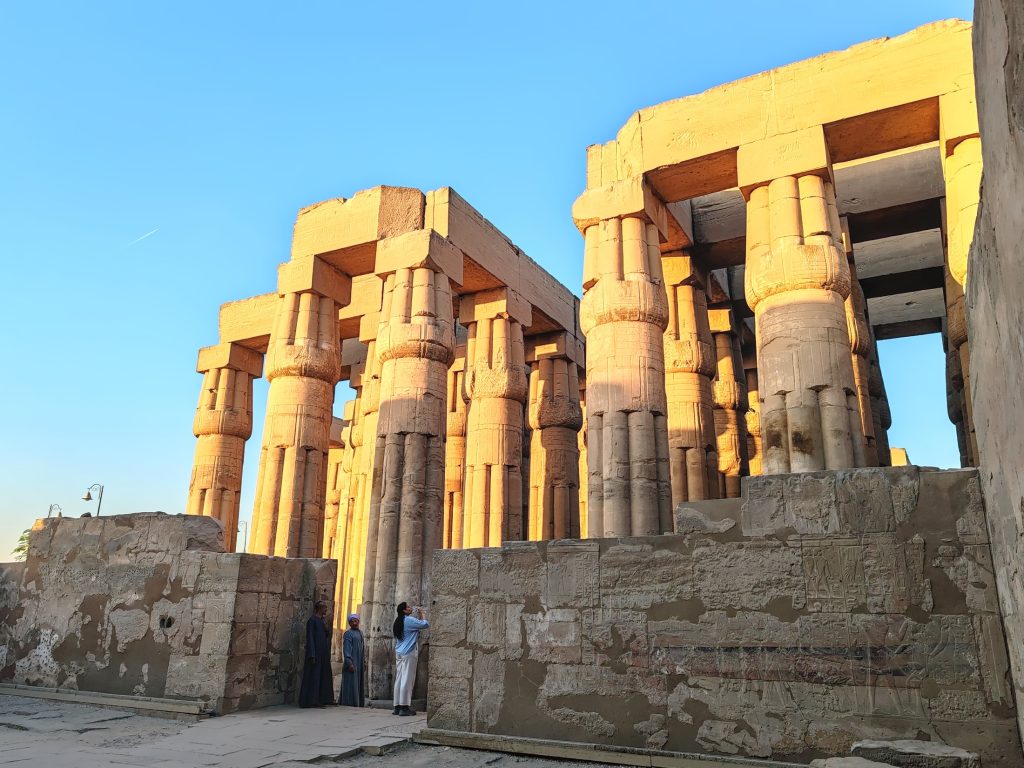
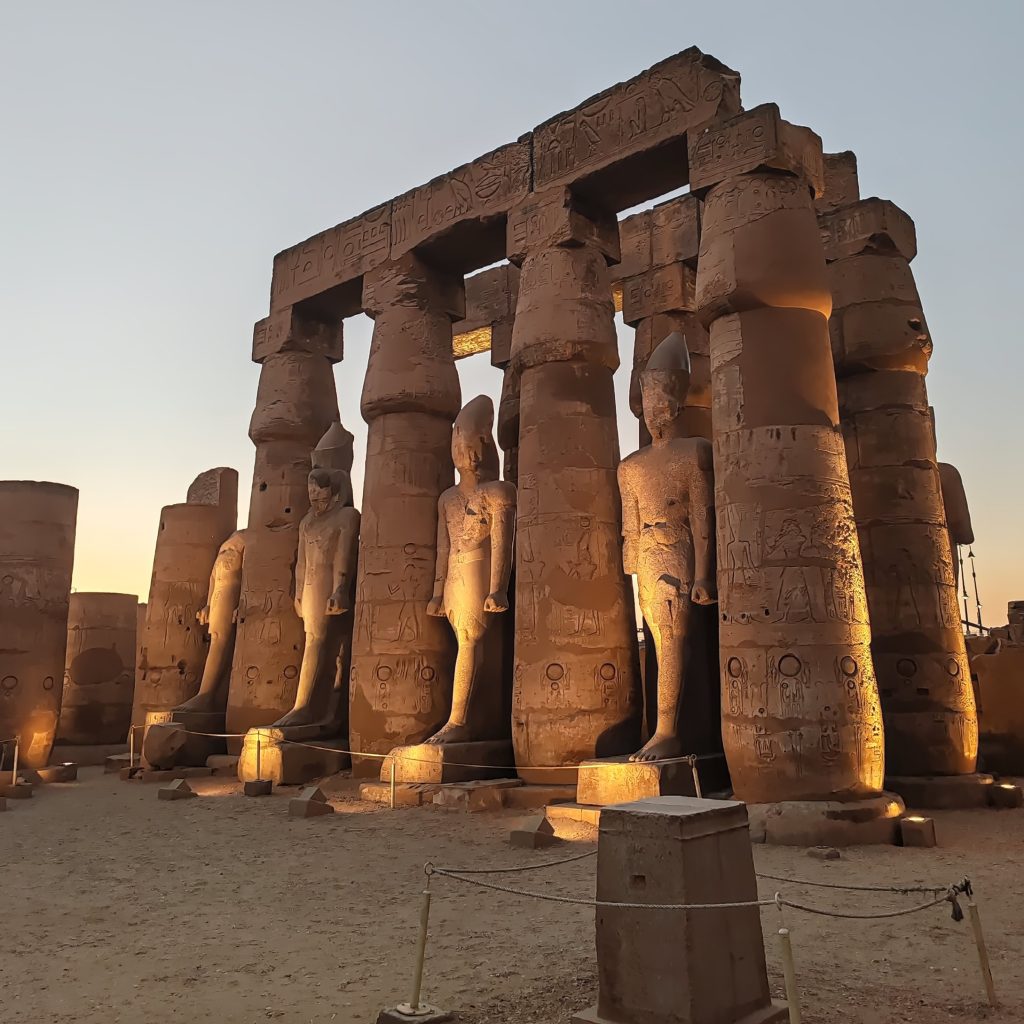
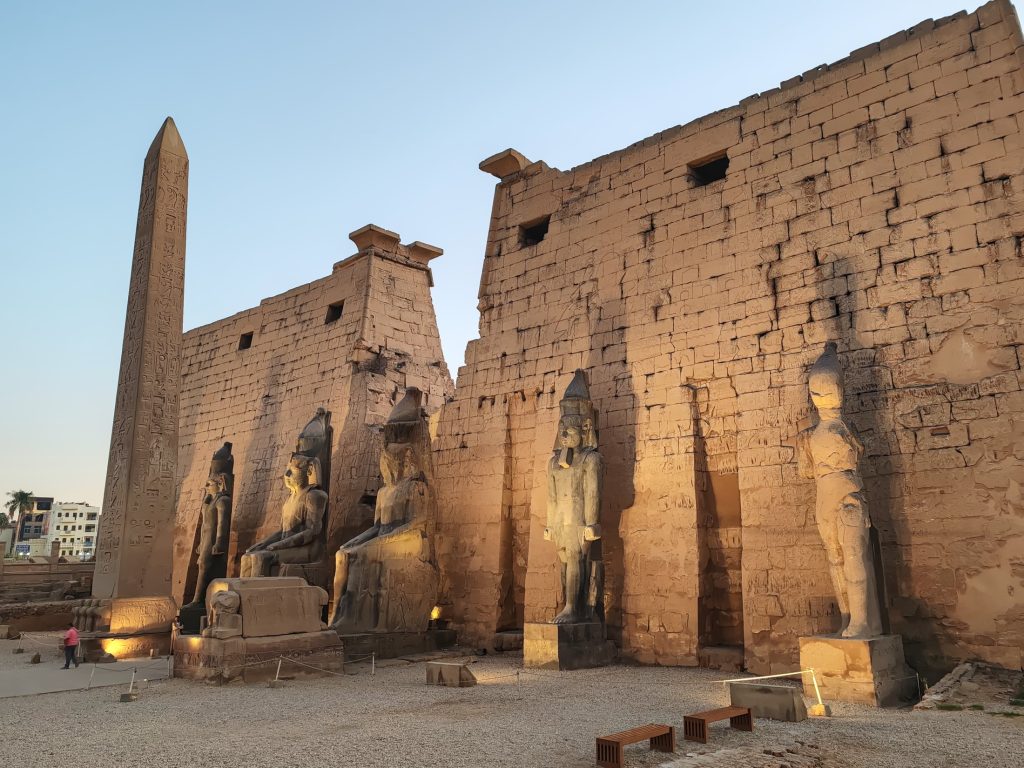
So, let’s head to the Temple of Luxor. Upon entering the temple area, the first thing you encounter is the impressive pylon built by Ramses II, which is connected to the Temple of Karnak by a long avenue of sphinxes. In front of the pylon, there are three of the original six statues of Ramses II, along with a magnificent obelisk. Its pair was gifted to France and is now located at Place de la Concorde in Paris. Passing through the gate, you enter the courtyard and colonnade of Ramses II, leading further to the courtyard and smaller halls of Amenhotep III from the 18th dynasty.
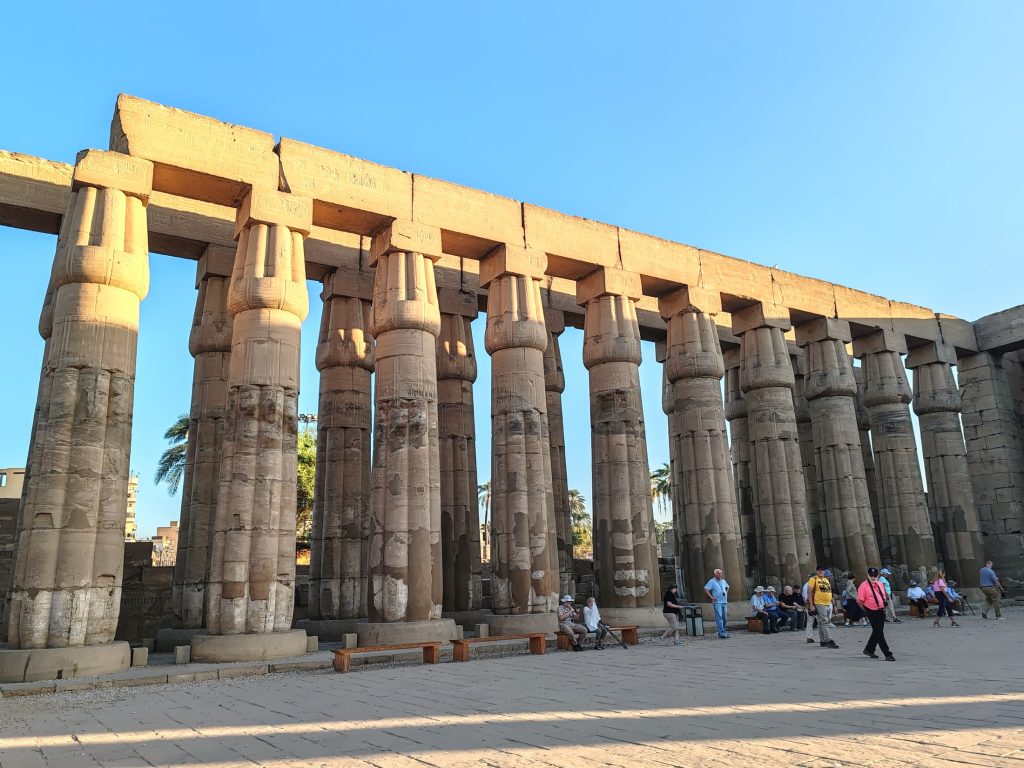
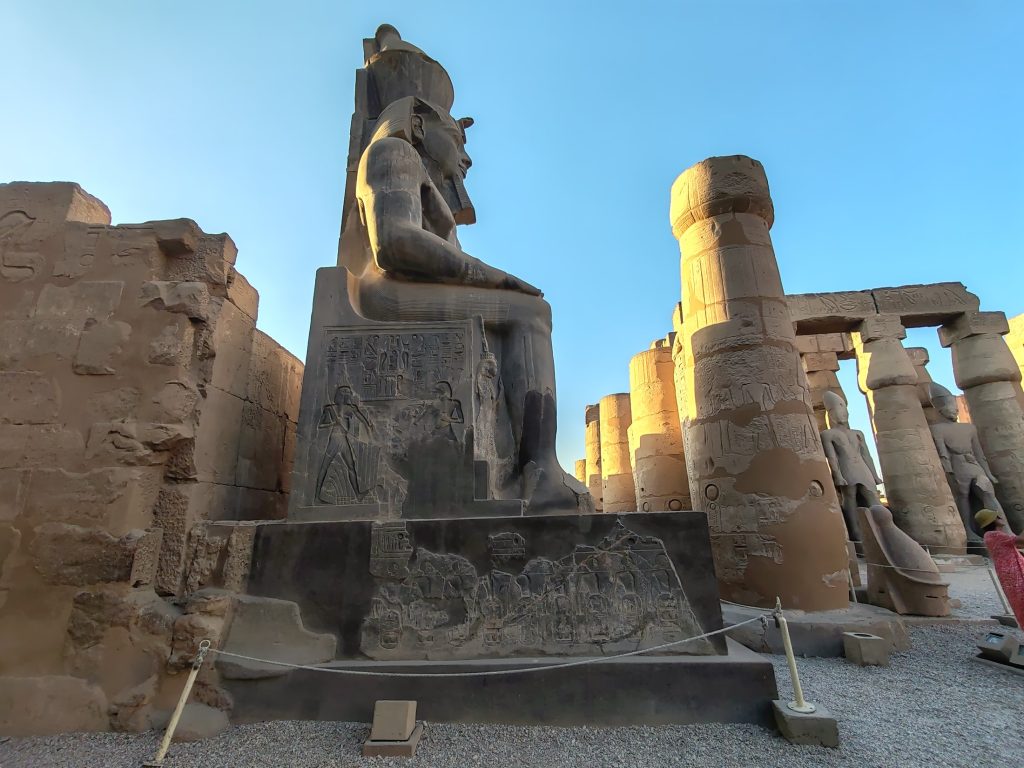
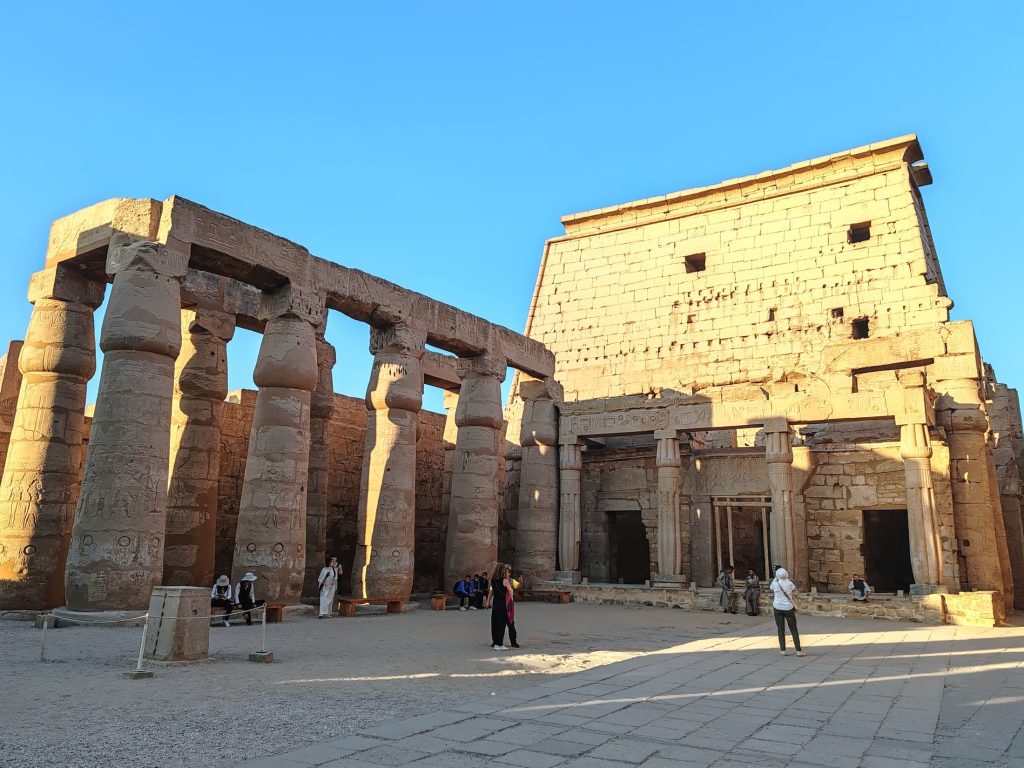
One of the specialties of the Luxor Temple is its long and still ongoing history as a religious building. In the late 4th century, Christian structures were built on the site of ancient temples, and in 640, the Abu Haggag Mosque, which is still in use today, was constructed on the site of a former basilica.
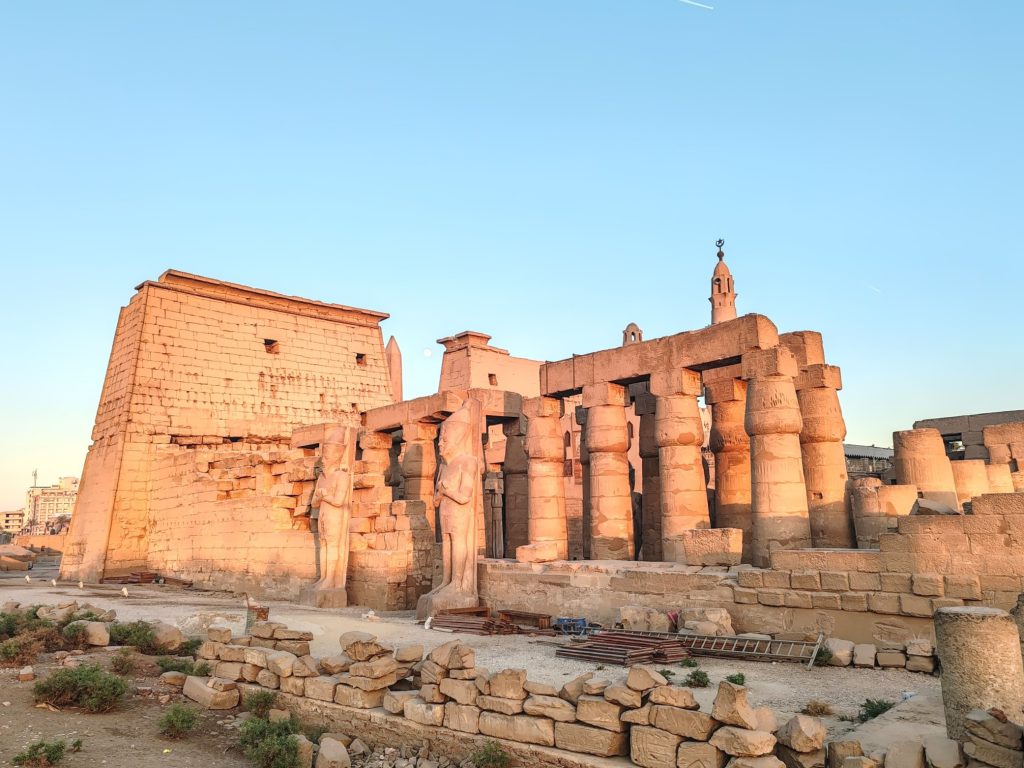
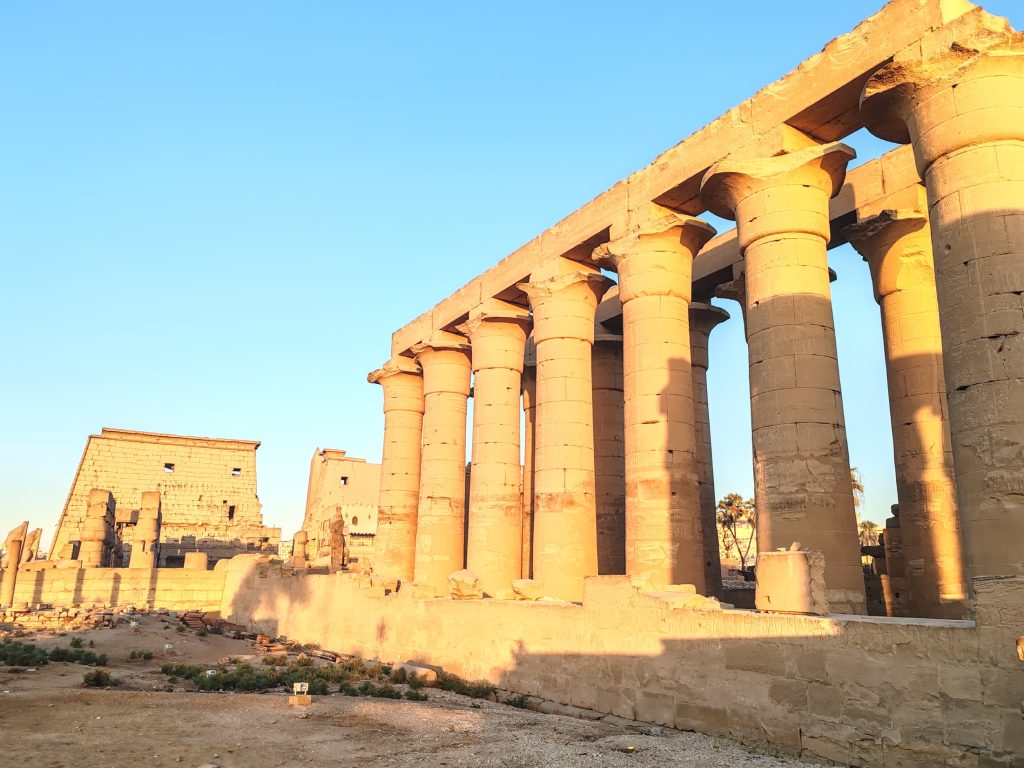
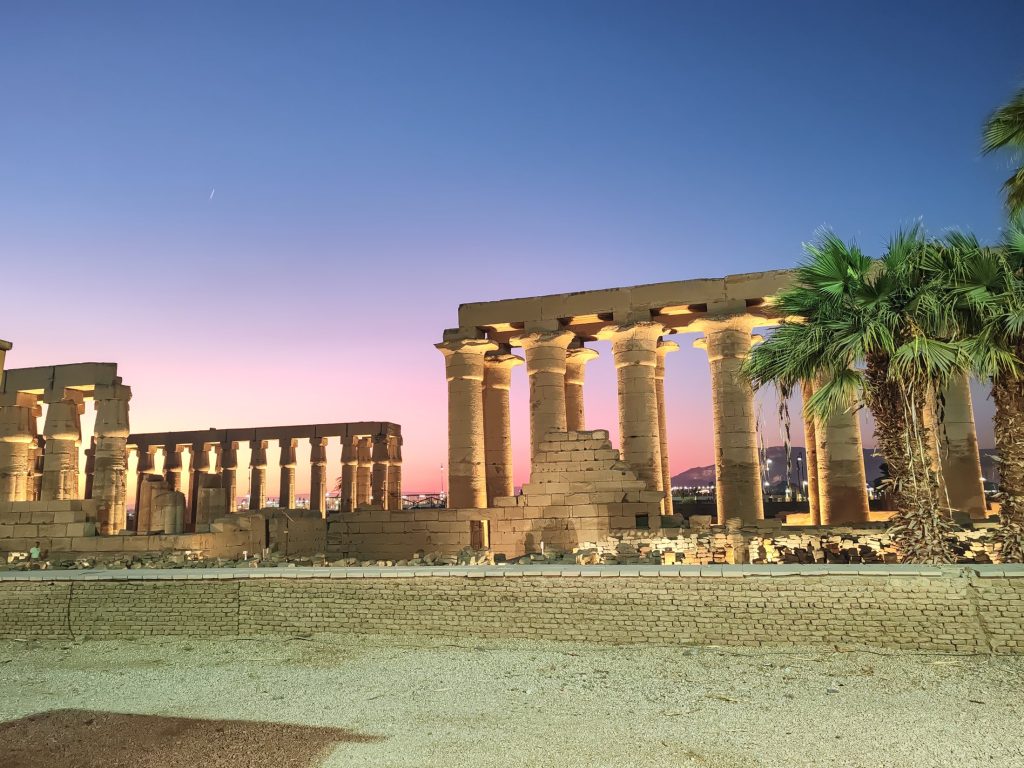
Regarding the Luxor Temple, our expectations weren’t as high as for Karnak, but it was absolutely magnificent as well, with its colossal statues and columns. We waited at the temple to witness the colors of the setting sun and the soft light that adds its own beautiful touch to the buildings and statues. The temple area is undoubtedly stunning even after sunset with its evening illumination, but we didn’t stay to see that. As we walked back to our accommodation from the temple, the sky above the Nile turned into beautiful shades of red and purple, which perfectly crowned a long but truly impressive sightseeing day in Luxor.
By bus to Hurghada by the Red Sea
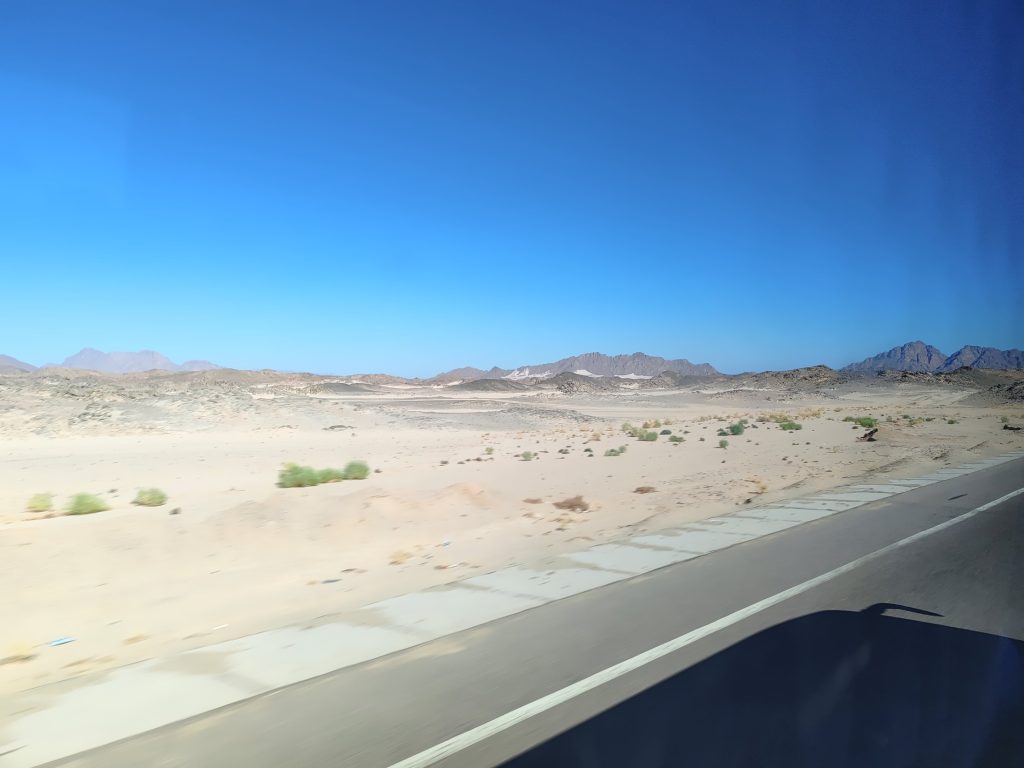
The last destination of our trip to Egypt was Hurghada, a city located on the Red Sea coast, best known as a package holiday destination. We also traveled to Hurghada by bus, this time taking a morning service operated by the Go Bus company, which was clearly more of a tourist bus compared to the one we took from Giza. The five-hour bus ride went smoothly along good roads, first through the lush Nile Valley and then across the rugged, rocky desert.
Work-focused visit to Hurghada and El Gouna
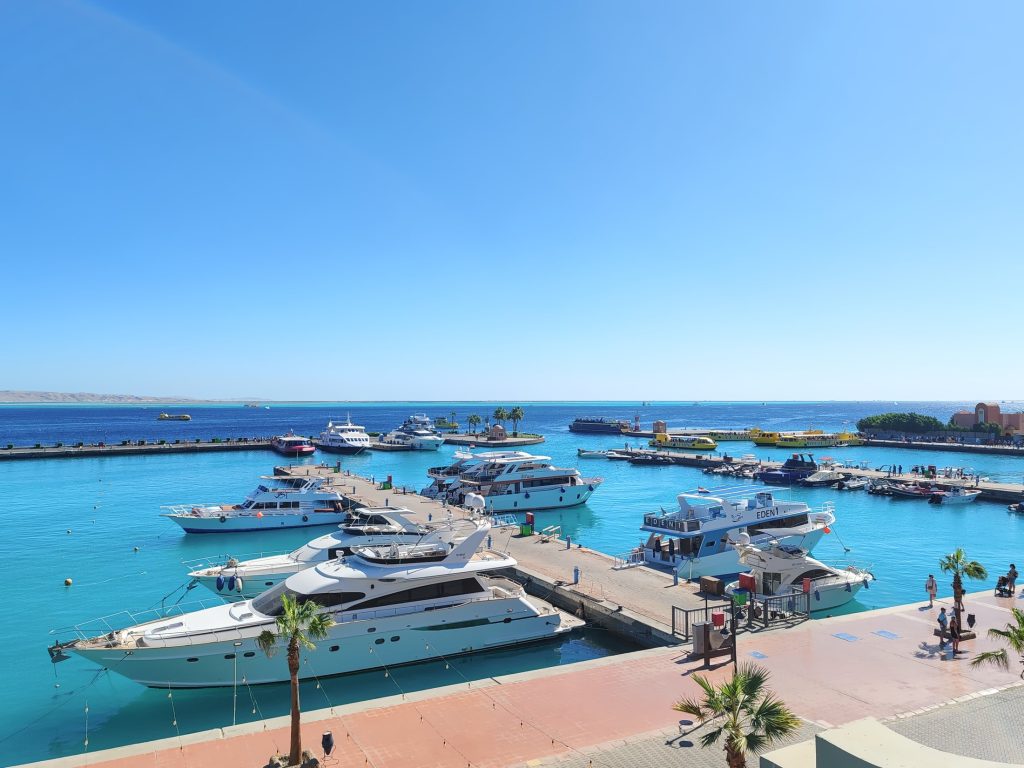
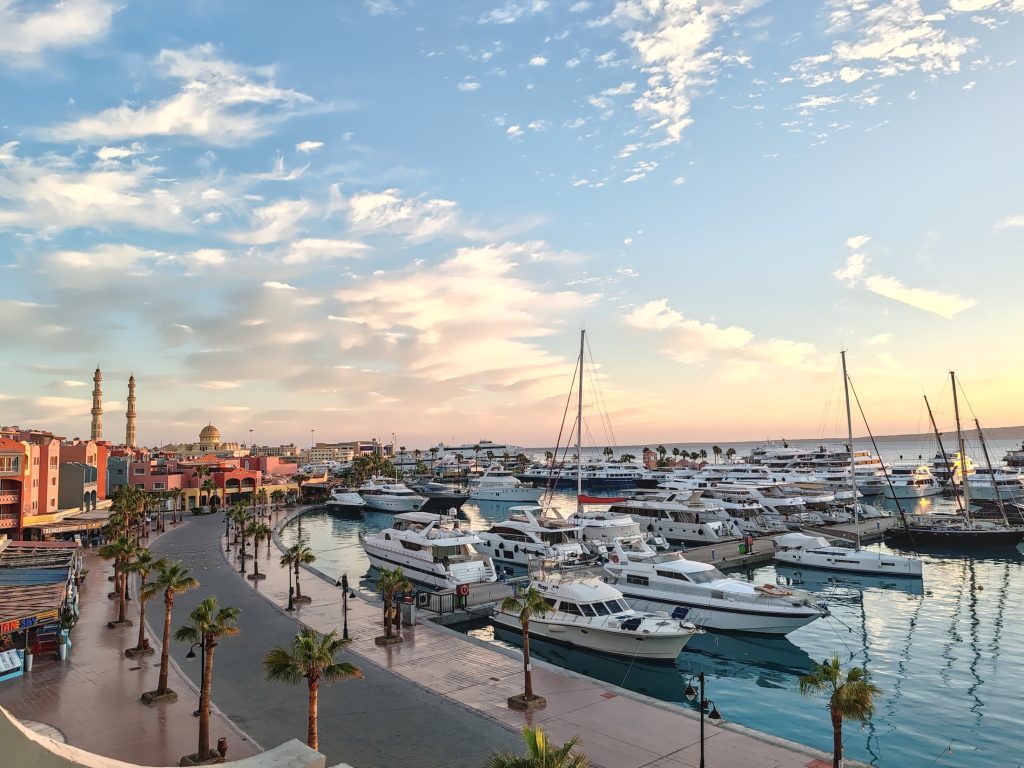
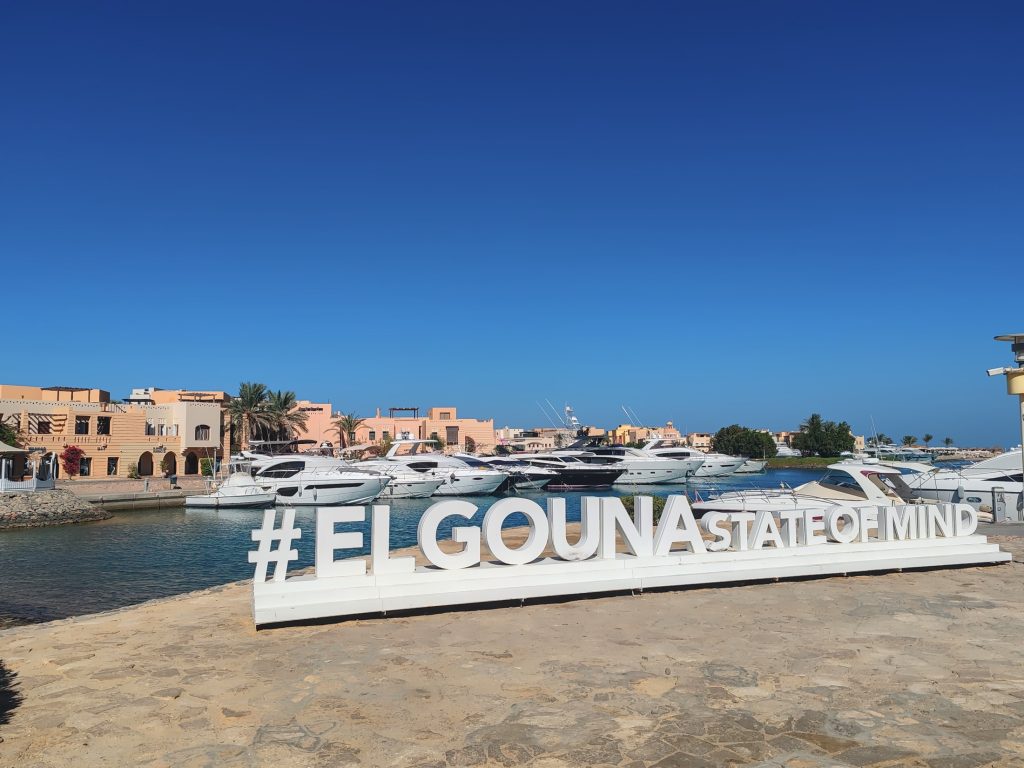
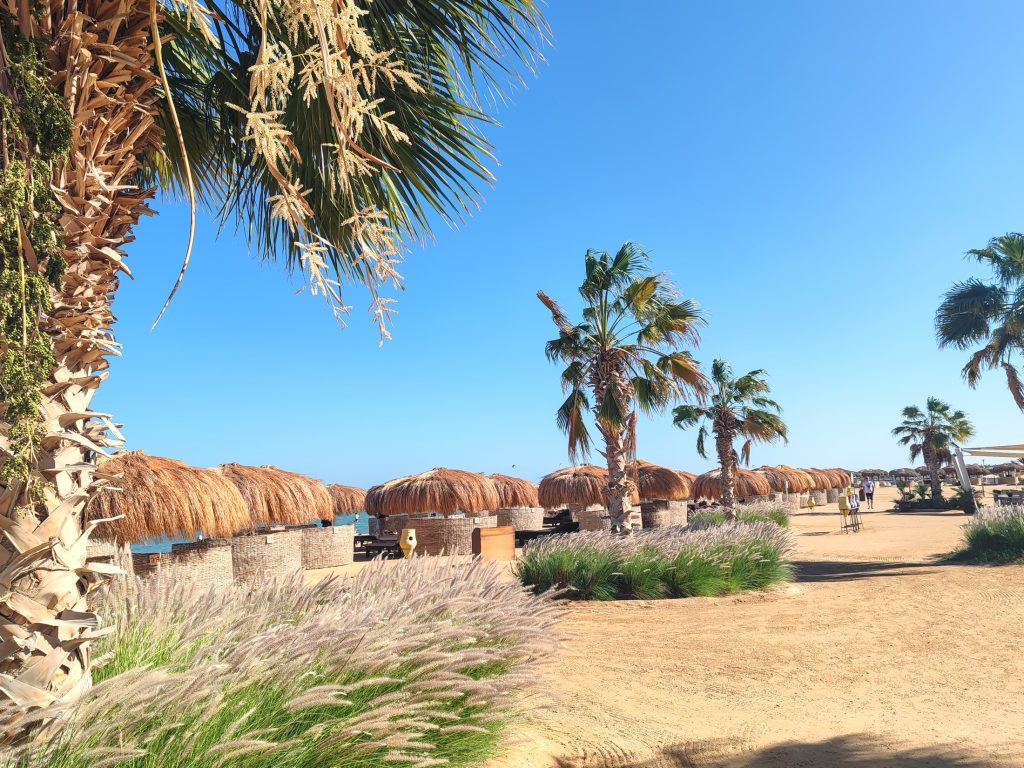
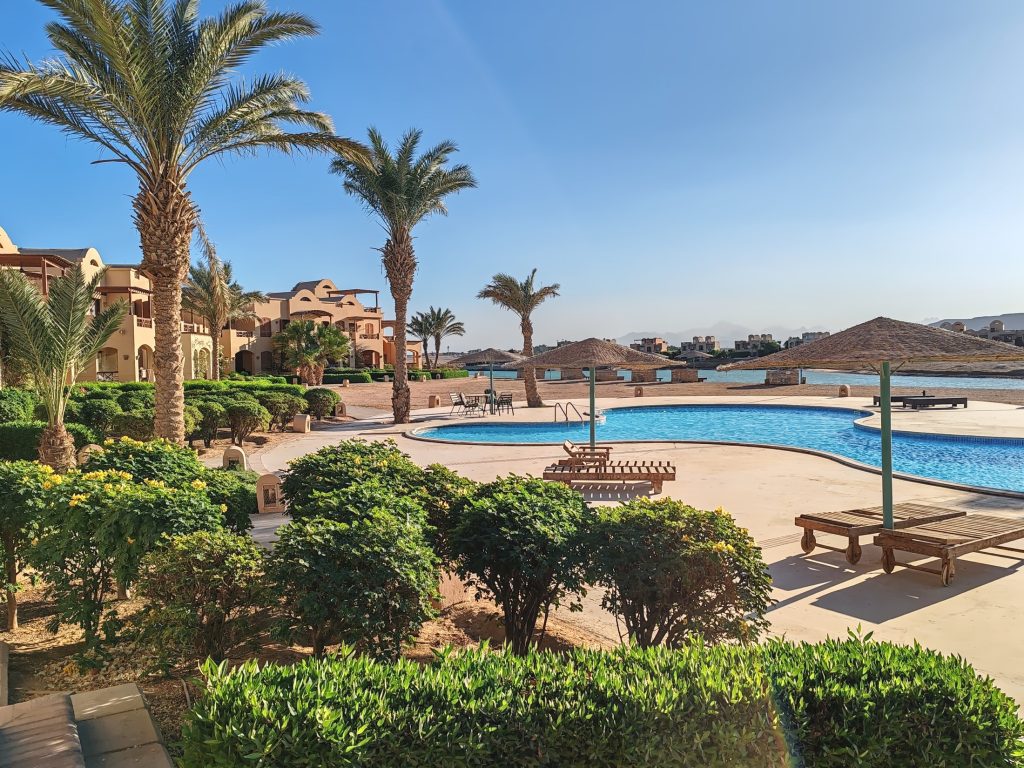
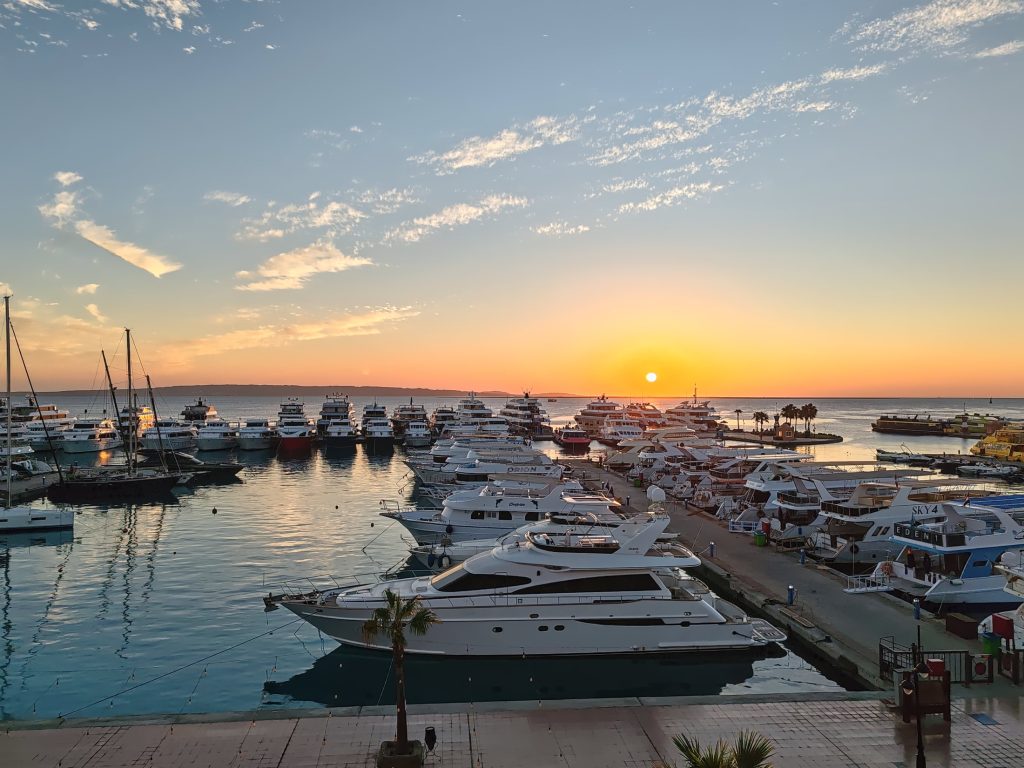
Our reason for going to Hurghada was also connected to a work project with Manna Insect, so instead of being on a holiday, we mostly focused on business activities. We stayed at Hurghada’s harbor and explored the surroundings on runs and short walks. The marina area itself is very pleasant, and nearby is the impressive Al Mina Mosque, but beyond that there isn’t much to see in the immediate area. We didn’t even visit Hurghada city, but we did take a short trip to El Gouna with our business partners. El Gouna is a privately developed resort and residential area, known for its man-made lagoons and islands as well as its upscale marina.
This two-week trip to Giza, Cairo, Luxor, and Hurghada was our first experience with Egypt, and left us with a surprisingly positive feeling about the country. Egypt certainly has many problems, but they are not really visible to tourists, and the wonders of ancient Egypt alone make the country an interesting destination.
The price level is super affordable at the moment, the climate is warm even in the winter months, and the level of safety is currently good. If we return to Egypt again, our target list includes at least a cruise on the Nile, Abu Simbel, and Alexandria on the Mediterranean coast. This time, our trip continued from Hurghada on a budget flight to Cologne, then by bus to Brussels, and on a one-way TUI flight to the Dominican Republic. In the following posts, we will talk about nomadic life and traveling in the Caribbean!
You can also follow nomad life on FinnsAway’s Instagram ja Facebook-pages!