Our Caribbean trip continued from the beaches of Bayahibe to the capital of the Dominican Republic, Santo Domingo. We first settled in the northern part of the city for a few days, with the intention of focusing more on laptop work, and then moved to the city’s old colonial-style center, Ciudad Colonial. Ciudad Colonial is the oldest, still inhabited city in the Americas founded by European settlers, and undoubtedly the heart of Santo Domingo. Many travelers visiting the Dominican Republic stop by Santo Domingo only for a day trip to explore the historic neighborhoods, but we absolutely recommend staying a bit longer. For us, Zona Colonial and Santo Domingo became a kind of base for the entire Caribbean journey, and we returned to the city several times throughout the winter 24/25.
History of Santo Domingo in a nutshell
The history of the city of Santo Domingo can be traced back to 1493, when the Spanish arrived on the island under the leadership of Christopher Columbus. The actual colonial city was founded by Columbus’s brother, Bartolomeo Columbus, in August 1498 and was named La Nueva Isabela after Queen Isabella I of Spain. In 1495, the city was renamed Santo Domingo (de Guzmán) in honor of Saint Dominic. The very first parts of the city were located on the eastern side of the Ozama River, but the main city, now known as the old town Ciudad Colonial, was built on the western side of the river along the Caribbean Sea after a devastating hurricane hit the first settlement in 1502.
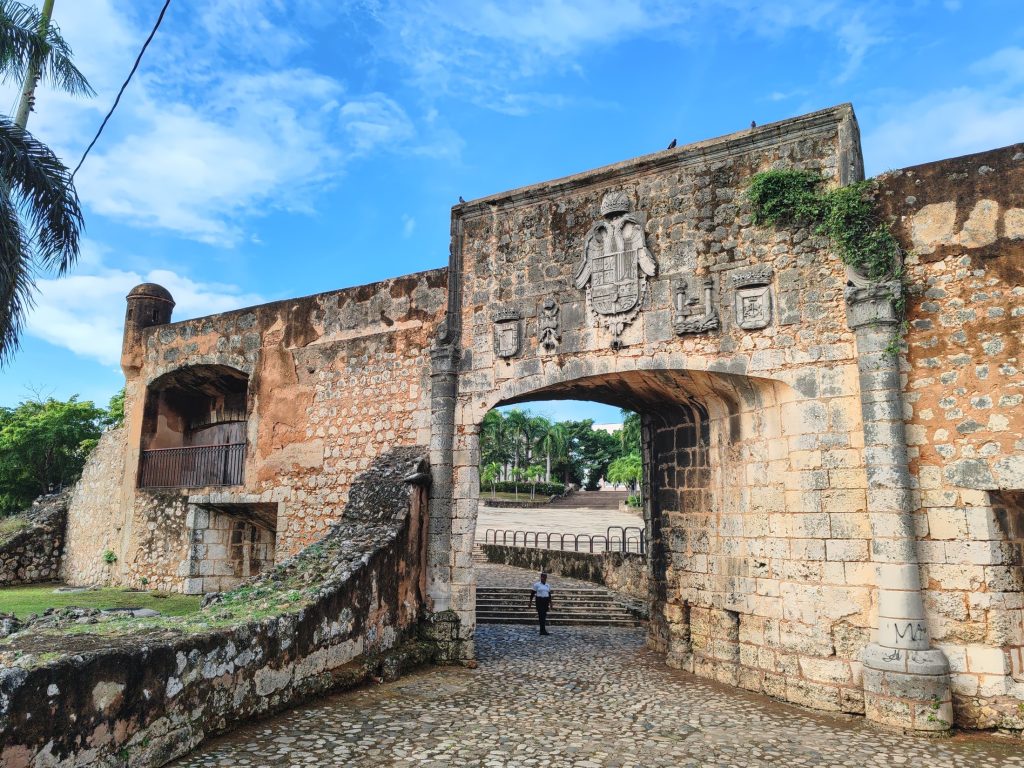
Santo Domingo was in many ways a progressive city and served as a model for many other colonial cities in the Americas. The city became the site of the first fortress, street, cathedral, monastery and hospital in the Western Hemisphere, all of which still exist today, albeit some only as ruins. Additionally, also the first university in the New World, Santo Tomás de Aquino, was established in Santo Domingo (starting in 1538), and it is still operational. Santo Domingo was also the site of the first slave rebellion in the Americas, which occurred in 1521.

In 1655, a battle was fought for control of the city when English troops attempted to seize it from the Spanish colony. However, the city’s defenses held, and the English troops were defeated. Apparently, as a result of this battle, the defensive walls and fortification structures were modified into an even more protective form.
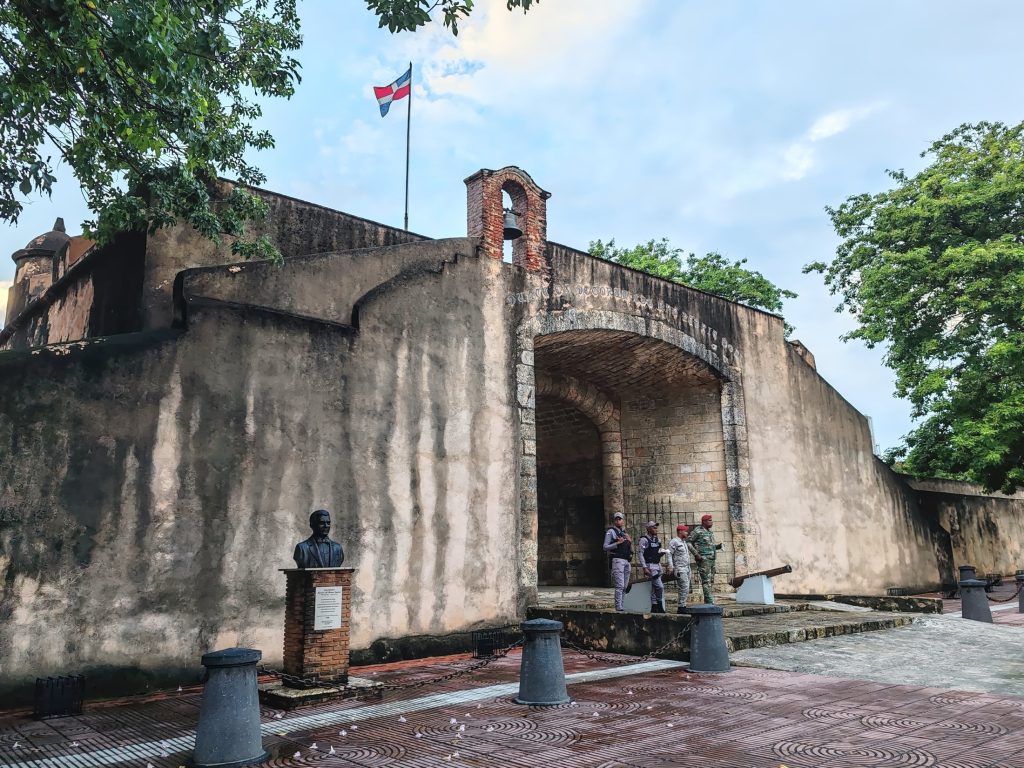
Between the years 1795 and 1822, the rulers of Santo Domingo and the entire colony changed quite frequently. In 1795, the city was handed over to France, and in 1801, it was captured by Haitian rebels. France regained control of the city in 1802, only for Spain to seize it again in 1809. In 1821, Santo Domingo became the capital of the nation known as Spanish Haiti, after forces led by José Núñez de Cáceres overthrew the Spanish Crown’s troops. However, just two months later, the colony rejoined Haiti, remaining part of it until the Dominican Republic’s independence in February 1844. Between 1936 and 1961, Santo Domingo was known as Ciudad Trujillo, named after Rafael Trujillo, the dictator who ruled the Dominican Republic and was also known as “El Jefe.”
Where to get travel insurance for a longer trip?
Over more than eight years of nomad life, we’ve searched for cost-effective and reliable solutions, especially for travelers’ health insurance.
In the article Nomad Travel Insurance: 3 +1 Easy Options, we present international insurance options suitable also for extended trips.
Charming Ciudad Colonial
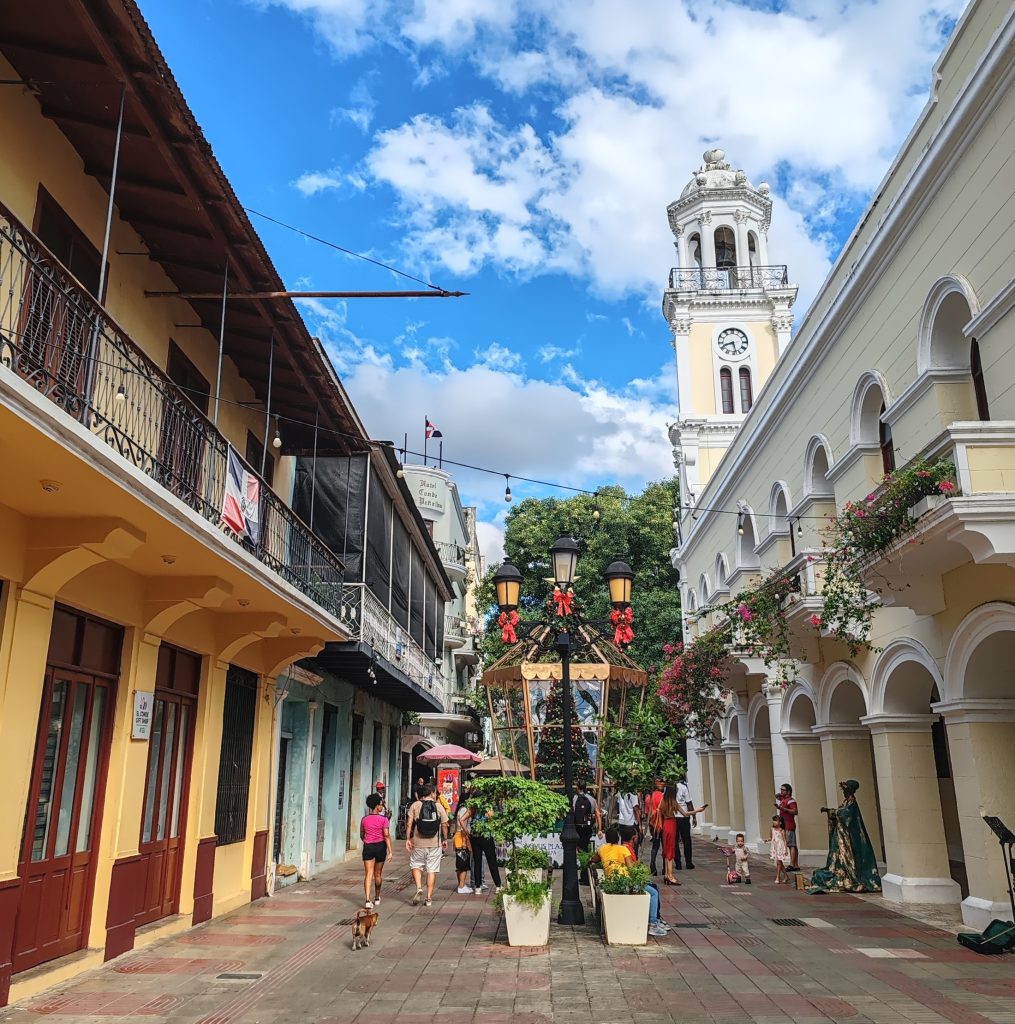
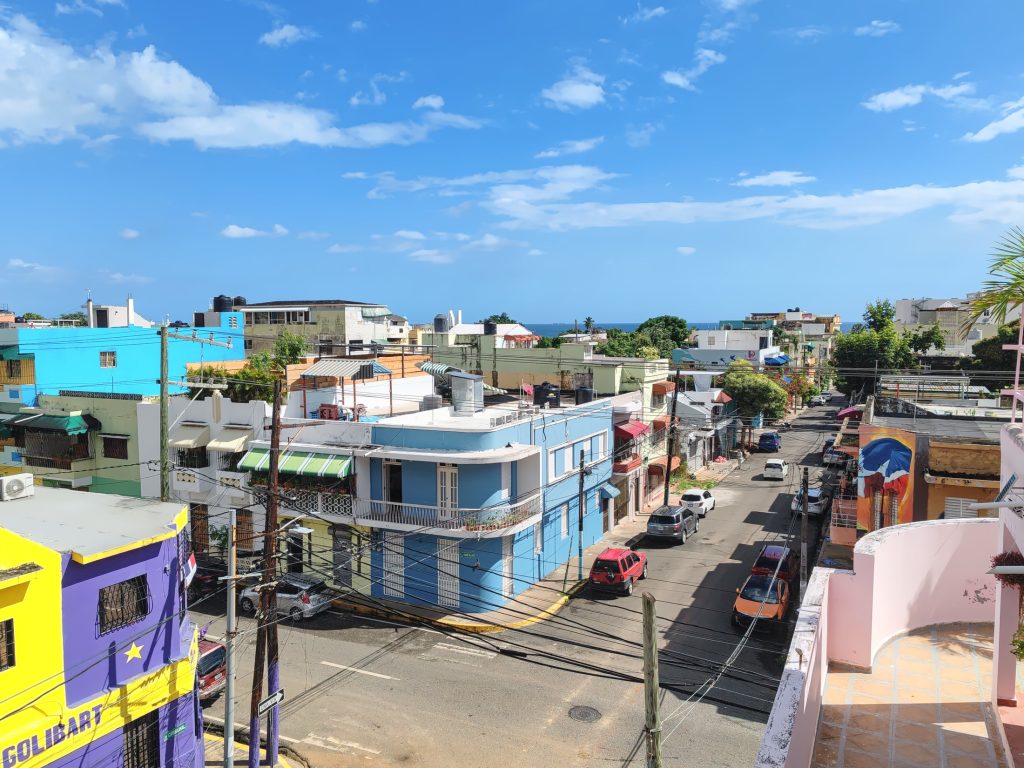
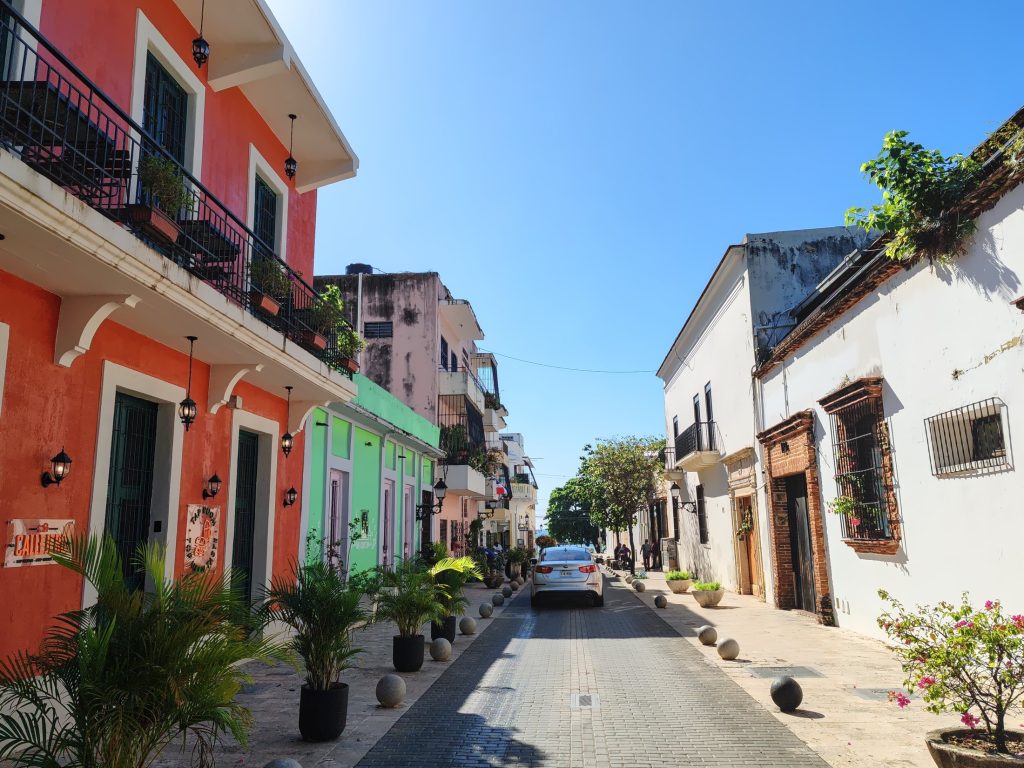
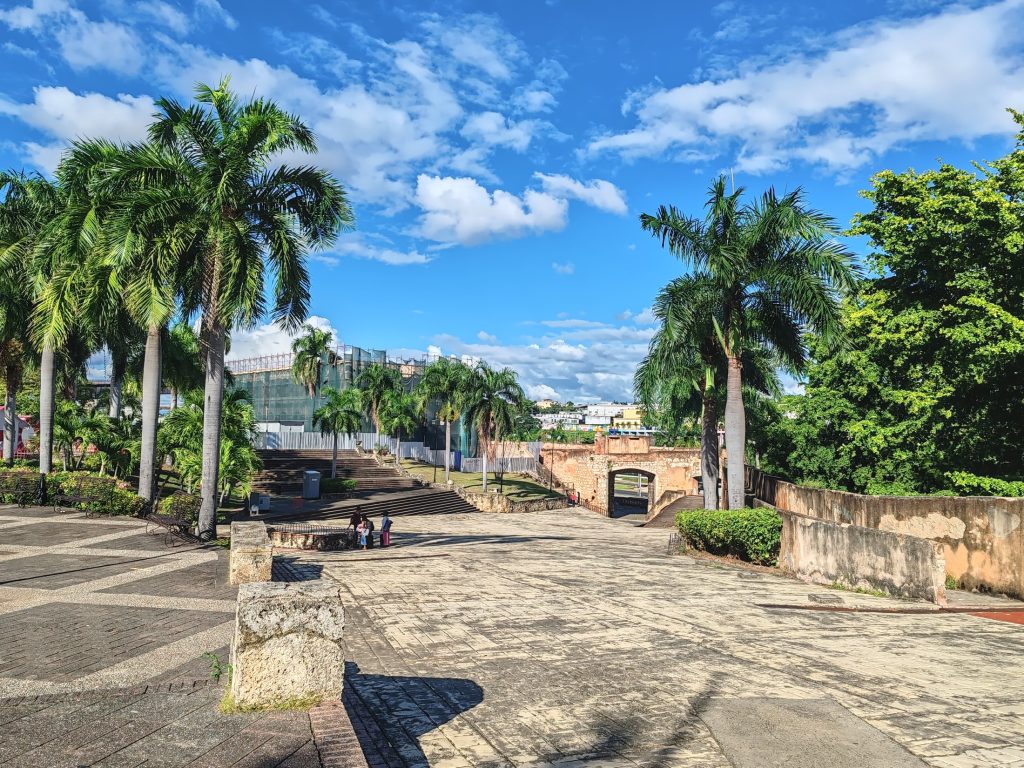
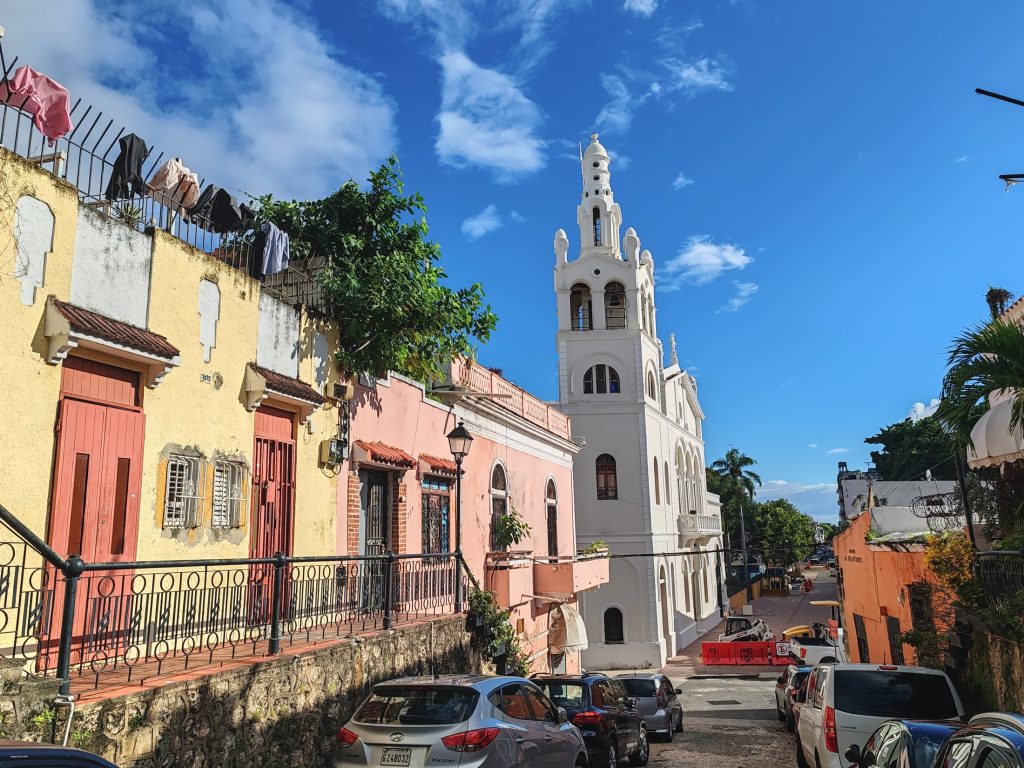
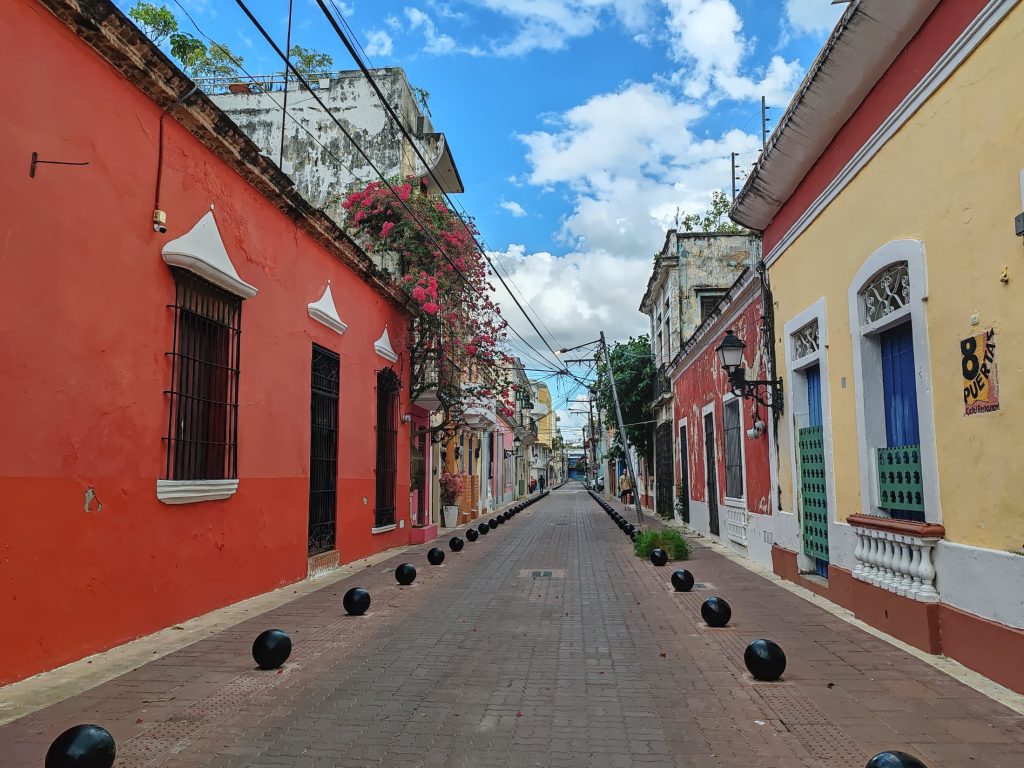
Although the current Santo Domingo is a bustling metropolis and the largest city in the Caribbean, the Zona Colonial area is relatively quiet in terms of traffic and exudes an old, even tranquil atmosphere. The long colonial history is truly evident in Zona Colonial, and the streets of the old town are wonderfully atmospheric. The buildings and streets of this UNESCO World Heritage-listed area are generally well-maintained, and during our visits, we saw several street renovation projects underway.
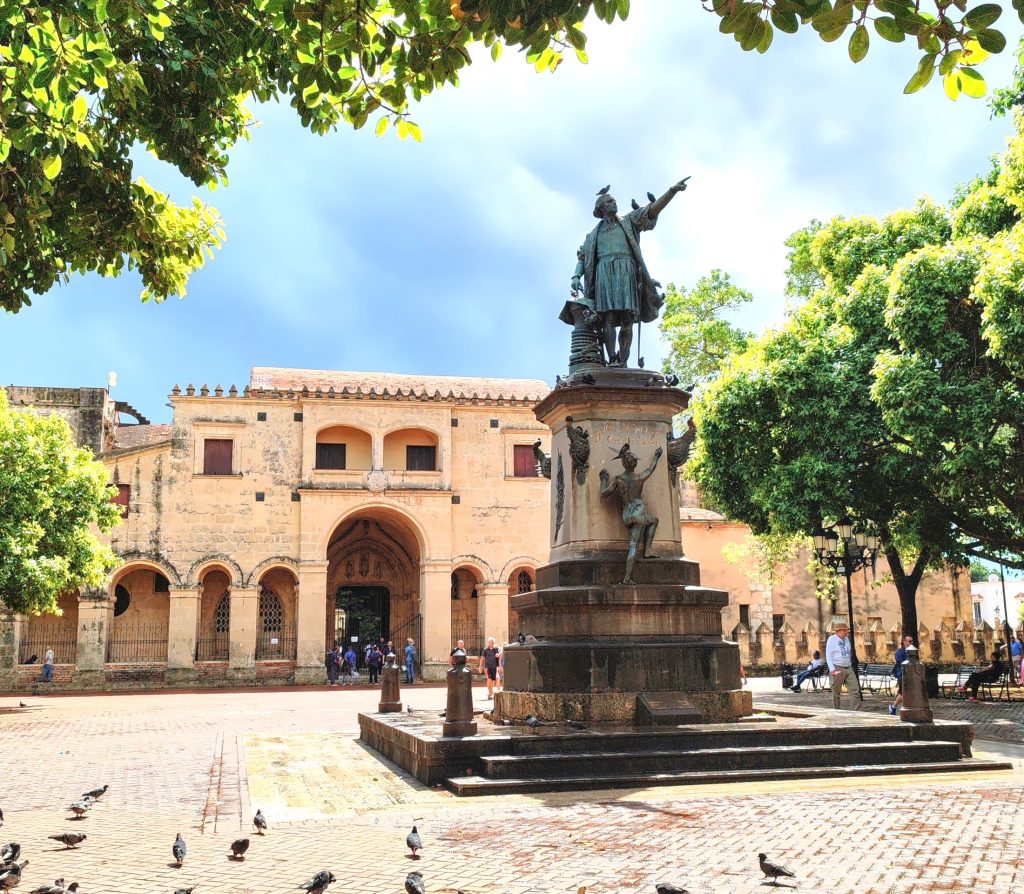
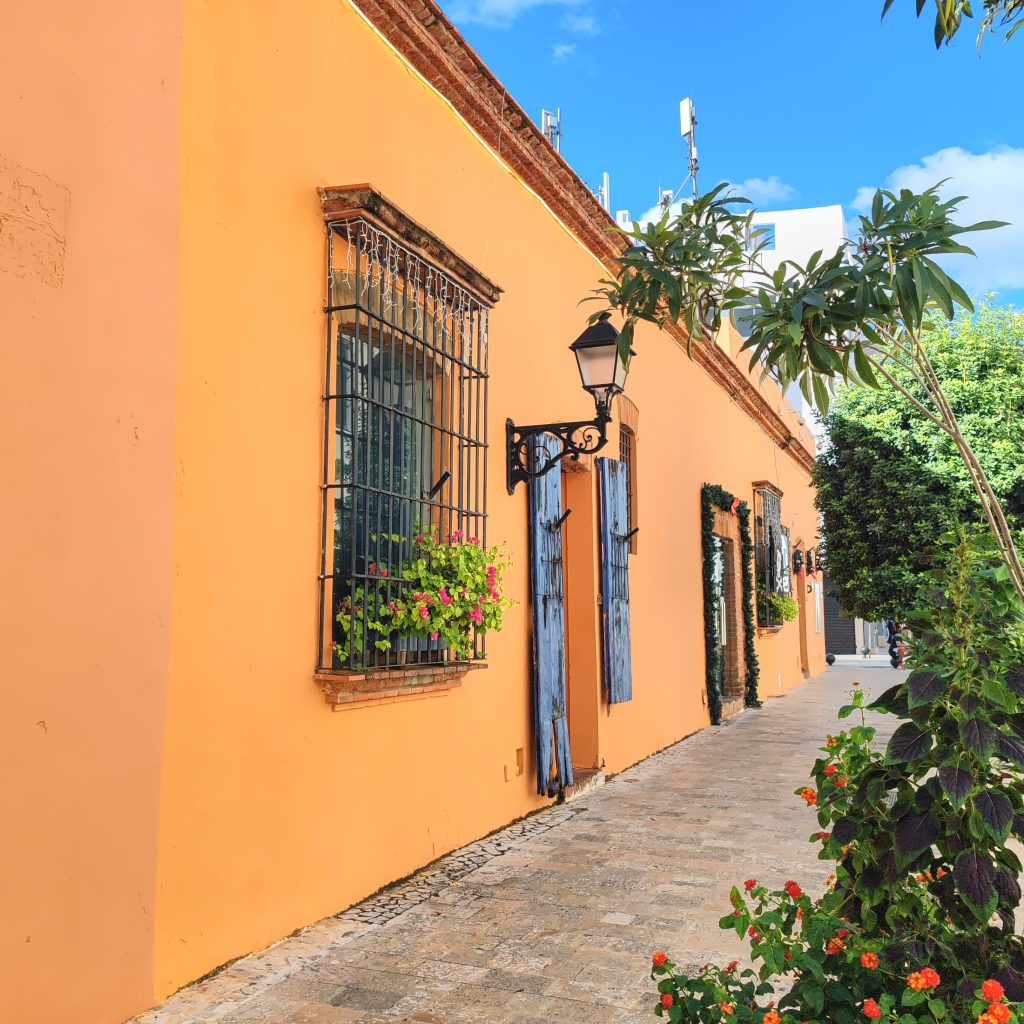
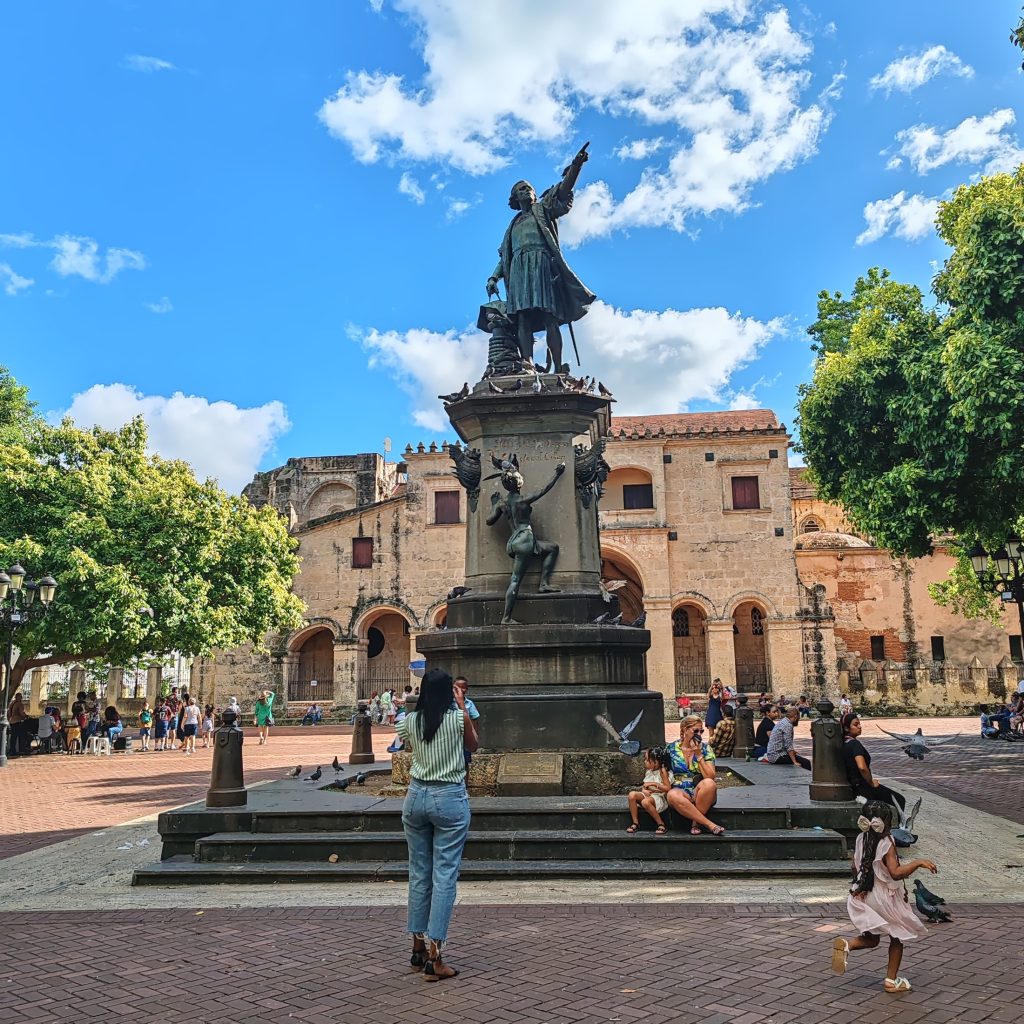
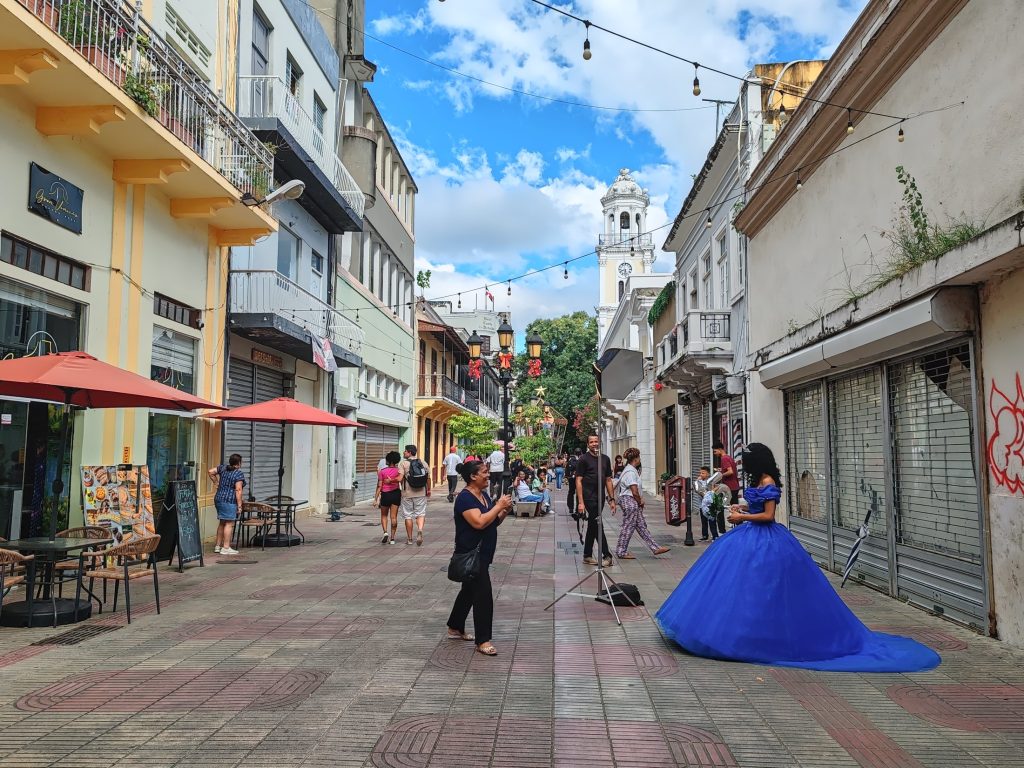
The heart of Zona Colonial is Parque Colón square, where a bronze statue of Christopher Columbus, erected in the late 19th century, stands at its center. On the eastern side of the square runs the charming, cobblestoned Calle Las Damas, the oldest paved street in the city and the New World. Along this picturesque street, you’ll find numerous historical palaces and old residential buildings. To the west of Columbus Square lies the pedestrian street El Conde, known for its bustling shops and restaurants. El Conde ends at the city gate Puerta del Conde, which leads to Parque Independencia, the Independence Park.
Historical landmarks of Santo Domingo
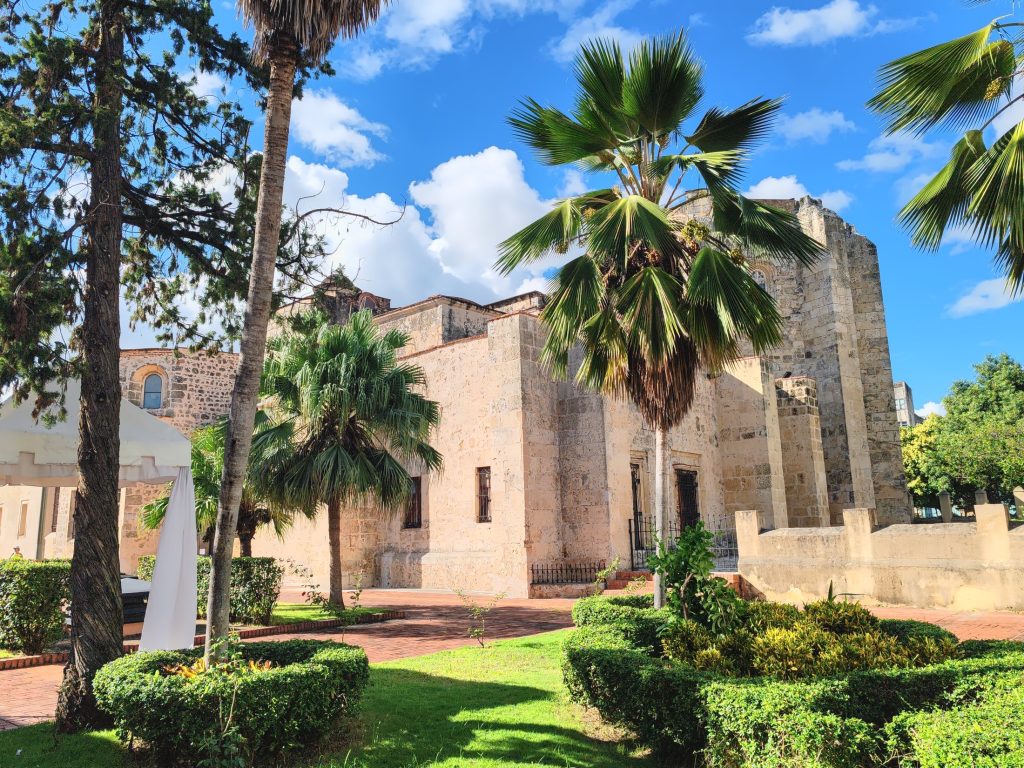
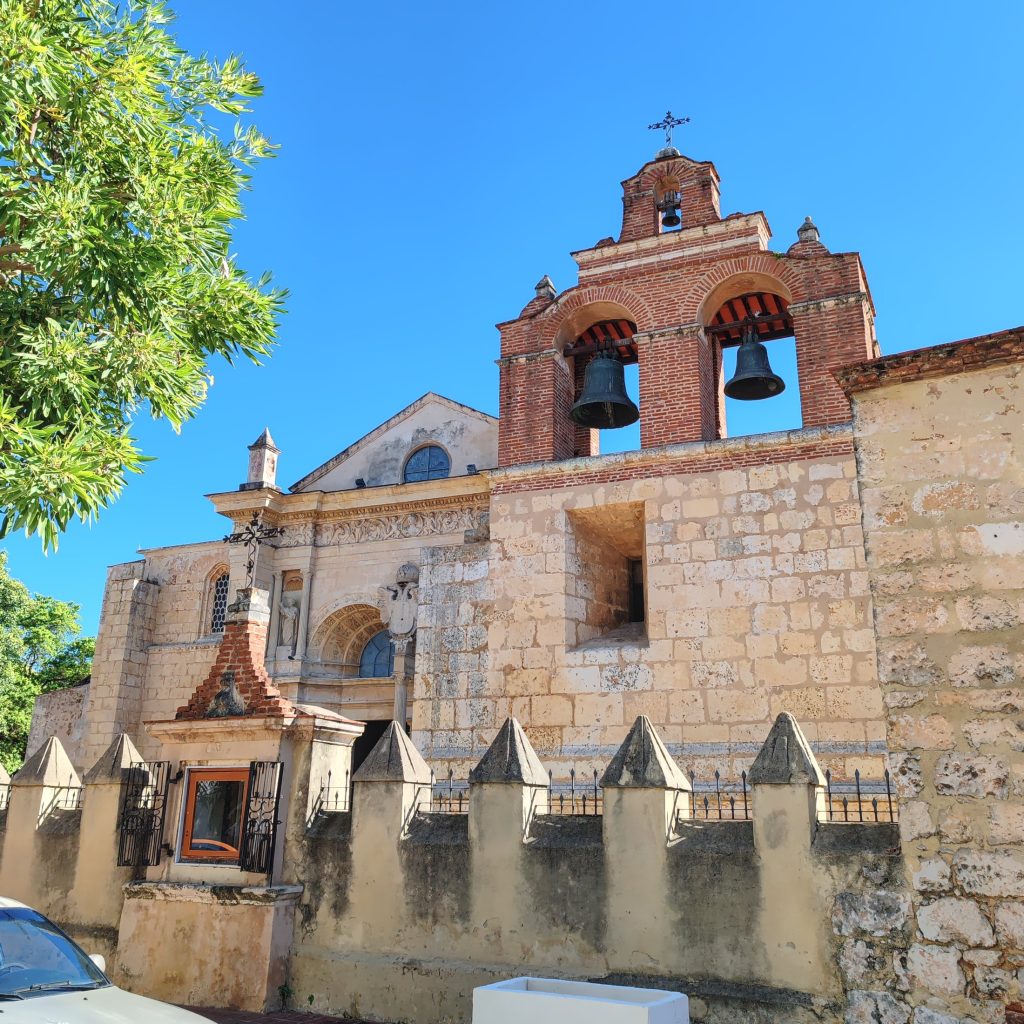
The Catedral Santa María la Menor, the Cathedral of Santo Domingo, is located next to Plaza Colón, Columbus Square. The construction of the magnificent cathedral began in 1512 by order of Pope Julius II and was completed in 1550. The cathedral’s architecture is primarily Gothic in style.

Alcázar de Colón, Columbus’s fortress, is located in Plaza de España square in the northern part of the old town. The Gothic and Renaissance-style building, which served as the governor’s palace, was completed in 1514 and was commissioned by Christopher Columbus’s son, Diego Columbus. Serving as the residence of the Columbus family for a long time, Alcázar de Colón is the first fortified palace in the Western Hemisphere.
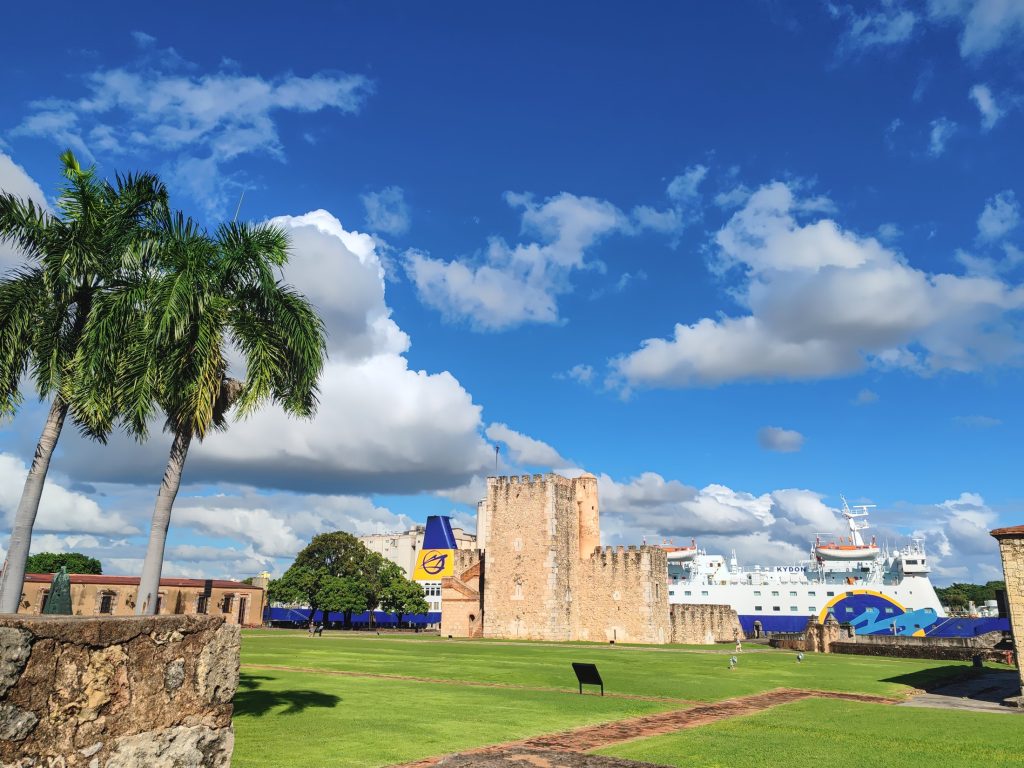
Fortaleza Ozama, in turn, is the oldest military structure of European origin in the Americas. The defensive fortress, built as part of the walls of Santo Domingo, was constructed between 1502 and 1508, initiated by Governor Nicolás Ovando. The walls that once surrounded the current old town extended from the riverbank all the way to the Puerta del Conde gate, which served as the main entrance to the city.
Outside the old town, the most significant landmark is likely the Faro a Colón, the Columbus Lighthouse. Construction of this mausoleum, built as a monument to Christopher Columbus, began in 1986 and it was inaugurated on the 500th anniversary of Columbus’s first voyage in 1992.
El Malecon is perfect for jogging and admiring sunsets.
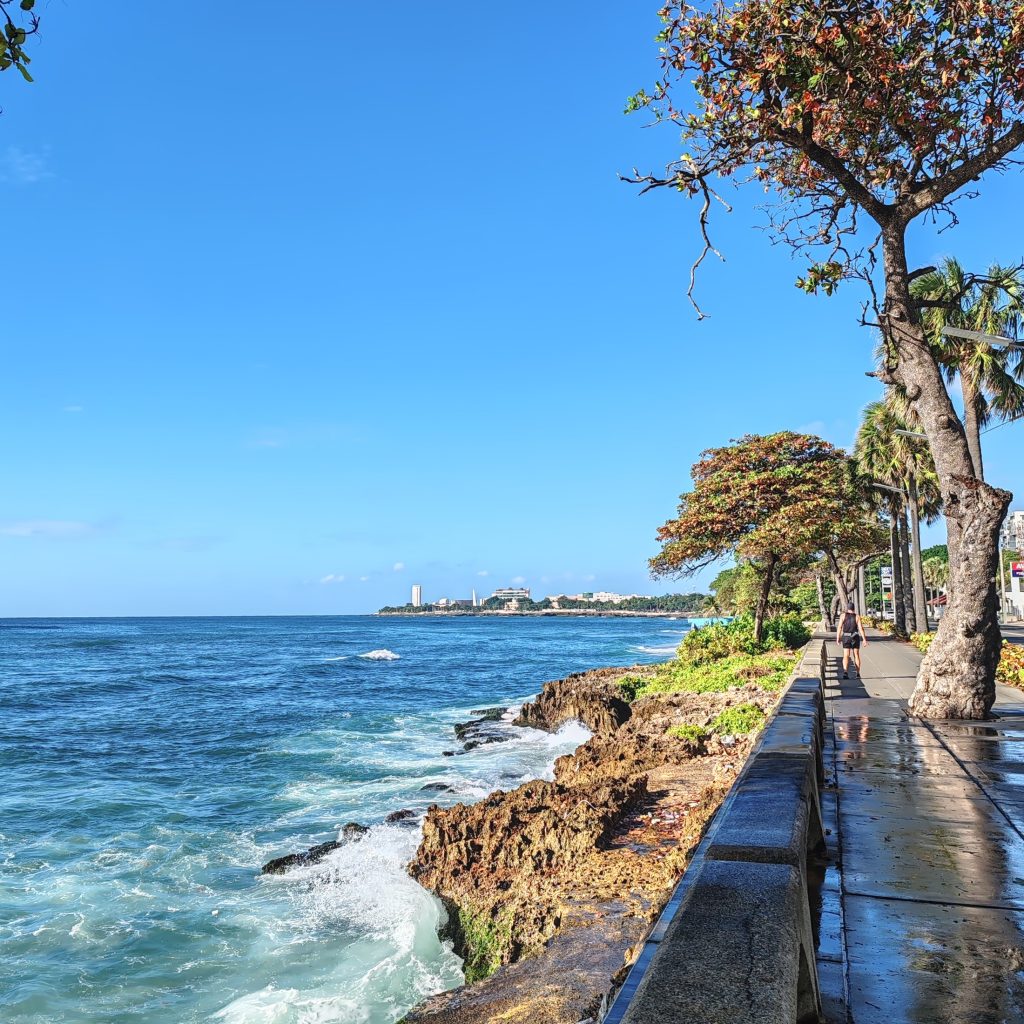
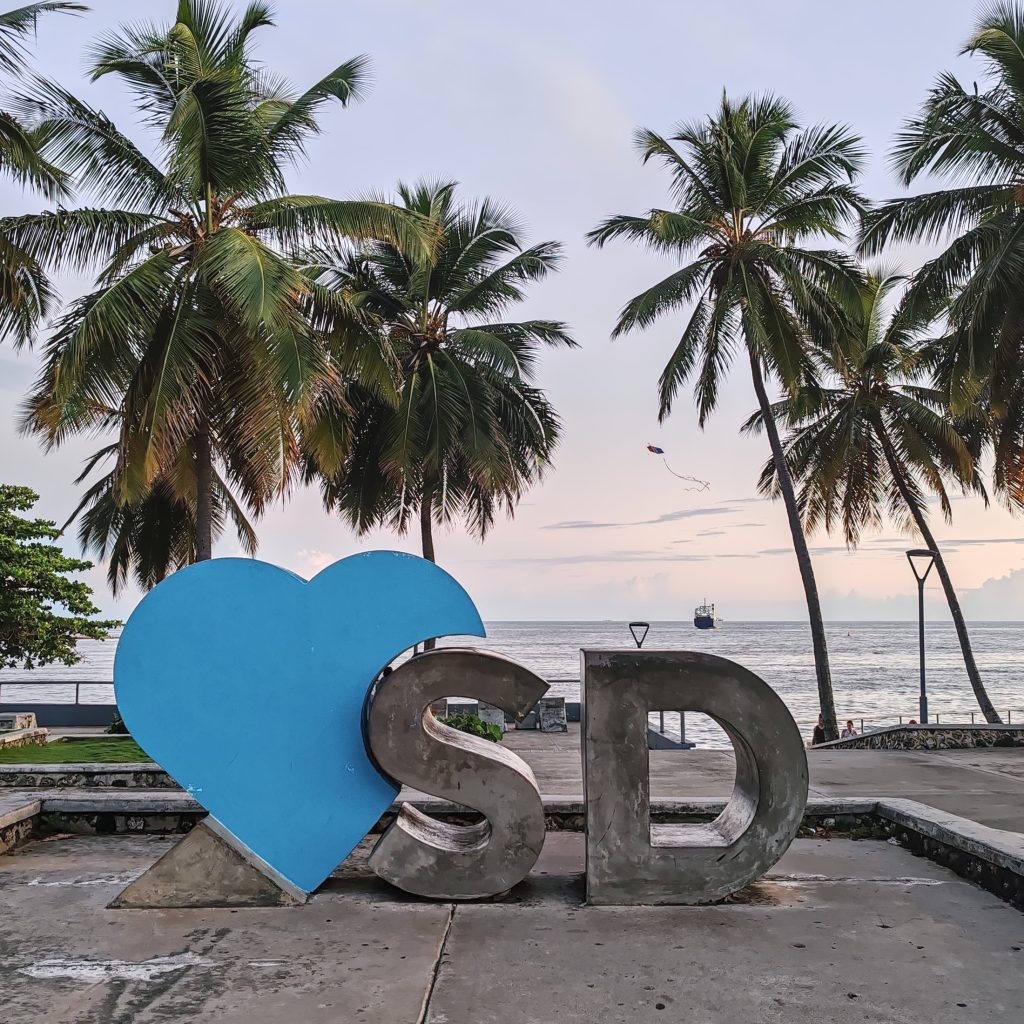
Along the George Washington Avenue in Santo Domingo, also known as El Malecón, you’ll find beautiful landscapes, squares, restaurants, and various leisure spots. El Malecón is a popular place for morning jogging, cycling, Sunday strolls, and admiring sunsets.
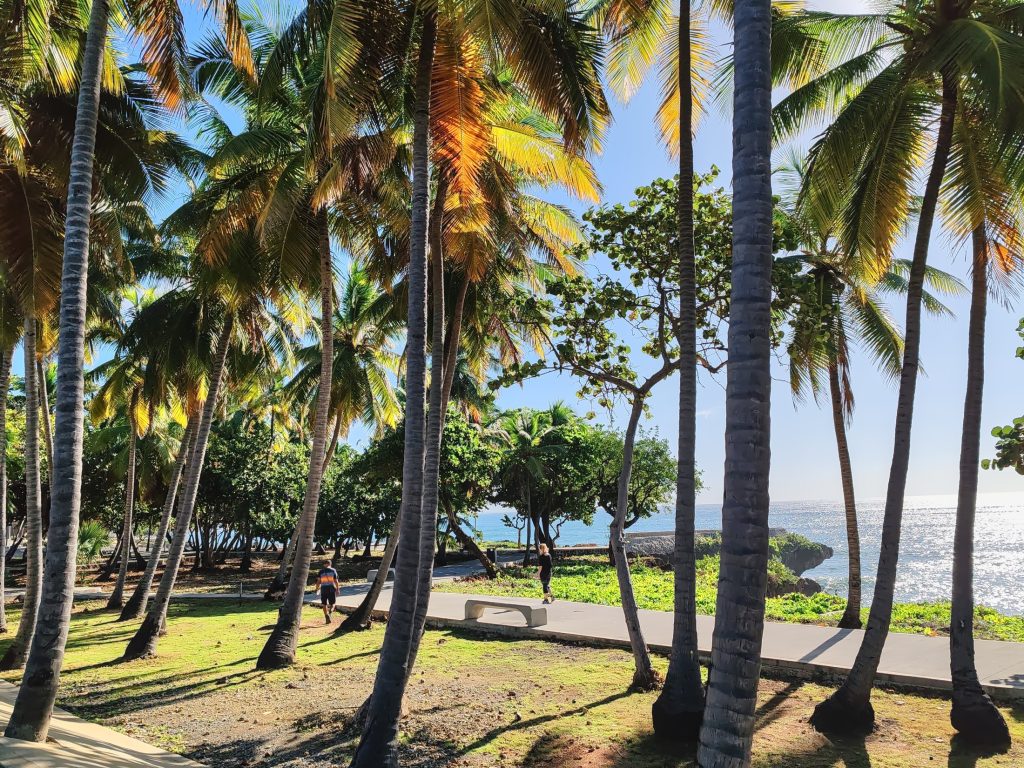
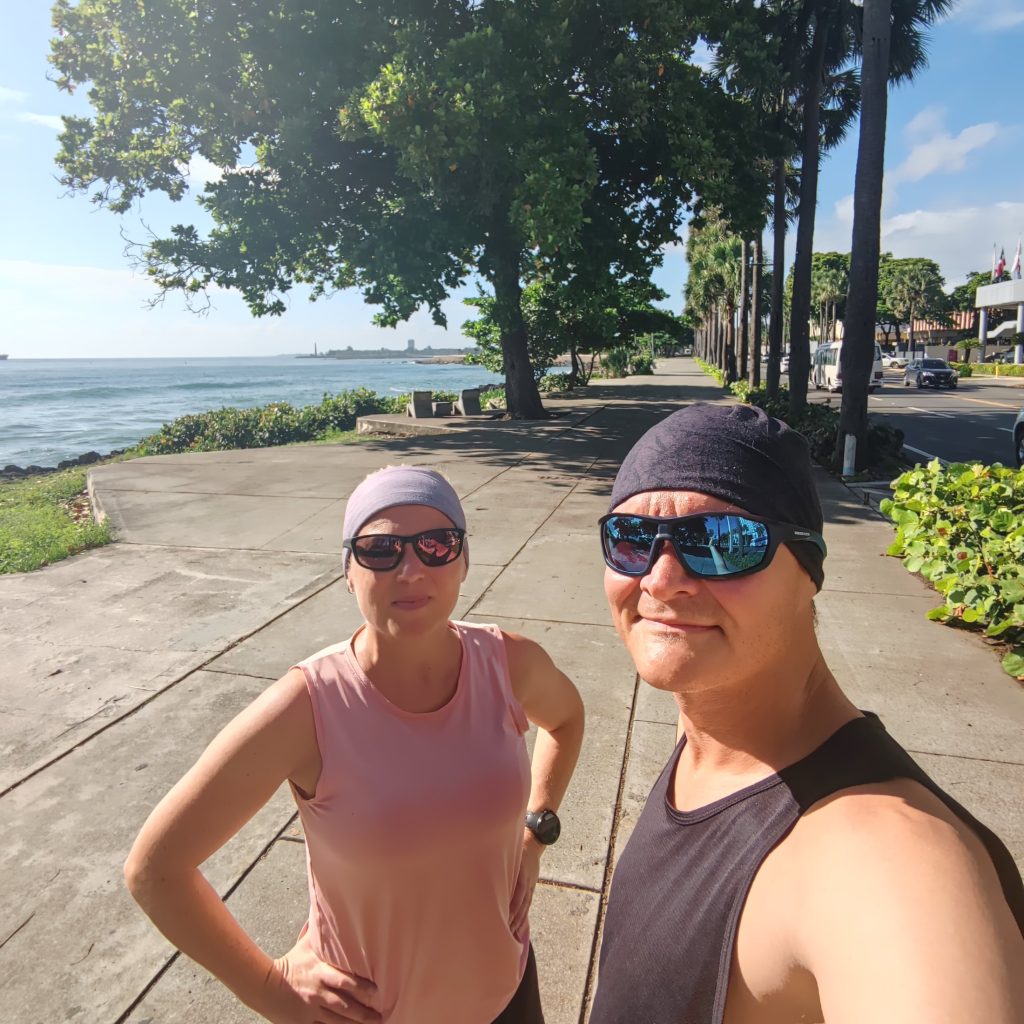
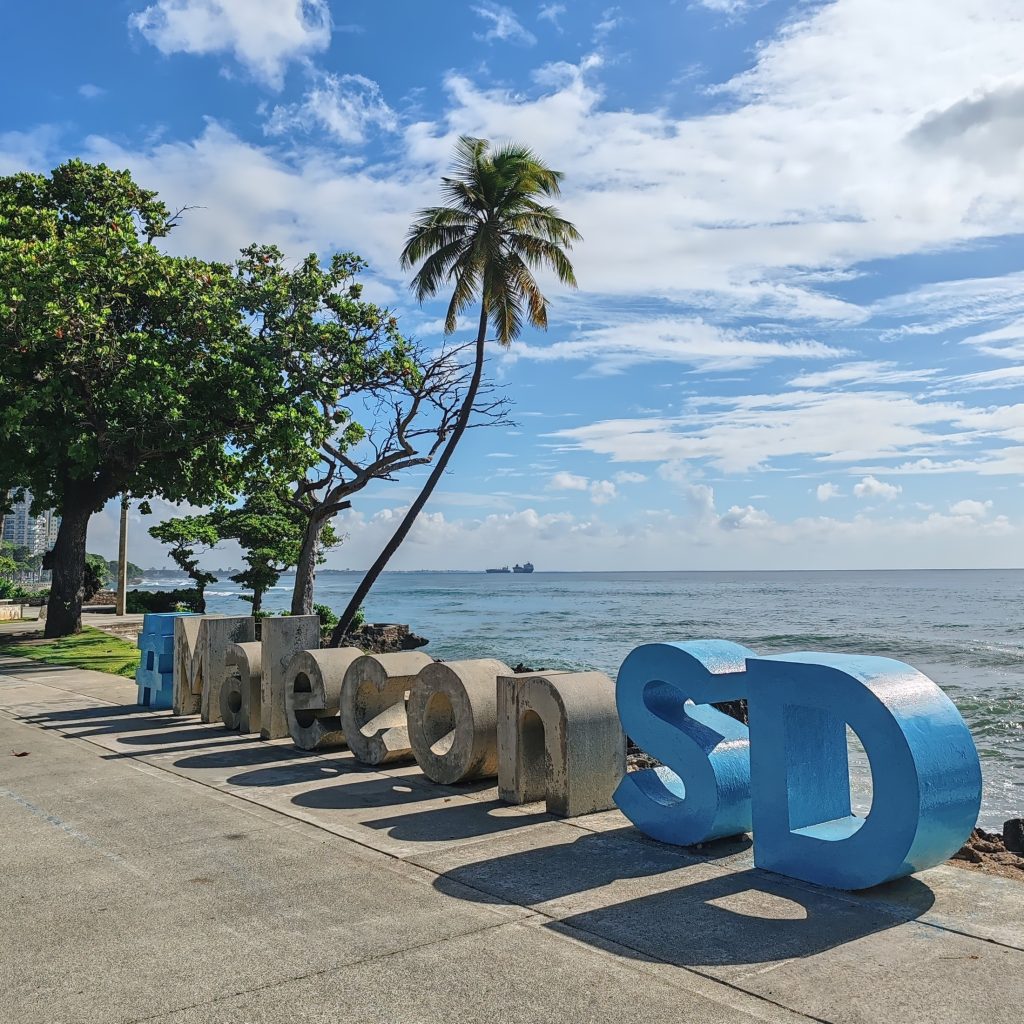
In 2017, the renovated waterfront promenade features rocky shores, sandy coves, and winding walking paths shaded by palm trees, along with a popular cycling lane. Unfortunately, the beaches along the Malecón are littered with trash and, in some places, appear to have some kind of sewer pipes leading into the sea. Apart from the litter on the beaches, Santo Domingo, or at least the most central parts of its downtown area, is in fairly clean condition.
Practical tips for Santo Domingo
I will later compile a separate post about independent traveling in the Dominican Republic and practical matters to keep in mind in the country, but here are a few quick tips for Santo Domingo:
Accommodation: In Santo Domingo, it is highly recommended to stay in the Ciudad Colonial area or its immediate surroundings. You can find accommodations ranging from luxurious hotels to modest hostels, and from private apartments to dormitories. We stayed several times at the simple yet cozy Casa Española hostel, where you could get an air-conditioned room with a private bathroom (though without hot water) for less than 20 euros. For those with slightly higher standards, the three-star Hotel Conde de Penalba, located right by Columbus Square, might be a suitable option.

Price Level: For a Caribbean country, the Dominican Republic is affordable, and you can travel there even on a small budget. Restaurant prices range from under ten euros (affordable pizzeria chains) to a few dozen euros. In grocery stores, imported products are generally quite expensive, but basic food items and, for example, local seasonal fruits are reasonably priced. Public transportation is inexpensive, as are taxi rides ordered through apps. It’s good to have cash on hand, which is easy to exchange or withdraw, but many places also accept credit cards.
Getting Around: It is easy to travel around the Dominican Republic by bus, but the public transportation within Santo Domingo is quite chaotic. The city does have a relatively new metro system, but its lines do not extend to the old town. There are city buses and various minibuses buzzing around the center, but we couldn’t make much sense of their routes or schedules. The Ciudad Colonial area is small enough to explore on foot, and for destinations outside of it, such as Faro a Colón or the airport, you can conveniently order a ride using the InDrive app.
Dressing: In Santo Domingo, clothing is primarily dictated by the weather – the Caribbean’s tropical climate makes the city quite hot and humid, so shorts, skirts, and T-shirts are the best everyday attire. For dinner at finer restaurants, it is, of course, polite to dress more appropriately, such as wearing long pants or a smarter dress, but there are no particularly conservative dress codes.
The best time to travel: The most popular and favorable travel period is the dry and “coolest” season from December to April. You can travel to the Dominican Republic year-round, but during the summer months, the weather is very hot, humid, and rainy, and autumn is hurricane season.
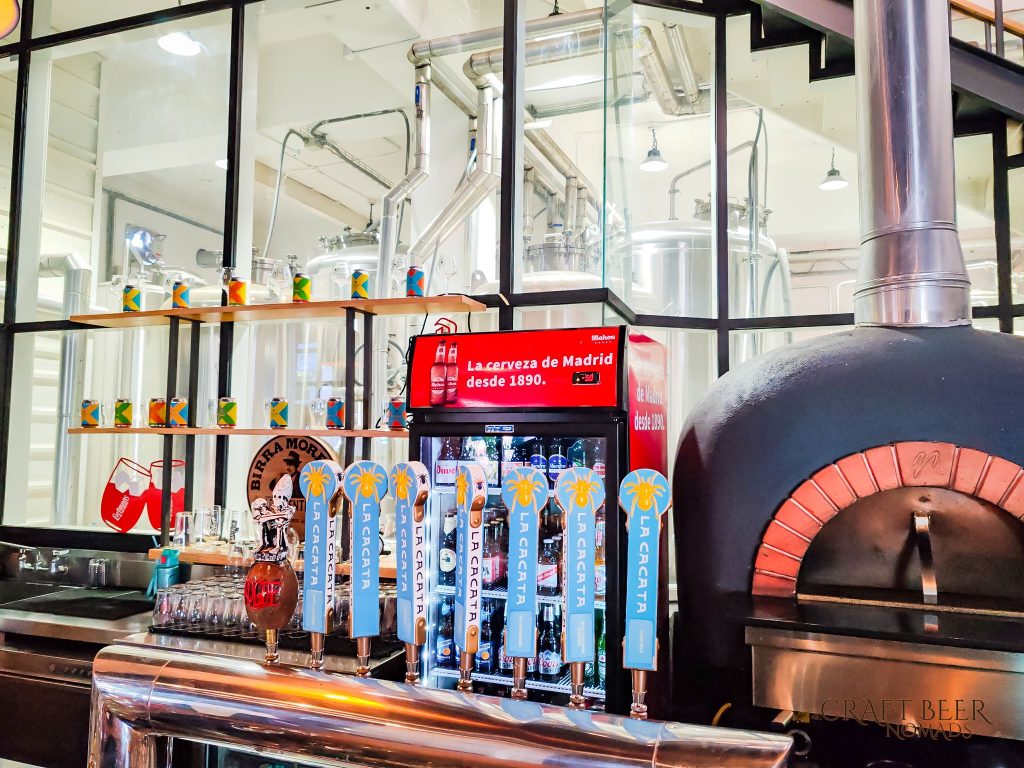
For the beer enthusiast: Check out at least Las Cacatas microbrewery! In the Zona Colonial area, there is a taproom of the Republica brewery and some pubs where you can find craft beer. The most popular local lager from a large brewery is Presidente, which is sold everywhere. Read more about beer culture in the Caribbean in our Craft Beer Nomads -blog.